Controversy Over Heathrow Airport's Third Runway: Safety Hazards and Cost Disputes Coexist
Comprehensive Report The plan to expand London Heathrow Airport with a third runway has recently attracted widespread attention in the UK. The UK Ministry of Defence has issued a safety warning regarding the plan, while issues such as the sharing of expansion costs and the impact on airfares have also continued to spark controversy.
This plan, which concerns the airport's development and the interests of various parties, is currently facing multiple challenges.
The UK Ministry of Defence has warned that if Heathrow Airport puts a third runway into use, the risk of aircraft being hit by birds will increase significantly.
It is reported that the proposed third runway will be located northwest of the existing airport, where there are waterways nearby that may attract birds to gather, thereby posing a threat to flight safety.
The Defence Infrastructure Organisation of the UK Ministry of Defence further stated that after the 2.2-mile-long new runway is put into use, not only will flights taking off from Heathrow Airport face the risk of bird strikes, but the operation of flights at the nearby Northolt Military Airfield, which is used by the royal family, will also be affected.
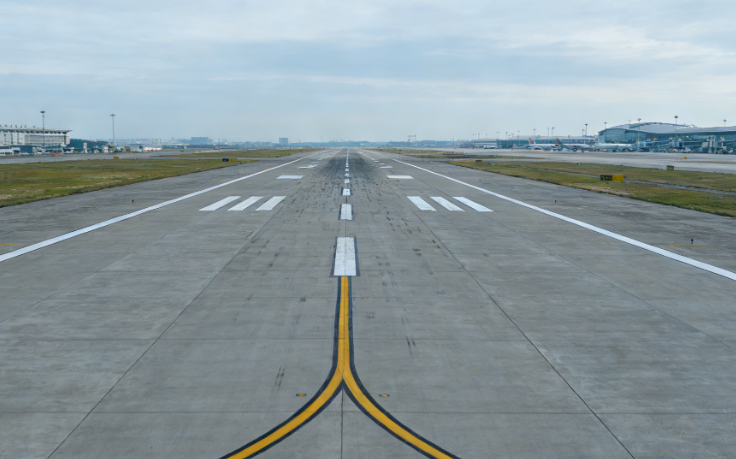
To reduce the risk, relevant officials have called for the planned new drainage channels (mainly designed to alleviate flooding in the Colne Valley) to be designed as "unattractive as possible" to birds, thereby reducing the possibility of bird flocks approaching the airport area and being sucked into aircraft engines.
A relevant statement from the UK Ministry of Defence pointed out: "The new water areas may increase the number of birds that pose a threat to air traffic, and may also lead these birds to migrate more to the area north of Heathrow Airport." In fact, Heathrow Airport itself has formulated relevant norms for wildlife hazard management, and reduces the risk of bird strikes through active control, off-site monitoring and other measures, which is in line with the relevant regulatory requirements of the UK Civil Aviation Authority (CAA).
In response to the safety warning, Heathrow Airport clearly stated that safety remains its top priority, and "all these potential risks and response measures will be carefully considered." It is reported that the airport plans to expand the third runway to increase the annual number of flights from the current 480,000 to 756,000, further improving the airport's capacity, consolidating its position as the UK's only hub airport, and boosting the UK's international trade and economic growth.
This expansion is part of Heathrow Airport's overall £49 billion modernization investment plan, of which about £2.1 billion is related to the third runway. It adopts a 100% private financing model and is planned to obtain planning permission in 2029 and open to flights within ten years.
In addition to safety hazards, the issue of expansion costs and cost sharing has become the focus of controversy.
Thomas Woldbye, Chief Executive Officer of Heathrow Airport, warned that a significant reduction in the £49 billion expansion budget may reduce the airport's attractiveness to passengers. He proposed that costs could be reduced by canceling some air bridges and requiring passengers to walk across the runway to board planes, but he also admitted that it remains to be seen whether airlines are willing to adopt these measures. "Heathrow has a very large number of boarding bridges, which many other airports do not have.
This is a considerable expense. Should we demolish them or keep them? This is a choice that needs to be made, and it will affect the final cost," Woldbye said.
In response to external controversies, Woldbye made a number of clarifications and responses.
He refuted reports that "Heathrow Airport plans to build the world's most expensive parking lot," stating that the "parking village" with 46,000 parking spaces has the same charging standards as parking lots in other parts of London; he also denied the claim by airlines that the new runway would increase airfares by £60, clearly stating that the construction cost of the third runway would be converted to £15 per passenger. "The opening of the new runway will attract new airlines and new aircraft models to the market, and we firmly believe that this will mean passengers do not need to worry about rising airfares. They will see more choices and fiercer competition among airlines, which is a good thing for consumers."
The attitude of the regulatory authorities has also become a key factor affecting the expansion process.
Woldbye said he expects the Civil Aviation Authority (CAA) to submit a review report by May, clarifying how much Heathrow Airport should charge airlines to support the runway construction.
He also revealed that starting from 2029, if the airport is to launch "large-scale investment" in the runway, relevant fees will need to be increased, even though the runway will not be open to flights for at least another six years. It is worth noting that the CAA has planned a comprehensive review of Heathrow Airport's economic regulatory model, focusing on the efficient control of expansion costs to avoid excessive fees harming consumers' interests.
In addition, Heathrow Airport's financial situation has added uncertainty to the expansion plan. Data show that the airport's pre-tax profit fell by 37% last year to £575 million. The reason for the profit decline is partly due to the revenue growth brought by record passenger traffic, and partly due to the reduction of relevant fees by the UK Civil Aviation Authority. At the same time, there are still differences between airlines and the airport on cost control.
International Airlines Group, the parent company of British Airways, has clearly stated that the runway construction cost should be controlled within £30 billion, while the airport plans to ensure their investment returns and resolve differences by granting airlines more flight slots.
As an important aviation hub connecting the UK to the world, Heathrow Airport's third runway expansion plan is not only related to the airport's own development, but also affects the UK's aviation competitiveness and economic growth.
At present, the plan still faces multiple challenges such as addressing safety hazards, negotiating cost sharing, and improving regulatory policies, and its subsequent progress is worthy of continuous attention.