Trump's Tariff Policy Volatility Causes Chaos: Swiss Enterprises in Difficulty as EU Suspends Relevant Trade Procedures
Local time on Saturday, former U.S. President Donald Trump's move to raise the global tariff rate from 10% to 15% suffered a setback. The whimsical changes in this policy have not only triggered fluctuations in the global trade pattern, but also plunged Swiss enterprises into a lot of uncertainties. They are facing far more confusions and challenges than clear solutions, with some enterprises demanding a refund of these taxes and others expecting more explicit policy explanations.
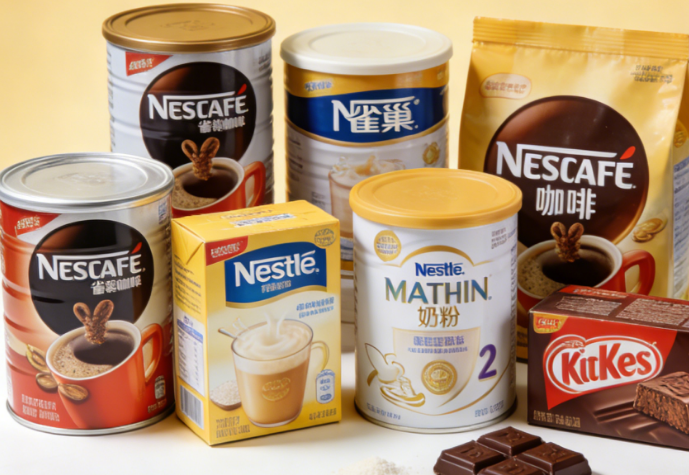
Local time on Monday, Nestlé CEO Philippe Naef told the AWP news agency that he was directly troubled by the frequent adjustments of tariffs. "If tariff rates change every three months, it will be too troublesome for us," he said. Although Nestlé, as a large food enterprise, processes and produces most of its products in local markets (i.e., places of production) and is relatively less directly affected by such policy changes, the frequent fluctuations in tariffs have seriously undermined the stability of the enterprise's supply chain planning and brought many inconveniences to production and operation.
When asked whether it is necessary to advance or suspend the upcoming tariff agreement negotiations, Naef adopted a cautious attitude and did not give a clear tendency. Regarding the relevant legal issues that need clarification, he said he "fully" trusted the Swiss Federal Government and the State Secretariat for Economic Affairs (SECO) to find a satisfactory solution, and clearly stated that he had not yet confirmed whether to join the legal proceedings initiated by other enterprises to seek relevant tariff compensation.
The difficulties faced by Swiss enterprises are reflected in many industries, with the Swatch Group being a typical example. The group's subsidiary across the Atlantic has clearly stated that it will request a refund of the additional taxes paid earlier. "At present, there are contradictions and incompleteness in the relevant information about the new tariffs, so it is difficult to make a judgment," a spokesperson for the watch group headquartered in La Chaux-de-Fonds, France, said, adding that the confusion in policy information makes it difficult for enterprises to formulate reasonable business strategies.
Different from the Swatch Group's pursuit of tax refunds, the Federation of the Swiss Watch Industry (FH) has focused on obtaining clear policy information. Yves Bugmann, President of the Federation, emphasized that the degree of impact of tariff policies on different Swiss enterprises varies significantly, which mainly depends on the import mode and business layout of each enterprise. The most urgent need at present is to obtain clear and unified policy guidelines to reduce operational risks.
The person in charge of the Swiss Trade Association added that the U.S. Supreme Court has not yet issued a clear opinion on the issue of tariff compensation, and such disputes will be ruled by lower U.S. institutions at this stage. Technically speaking, the relevant additional taxes are paid by importers in the United States, so the request for tax refund should also be put forward by importers. "In fact, most Swiss industrial enterprises have borne part of the tariff costs by adjusting product prices, and they currently need to reach an agreement with customers to jointly respond to this situation," the person in charge said.
The chaos in tariff policies has not only affected Swiss enterprises, but also triggered a chain reaction in the EU. A number of European parliamentarians revealed before holding a special meeting on the matter that the European Parliament had decided on Monday to suspend the procedures for implementing the trade agreement reached between the EU and the United States. This move comes against the background that the U.S. Supreme Court had previously ruled to overturn the relevant tariff policies of the Trump administration, and Trump subsequently announced a new global tariff policy, raising the rate from 10% to 15%, which conflicts with the previously reached trade agreement between Europe and the United States.
It is reported that last summer, after several rounds of intense negotiations, Brussels and Washington finally reached a trade agreement, which reduced the tariffs imposed by the United States on most European products to 15%, far lower than the 30% tariff rate previously threatened by Trump. In exchange, the EU promised to abolish the relevant tariffs imposed on U.S. imports, and the implementation of this commitment still needs the approval of the European Parliament.
The EU clearly stated on Sunday that it hopes the United States will abide by the previously reached trade agreement between the two sides and maintain the stability and predictability of global trade. However, the new global tariff policy launched by the Trump administration has undoubtedly increased the uncertainty of EU-U.S. trade relations and exposed the global trade market to more potential risks. At present, Swiss enterprises, the EU and relevant U.S. institutions are all waiting for more clear policy guidelines to resolve the current trade difficulties.