A‑share Lithium‑sector Interim Results 2026: Lithium‑salt Producers Recover, Battery Makers Show Mixed Performance
All A‑share listed firms within China’s lithium‑battery sector had published their half‑year reports for 2026 by 30 August. Against a backdrop of rebounding lithium prices in the first half of the year, the sector delivered generally improved operating results. Lithium‑ore and lithium‑salt producers posted notable profit recovery, while dedicated lithium‑cell manufacturers recorded divergent financial outcomes.
Industry participants observe that near‑term lithium prices will remain shaped by a tight supply‑demand balance. Over longer time horizons, competitive dynamics across the lithium‑industry landscape have shifted. An era defined purely by capacity expansion draws to a close, with technological capability, supply‑chain resilience and global operational layouts set to become core competitive advantages.
Rising lithium prices formed the primary driver of upstream earnings recovery. Two major sector leaders, Tianqi Lithium and Ganfeng Lithium, recorded net profits attributable to shareholders of RMB 4.242 billion and RMB 4.257 billion respectively. Year‑on‑year net‑profit growth rates stood at 4 925.46 per cent for Tianqi Lithium, 1 076.14 per cent for Rongjie Co., Ltd and 139.24 per cent for Yongxing Special Materials Technology. Both Ganfeng Lithium and Shengxin Lithium Energy swung from losses into profitability during the period.
According to data from Shanghai Metals Market (SMM), the average spot price for battery‑grade lithium carbonate across the first half of 2026 reached RMB 163 400 per tonne, representing a 132.14 per‑cent increase compared with RMB 70 400 per tonne in the equivalent period one year earlier. Higher lithium‑salt prices have delivered tangible relief for listed companies that endured compressed margins in prior cycles. Corporate disclosures confirm sharp year‑on‑year price increases for lithium‑related products as the main earnings catalyst.
Resource‑capacity expansion remains under way across the industry. Shengxin Lithium Energy now operates 137 000 tonnes per annum of lithium‑salt capacity alongside 500 tonnes per annum of metallic‑lithium output, placing it among global top‑tier producers. Its Indonesian lithium‑salt plant ramped‑up output substantially in the first half, while development work proceeds at its Murong lithium‑ore deposit. Tianqi Lithium completed a 1 000‑tonne‑per‑annum metallic‑lithium production base in Chongqing in May, and continues preparatory work for the Yajiang Cuola spodumene‑mine project in Sichuan, which will supply domestic lithium‑concentrate feedstock upon completion.
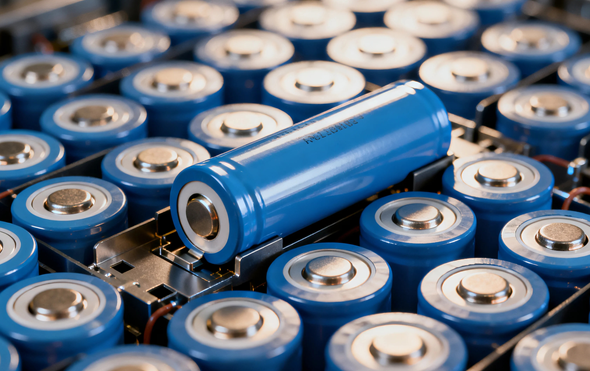
Supply‑demand shifts and lithium‑price volatility will continue to shape profitability for upstream miners and converters. Market‑research analysis indicates that tight‑balance conditions will persist through the second half of the year. Inertia from earlier capacity build‑outs exists on the supply side, yet demand remains robust, underpinned by energy‑storage deployment and industrial expectations for solid‑state‑battery commercialisation. Over extended cycles, lithium will revert more closely to commodity‑market characteristics with reduced price volatility, while substantial unmet demand potential remains.
Unlike the broad‑based profit rebound among upstream lithium‑material operators, downstream cell manufacturers delivered split results. More than half of listed lithium‑cell firms achieved year‑on‑year increases in revenue and net profit. Contemporary Amperex Technology Co., Limited (CATL) registered turnover of RMB 276.917 billion and attributable net profit of RMB 43.284 billion, rising 54.8 per cent and 41.98 per cent respectively. EVE Energy, Desay Battery and Gotion High‑Tech all reported net‑profit growth exceeding 100 per cent. At the same time, ten listed lithium‑cell producers recorded year‑on‑year net‑profit declines.
Within the global energy‑transition context, cell manufacturers with superior technology, market access and robust supply‑chain structures are strengthening their profit‑generating capacity. CATL expanded operational scale, lifted its domestic power‑battery market share, maintained product‑technology leadership and rolled‑out innovative energy‑storage offerings. EVE Energy reinforced upstream supply‑chain arrangements and deployed hedging instruments for raw‑material costs and foreign‑exchange exposure to stabilise core‑business returns, alongside multiple product‑development milestones.
For manufacturers reporting falling net earnings, business‑model restructuring, shifts in customer‑order fulfilment rhythms and rising raw‑material costs created operational headwinds. Growth potential within energy‑storage markets and advancing solid‑state‑battery commercialisation may drive further profit expansion for lithium‑battery enterprises.
Industry‑sector research notes that future competition will move away from simple capacity‑building races and focus on comprehensive operational strength. Product differentiation, global‑market execution, end‑to‑end cost management and supply‑chain robustness will widen performance gaps between participants. Companies must accelerate solid‑state and semi‑solid‑state battery commercial roll‑outs to improve product performance and secure premium pricing. Overseas localised manufacturing facilities need to comply with carbon‑footprint standards and trade‑regulation frameworks to secure international energy‑storage and power‑cell orders, supported by local‑market certification and delivery systems. Process innovation and integrated manufacturing workflows can lower production costs, while stable upstream‑resource co‑ordination mitigates commodity‑price cyclicality. Beyond vehicle‑battery markets, operators must cultivate new‑growth avenues including energy‑storage and computing‑power power‑supply applications.
热门内容推荐