China’s EV Charging Infrastructure Hits 21.481 Million by End of Q1 2026, Booming Steadily
China’s electric vehicle (EV) charging infrastructure has maintained rapid growth, effectively supporting the travel needs of EV users and boosting the development of the new energy vehicle industry. The National Energy Administration recently released data showing that by the end of March 2026, the total number of EV charging infrastructure in China had reached 21.481 million, a year-on-year increase of 46.9%.
Among the total, public charging facilities stood at 4.863 million with a rated total power of 234 million kilowatts, while private charging facilities reached 16.618 million. China Government Network reports that the country has been vigorously advancing the “Three-Year Doubling” Action Plan for EV Charging Facility Service Capacity (2025-2027), which is expected to drive more than 200 billion yuan in investment by the end of 2027.
Holidays serve as an important test of the support capacity of charging facilities. Data from the National Charging Facility Monitoring and Service Platform shows that during this year’s Spring Festival holiday, the number of charging sessions on highways reached 6.021 million, with a total charging capacity of 149.7675 million kilowatt-hours and a daily average of 16.6408 million kilowatt-hours, hitting a record high.
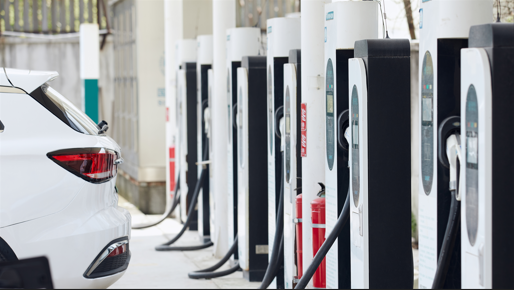
Facing the surging charging demand, Liu Mingyang, Deputy Director of the Electric Power Department of the National Energy Administration, said, “We have guided local governments and enterprises to strengthen pre-holiday inspections, holiday duty and charging guidance, effectively ensuring the large-scale travel and charging needs of electric vehicles.”
In 2025, the development of China’s charging facilities continued to improve in quality and upgrade, showing three main characteristics. Firstly, the scale grew faster: it took 13 years to build the first charging station in 2006 to exceed 1 million facilities in June 2019, 5 years to reach 10 million in June 2024, and only 18 months to jump from 10 million to 20 million.
Secondly, charging efficiency improved: the layout and construction of high-power charging facilities accelerated, with the average single-gun charging power at public stations reaching 46.5 kilowatts, a year-on-year increase of 33% in charging efficiency and a significant improvement in charging service experience. Thirdly, the coverage became wider: a total of 71,500 charging piles were built in highway service areas across the country, covering more than 98% of all service areas, and 19 provinces had achieved “full coverage of charging facilities in every town”.
While expanding in scale, charging facilities are evolving from “one-way power supply equipment” to “two-way energy nodes” to support the construction of a new power system. On April 28, China’s first national-level large-scale vehicle-grid integration demonstration station, integrating operation services, technology verification and industrial cultivation, was officially put into operation in Hefei, Anhui Province.
Xu Weigang, Director of the Marketing Department of State Grid Hefei Power Supply Company, introduced that the station has 72 EV charging parking spaces, 53 of which have vehicle-grid bidirectional charging and discharging functions, allowing car owners to not only charge their vehicles but also feed surplus power back to the grid. The demonstration station integrates quantum technology with vehicle-grid integration, using “5G + quantum encryption” communication technology to ensure safe and accurate scheduling.
In September 2025, six ministries including the National Development and Reform Commission and the National Energy Administration jointly issued an action plan, aiming to build 28 million charging facilities nationwide by the end of 2027, providing over 300 million kilowatts of public charging capacity to meet the needs of more than 80 million EVs.
热门内容推荐