Three Local Zones in Tianjin’s Binhai New Area Pursue Industrial Upgrade and Community Service Innovation
Per Xinhua News Agency, grassroots jurisdictions within Tianjin’s Binhai New Area carry out multi-pronged reforms spanning advanced manufacturing renovation, traditional petrochemical park restructuring and digitalised community governance, rolling out targeted supporting measures to unlock idle industrial resources and upgrade public service delivery across respective neighbourhoods.
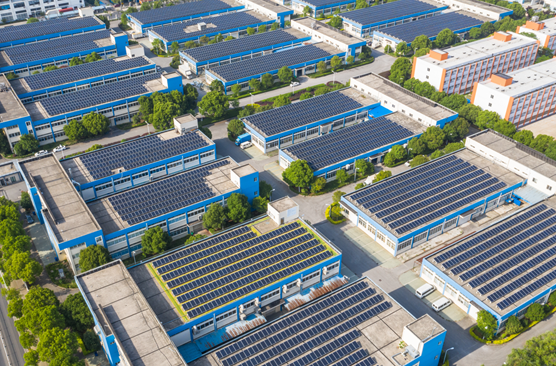
Industrial facilities stand neatly arranged inside industrial parks of Zhongtang Town, an established industrial hub in Binhai New Area, with full-capacity production running steadily across newly completed workshops. The township shifts its core development focus toward intelligent manufacturing, facilitating smooth construction and commissioning of multiple tech-driven industrial projects to reinforce local industrial restructuring momentum.
A home-grown private enterprise specialising in oilfield engineering and intelligent workover equipment manufacturing has earned national accreditation as a Specialised, Refined, Unique and Innovative “Little Giant” firm, with its newly operational production base enabling continuous output from intelligent workover robot assembly lines.
Customised on-site service is delivered via the town’s innovation service platform; dedicated staff conduct regular site visits to identify operational hurdles and coordinate cross-department solutions whenever project barriers emerge.
Following urban renewal policies, local authorities map out disused factory premises and dormant industrial assets systematically to accommodate high-value industrial investment, alongside focused recruitment of manufacturers engaged in precision machinery, smart production and advanced new materials to sustain steady industrial expansion in the township.

Major operational shifts have reshaped Dagang Petrochemical Industrial Park, which was founded back in 2003 and once hosted hundreds of manufacturers generating nearly CNY10 billion in annual turnover. Stricter environmental compliance and industrial safety criteria forced underperforming operators out of the market in preceding years, before official turnaround policies took effect from 2023. Tianjin’s dedicated regulatory documents supporting high-quality development of green petrochemical chains secured formal chemical park certification for the zone, prompting local administrators to adopt a refined chemical development blueprint centred on compact, high-value niche production instead of large-scale bulk chemical manufacture.
A former idle power cabinet factory site unused for more than a decade now houses Greenway New Materials, a lithium hydroxide deep-processing producer; with coordinated backing from park administrators and customs authorities, the site is home to North China’s first public bonded warehouse for hazardous chemical products. The firm’s phase-one production line launched in June 2025 has exceeded CNY100 million in annual output by the end of the same year, with finished goods exported to more than a dozen overseas markets.
Since 2023, park planners have locked in four defined industrial tracks covering information technology auxiliary supplies, high-performance chemical additives, circular chemical resource utilisation and pharmaceutical intermediates, welcoming 21 fresh industrial investments within three years and helping resident businesses build complete upstream and downstream supply chains to revitalise the ageing industrial precinct.
Digital transformation also extends to grassroots civil administration in Zaishang Subdistrict, located in northeastern Binhai New Area, where senior citizens account for one-third of permanent local residents. Community management teams launched regular live-streaming public consultation sessions starting from May 2025, scheduling live broadcasts every Monday, Wednesday and Friday to respond to residents’ daily concerns via online interactive channels.
Cumulative viewership across all live sessions has surpassed 160,000 hits, while local administrators have successfully resolved more than 300 practical livelihood matters submitted by residents throughout the ongoing service programme.
According to CGTN Radio, Tianjin’s municipal authorities keep refining tiered incentive schemes for innovative small and medium-sized enterprises, releasing continuous fiscal and financing support policies to solidify the growth of specialised manufacturing entities across Binhai New Area in the coming phases.
Ongoing policy optimisation will further streamline administrative approval procedures for new industrial projects, alongside sustained resource reallocation of vacant land and factory space to attract more high-potential manufacturers into local industrial clusters. Meanwhile, petrochemical parks will keep deepening cooperation with research institutions to advance green, low-carbon chemical innovation, and neighbourhood committees will further expand online public service channels to enrich convenient livelihood services for local inhabitants.
热门内容推荐