China’s Smart and Green Shipping Transformation Unveiled at Tianjin International Shipping Expo
Shipping underpins over 80 per cent of global trade, serving as a vital maritime link for unimpeded global industrial and supply chains. The 4th Tianjin International Shipping Industry Expo, held from June 2 to 5, gathered more than 400 domestic and overseas exhibitors. The event showcases China’s accelerated shipping industry transformation, driven by intelligent upgrading that shifts the sector from experience-based and traditional operations to digital, futuristic and leading-edge development models.
Digital and intelligent technologies are reshaping vessel navigation operations across the industry. Advanced AI-powered maritime systems are replacing traditional experience-dependent navigation modes with data-driven precision control. At the expo, real-time remote vessel operation technology was demonstrated, enabling operators based in Shanghai to calibrate ship routes for vessels sailing near Jiaxing from hundreds of kilometres away. The system integrates multi-dimensional data including meteorological conditions, ocean currents and sea lane scenarios to independently plan optimal sailing routes.
Green shipping innovation also takes centre stage at the exhibition. A wind energy harvesting device model displayed by COSCO SHIPPING demonstrates new potential for low-carbon maritime transport. Intelligent systems dynamically adjust the rotation, lifting and folding of sails based on real-time wind speed data, maximising offshore wind energy utilisation and cutting vessel fuel consumption by up to 25 per cent annually. Industry insiders acknowledge that China’s shipping development stands out for its integrated progress in connectivity, technological innovation and intelligent application, beyond sheer scale and infrastructure advantages.
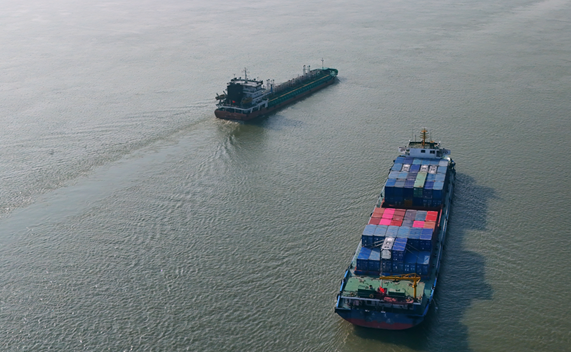
China’s shipping sector is undergoing a fundamental shift from experience-reliant operations to smart and eco-friendly development. The country now boasts more than 1,200 new energy and clean energy-powered vessels. In April this year, Ningyuan Diankun, the world’s largest and China’s first 10,000-tonne fully electric intelligent container ship, commenced commercial operations with its maiden voyage from Ningbo Zhoushan Port.
Port terminals have become core application scenarios for artificial intelligence, with digital transformation substantially boosting operational efficiency and service quality. Tianjin Port’s self-developed PortGPT large model streamlines terminal management by reducing reliance on manual monitoring of complex operational data. The port’s self-developed new-generation container terminal operating system has lifted single-bridge operational efficiency by 10 per cent and lowered production energy consumption by 8 per cent.
China leads the world in the number of automated ports under construction and completed. Breakthroughs continue in intelligent port hardware including unmanned shore cranes, automated guided vehicles and intelligent yard equipment. Regulatory authorities have rolled out the Intelligent Shipping 2030 Action Plan jointly with relevant departments, aiming to realise extensive and in-depth integration of artificial intelligence with shipping elements and achieve key breakthroughs in core intelligent shipping technologies by 2027.
As intelligent scenarios gain widespread adoption across the maritime sector, unified industrial standards have become essential for sustainable development. Unified data systems, industrial standards and governance mechanisms underpin collaborative AI empowerment for global shipping. In 2024, China led multiple countries in formulating and releasing the international standard Shipborne Cybersecurity Risk Assessment, standardising core assessment elements and procedures for ship network security.
China Merchants Group is collaborating with Huawei to develop a dedicated operating system for maritime vessels, scheduled for official release in September this year. The system will build an independently controllable, standardised and intelligently collaborative underlying platform for the shipping industry. The formulation and implementation of Chinese-led standards and technological systems translate domestic practical experience and innovative outcomes into universally applicable global solutions, facilitating cross-border interconnection of intelligent maritime technologies and resources.
热门内容推荐