Xiamen Port’s Lithium Battery Exports Surpass 25,000 TEUs This Year As Vessel Carrying Energy Storage Cabinets Sails For Malaysia
According to China Radio International’s Fujian branch news, a Singapore-flagged vessel SIA Pisces departed Songyu Terminal of Xiamen Port recently, loaded with more than 180 lithium-ion battery energy storage cabinets bound for Malaysia. The departure marks a fresh milestone for the port, with cumulative outbound shipments of lithium battery goods topping 25,000 twenty-foot equivalent units since the start of the year.
Lithium batteries sit at the heart of China’s “new three” export commodities, acting as a core driver of foreign trade expansion. Overseas appetite for power and energy storage batteries has surged in recent periods, fuelled by accelerated energy transition across Europe and continuous infrastructure rollout for renewable power throughout ASEAN member states.
Xiamen Port holds distinct industrial and logistical edges that underpin its standing as a premier outbound hub for new energy manufacturers. The port sits within close proximity to major lithium battery producers including CATL and Hithium Energy Storage, securing consistent and ample cargo supplies for export operations. Purpose-built storage yards and handling facilities categorised for nine classes of dangerous goods have been fully constructed across the port’s container terminals, enabling end-to-end compliant handling for all varieties of lithium battery consignments. An extensive network of ocean liner routes links the port with Southeast Asian, European and American markets, offering stable tonnage capacity to match global logistics demands for battery shipments.
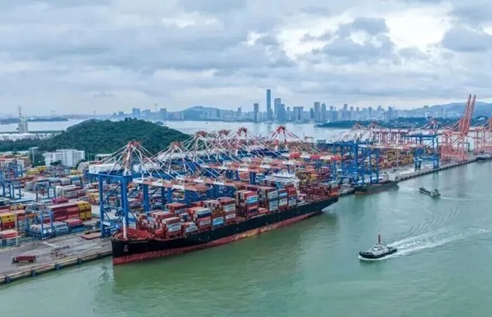
Frontline service frameworks have been refined across terminal operations to draw greater volumes of lithium battery cargo to Xiamen Port. Dedicated service teams maintain regular liaison with core manufacturers, allocating berths and storage space to align with production and shipping timetables. Customised handling protocols have been developed to address specific logistical hurdles, including the excess weight of large-scale energy storage containers. Round-the-clock booking for container delivery and uninterrupted night-shift loading schedules operate to minimise vessel and cargo dwell time at the port, cutting overall logistics expenditure for manufacturers and lifting cargo circulation efficiency.
Smooth cross-authority coordination across the full port ecosystem underpins robust clearance performance for lithium battery exports. Xiamen Port Authority, Xiamen Maritime Safety Administration, Xiamen Customs and Dongdu Border Inspection Station operate permanent joint coordination mechanisms, rolling out full-process green channels for outbound lithium battery consignments. Simplified declaration procedures, advance on-site inspections and synchronised data sharing have been implemented, balancing rigorous safety oversight for hazardous goods with shortened turnaround periods for ships and cargo. Cross-departmental operational integration delivers streamlined customs clearance workflows that sustain steady growth in lithium battery export volumes through Xiamen Port.
Global market demand for renewable energy hardware maintains firm upward momentum, creating ample room for further expansion in lithium battery outbound trade. Xiamen Port will carry out comprehensive upgrades to its full-spectrum supporting services to reinforce its position as a pivotal domestic hub for lithium battery exports. Specialised terminal handling infrastructure will receive iterative upgrades to raise the port’s capacity to process large-volume lithium battery shipments. Outreach campaigns targeting industrial clusters focused on new energy manufacturing will be rolled out to secure additional export cargo, while collaboration with global shipping lines will deliver denser international sailings and dedicated tonnage allocations for lithium battery consignments. Bespoke end-to-end logistics packages will be rolled out for individual manufacturers, with deeper cross-departmental port coordination enabling seamless data exchange across declaration, inspection and cargo handling stages. Enhanced professional port services and integrated cross-authority clearance workflows will strengthen competitive advantages for China’s “new three” export goods, supporting domestic new energy industries to expand market footprint across global territories and drive steady advancement in the port’s export-oriented economy.
热门内容推荐