1,000MW Expansion Unit Enters Commercial Operation at Binhai Power Station in Jiangsu
Unit 5 of the 2×1,000MW expansion project operated by State Power Investment Corporation at Binhai has passed the mandatory 168-hour full-load reliability trial, marking its formal transition to commercial power generation. The unit maintained steady equipment operation with all operational indicators meeting designed benchmarks when the trial concluded at 16:18 on 12 July, delivering enhanced power supply flexibility and creating greater capacity to integrate renewable power into regional grids.
Sited within the Binhai Port industrial zone of Yancheng, Jiangsu Province, the facility is jointly funded by State Power Investment Corporation Jiangsu branch and Yancheng Guoneng Investment Co., Ltd. The development houses two ultra-supercritical double reheat coal-fired generating units each rated at 1,000 megawatts, alongside integrated high-efficiency flue gas desulphurisation, denitrification and dust removal environmental control systems. Total capital expenditure for the scheme stands at roughly 80 billion yuan.
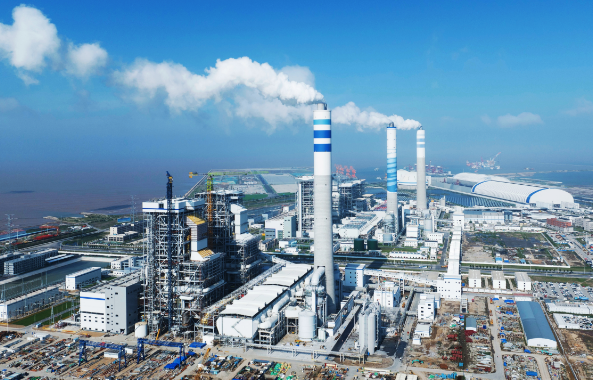
This plant ranks among the core supporting and flexible regulating power facilities initiated during Jiangsu’s 14th Five-Year Plan cycle. It also forms a vital pillar of the comprehensive wind-solar-coal-storage multi-energy complementary hub being built in Binhai, a layout designed to balance intermittent renewable power output with dispatchable thermal generation.
Once both generating units reach full operational readiness, the station will transmit 10 billion kilowatt-hours of electricity annually into Jiangsu’s provincial power grid. The yearly power output matches the aggregate domestic consumption of around four million urban and rural households across the region.
Continuous stable power output from Unit 5 will reinforce grid stability across eastern Jiangsu in the coming months. Further commissioning and optimisation work will advance for the second 1,000MW unit of the expansion scheme, while integrated coordination between on-site thermal generation and adjacent wind and photovoltaic installations will be refined to lift local renewable energy absorption capacity.
热门内容推荐