Sinograin Deploys Full Flood Prevention Measures to Secure Grain Reserves Against Typhoon Bavi
Typhoon Bavi, the ninth typhoon of the year, has brought severe gales and heavy rainfall to multiple regions across East China, North China and Northeast China. In response to the extreme weather conditions, China Grain Reserves Group (Sinograin) has launched comprehensive flood prevention and disaster relief operations to fully guarantee the safety of staff, grain reserves and grain storage depots in affected areas.
Prior to the typhoon’s arrival, Sinograin’s Liaoning branch activated flood prevention emergency responses immediately after receiving meteorological alerts for Typhoon Bavi. The branch carried out 67 rounds of comprehensive hazard inspections and conducted dynamic flood risk grading assessments for 121 local storage depots, rolling out targeted defensive measures tailored to the risk level of each site.
The branch has fully upgraded on-site emergency preparedness for key flood-prone storage facilities. More than 20 drainage pumps, over 60,000 sandbags, 126 waterproof baffles and 57 emergency lighting devices have been deployed at key locations. All power generators and drainage equipment have undergone thorough maintenance and trial runs to ensure full operational readiness at all times. Maintenance teams have cleared and dredged 1,864 drainage pipelines, ditches and catch wells across storage zones by removing silt and debris to maintain unobstructed drainage systems.
A total of 5,863 critical facilities, including depot gates, barn ventilation openings and grain retaining doors, have been fully sealed and reinforced. Temporary water-retaining structures and cofferdams have been installed at low-lying depots to fend off surface water inundation. The branch has also established real-time information sharing mechanisms with local meteorological, emergency management and water conservancy authorities, continuously tracking the typhoon’s trajectory and evolving rainfall and water level conditions to advance all preventive arrangements.
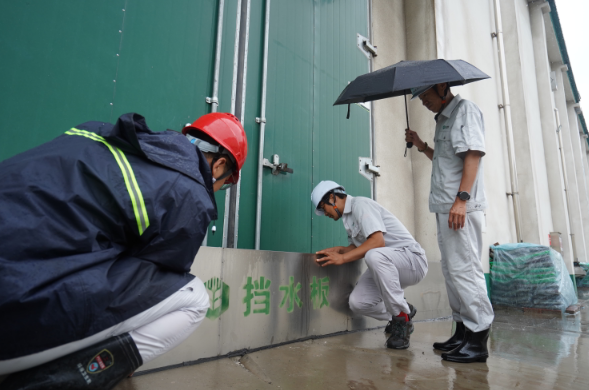
During the typhoon’s impact period, the Liaoning branch strictly adhered to the principle of prioritising personnel safety before on-site disposal. All ongoing construction projects and field operations at affiliated sites were suspended, with all construction personnel evacuated to designated safe areas. A daily scheduling mechanism has been implemented, with full-coverage supervision of flood prevention work at subordinate enterprises conducted twice daily via remote monitoring systems and telephone inspections, enabling real-time oversight of flood situations and emergency preparation status at all storage depots.
On the evening of 13 July, persistent torrential rain triggered a sharp rise in water levels of the Hun River. Floodwater surged rapidly at a leased grain storage depot in Hunnan District, Shenyang, posing imminent risks to grain storage barns. Emergency teams of the Liaoning branch launched dual-line rescue operations on site. One team deployed multiple high-power water pumps for continuous flood drainage, while another team reinforced flood barriers by manually transporting and stacking sandbags.
Key emergency supplies including sandbags and drainage pumps were depleted amid the continuous rescue operation. Severe urban waterlogging paralysed major traffic routes across Shenyang at the time. Operational staff navigated flooded road conditions under heavy rain to deliver emergency supplies to the flood prevention frontline through coordinated relay transportation.
Over 30 hours of uninterrupted on-site rescue efforts have effectively stabilised water levels at the affected depot, with all national grain reserves kept intact and free from flood damage. Sinograin will sustain rigorous flood prevention and safety management protocols at all storage facilities, maintaining full emergency readiness to tackle extreme weather risks and secure stable grain reserve safety in regional areas.
热门内容推荐