China’s State Grid Hits Record Power Load of 1.252 Billion kW Amid Summer Peak Demand
Power load across the State Grid operational area reached a historic high of 1.252 billion kilowatts on 14 July. New peak load records were registered in two regional power grids covering Central and Southwest China, as well as four provincial power grids including Southern Hebei, Hubei, Hunan and Sichuan. Facing surging summer electricity consumption, State Grid has prioritised reliable power supply and leveraged the strengths of its large-scale integrated power grid and nationwide energy market.
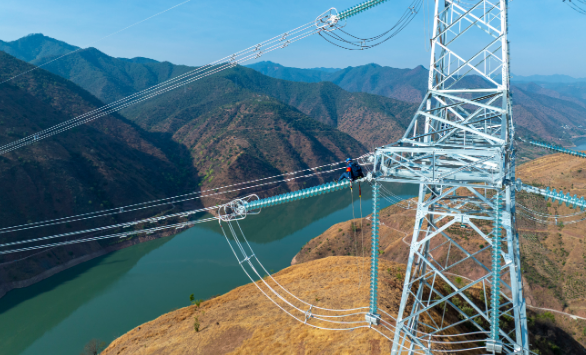
The company has implemented a coordinated cross-provincial power allocation system centred on medium and long-term transactions, supplemented by spot market balancing and emergency dispatching mechanisms. It fully utilises cross-regional ultra-high voltage transmission corridors to facilitate real-time power redistribution and temporal supply complementarity across regions. The maximum cross-regional power transmission volume has reached 152 million kilowatts, delivering targeted power support to regions under tight supply pressure during peak periods.
To cope with the summer peak electricity demand, State Grid has rolled out coordinated operational upgrades across power generation sources, grid networks, flexible load management and intelligent dispatching systems to sustain stable grid operation and orderly power delivery.
On the power generation side, the enterprise strengthens overall generation capacity management by ensuring full operational status and stable output of thermal power units. It optimises water reservoir energy storage scheduling and precisely regulates hydropower generation. Pumped storage and new energy storage facilities are fully deployed to offset peak power shortages and balance off-peak grid load. Coordinated dispatching of renewable and conventional power sources maximises grid integration and power output to boost peak supply capacity.
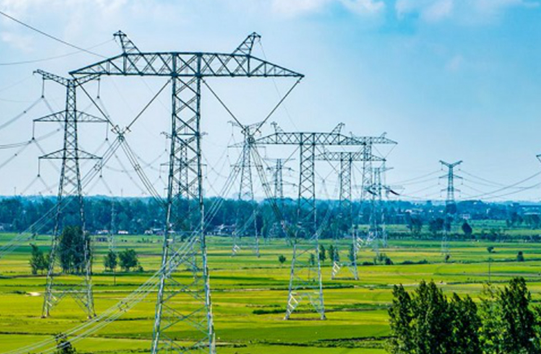
On the grid operation side, market-oriented resource allocation mechanisms are continuously optimised. Operational arrangements are dynamically adjusted to maximise transmission corridor efficiency and enable timely cross-regional power balancing, driving repeated record highs in inter-regional power delivery volumes.
On the power consumption side, market-based electricity trading mechanisms are further refined. Time-of-use pricing signals guide end-users to adjust power consumption behaviours, easing peak-time grid pressure and optimising overall load distribution across the grid.
Digital and intelligent technologies are widely adopted to enhance grid operational efficiency. High-precision meteorological early warning systems accurately predict extreme weather impacts, while artificial intelligence load forecasting models deliver data-driven insights into real-time power supply and demand trends, enabling more precise and intelligent grid dispatching decisions.
Adhering to unified nationwide grid operational principles, State Grid has previously released comprehensive summer power supply guidelines covering 24 key measures across six categories, alongside 26 flood prevention and disaster mitigation initiatives in eight dimensions. A total of 168 key peak-summer power supply projects have been completed and put into operation on schedule.
The company enforces a standardised operational framework featuring unified national coordination, zoned management and customised provincial-level response plans. It strengthens collaborative mechanisms between government departments, grid operators and power producers, as well as cross-regional operational coordination. Dedicated power supply task forces at all levels maintain routine operational status, with all peak-summer guarantee measures fully implemented and consistently operational.
State Grid will continue to optimise multi-dimensional power supply guarantee mechanisms throughout the remaining summer peak period. Continuous upgrades to intelligent dispatching capabilities and cross-regional power balancing systems will further enhance the stability and resilience of national power supply systems amid fluctuating demand and extreme weather conditions.
热门内容推荐