China-ASEAN trade surges 18.2% in H1 2026 on efficient logistics and RCEP tariff dividends
According to data released by the General Administration of Customs, trade volume between China and ASEAN reached 4.34 trillion yuan in the first half of 2026, marking an 18.2% year-on-year increase. As long-standing top trading partners, the two sides have sustained steady trade expansion, with bilateral growth maintaining an upward trend for ten consecutive quarters. Robust logistics connectivity and continuous RCEP policy dividends have become core drivers of the booming bilateral trade landscape.
Qingdao Port, a key northern foreign trade hub of China, serves as a vivid microcosm of thriving China-ASEAN trade. Seamless sea-rail intermodal transport systems have drastically shortened cargo transit cycles, enabling inland manufactured goods to reach container terminals within 20 minutes after arriving at the port. Finished products from inland industrial bases across Jiangsu, Zhengzhou and Xi’an are efficiently assembled at Qingdao Port for subsequent shipment to ASEAN markets, forming a high-efficiency and cost-effective outbound logistics channel.
Shandong Port Group has launched 109 sea-rail intermodal freight routes to date. In the first half of this year, its sea-rail intermodal container throughput totalled 2.453 million TEUs, rising 11.9% year on year. The stable and low-cost intermodal model has effectively connected inland manufacturing clusters with overseas markets, delivering tangible cost and time advantages for export enterprises.
RCEP tariff concessions and industrial chain integration further fuel bilateral trade growth. As one of the world’s largest free trade agreements, the RCEP framework eliminates tariffs on over 90% of regional goods trade in the long run, with prominent tax reduction effects covering intermediate products such as motorcycle parts and chemical raw materials. In the first half of 2026, China’s imports and exports of intermediate products with ASEAN hit 2.86 trillion yuan, up 24.5% year on year and accounting for two-thirds of the total bilateral trade volume, reflecting deepening industrial and supply chain synergy across the region.
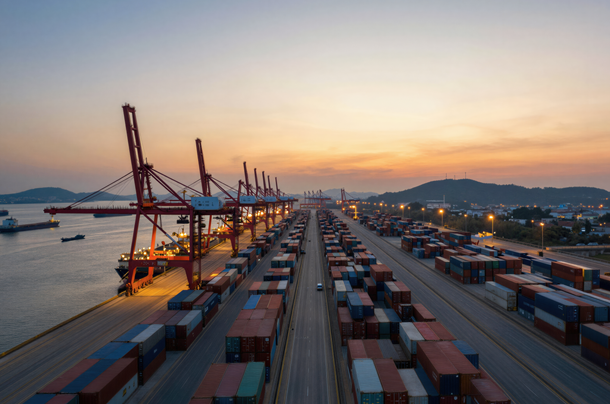
Port route expansion continuously improves trade accessibility. Qingdao Port opened five new direct ASEAN routes in the first half of the year, lifting its total number of ASEAN routes to more than 50. The port now offers high-frequency direct shipments to major ASEAN ports in Vietnam, Thailand, Indonesia and Malaysia, with up to six Southeast Asian cargo vessels berthing at the terminal on peak days.
Chinese manufactured goods maintain strong market competitiveness in Southeast Asian markets. Benefiting from upgraded product quality, independent innovation capabilities and RCEP tariff reductions, Chinese equipment and consumer goods enjoy growing market recognition among overseas merchants. In the first half of the year, Qingdao Port’s exports to ASEAN saw outstanding growth across key categories, with new three-strategy product exports jumping 163.5% year on year, commercial vehicle exports rising 55.1%, and ship exports surging 160.9%.
Customs clearance facilitation measures accelerate two-way trade circulation. Huangdao Customs has launched dedicated green channels for fresh agricultural products, implementing priority document review, accelerated inspection and rapid detection to shorten the clearance cycle for time-sensitive fresh goods. Efficient customs services enable fresh fruits, aquatic products and other characteristic ASEAN commodities to enter the Chinese market rapidly.
In the first half of 2026, the total import and export volume of Qingdao Port with ASEAN reached 255.63 billion yuan, a year-on-year increase of 11.8%. Steady growth in imports of ASEAN agricultural products and resource goods enriches domestic market supply. Moving forward, continuous optimisation of regional logistics networks and further release of RCEP policy potential will sustain the high growth momentum of China-ASEAN trade and deepen mutually beneficial economic and trade cooperation.
热门内容推荐