West African States Endorse Nigeria–Morocco Atlantic Gas Pipeline at ECOWAS Summit
On July 20, 2026, leaders of the Economic Community of West African States (ECOWAS) have taken a significant step toward advancing one of Africa’s largest energy infrastructure projects by endorsing the Nigeria–Morocco Atlantic Africa Gas Pipeline (AAGP) during their Summit in Freetown, Sierra Leone.
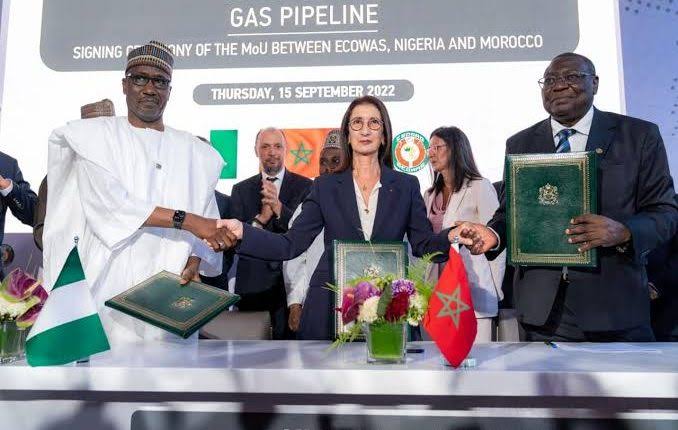
The Heads of State and Government witnessed the signing of the Intergovernmental Agreement (IGA), providing the legal and institutional framework for the development of the approximately 6,800-kilometre pipeline. The project is designed to transport Nigerian natural gas along Africa’s Atlantic coast to Morocco, where it will connect to the existing Maghreb-Europe Gas Pipeline, creating a potential export route to European markets while strengthening regional energy access.
The agreement formalizes the collective support of ECOWAS member states for a project initially launched as a bilateral initiative between Morocco and Nigeria. It was first proposed by King MOHAMMED VI of Morocco and the late Nigerian President Muhammadu BUHARI, and continues to receive the backing of Nigerian President Bola Ahmed TINUBU. The project is jointly developed by Morocco’s National Office of Hydrocarbons and Mines (ONHYM) and the Nigerian National Petroleum Company Limited (NNPC Ltd.).
Once completed, it will cross thirteen African countries and is expected to transport up to 30 billion cubic metres of natural gas annually. Project developers estimate that up to half of this volume could supply Morocco and Europe, with the remainder serving regional markets.
The signing of the agreement represents a significant institutional step for the project, shifting it from a bilateral initiative to a regional undertaking backed by ECOWAS member states. The next phase will include the establishment of a project company headquartered in Casablanca and a Pipeline Higher Authority based in Abuja, ahead of investor mobilization and the final investment decision. Morocco and Mauritania, which are not ECOWAS members but are directly involved in the project, are expected to sign the agreement separately during a future ceremony in the presence of the Nigerian President.
Estimated to cost around 25 billion USD, the Atlantic Africa Gas Pipeline aims to strengthen regional energy security, expand electricity generation, support industrial development and foster greater economic integration across West Africa. According to ONHYM and NNPC Ltd., the main technical, environmental and engineering studies have now been completed, allowing the project to move progressively into its operational development phase. The first sections of the pipeline are expected to become operational in the early years of the next decade.
While financing and implementation remain key challenges before construction can advance at full scale, the agreement signed in Freetown represents one of the most significant milestones achieved by the project since its launch.
Source: Moroccan News Agency.
热门内容推荐