China’s AI industry expands rapidly with industrial integration upgraded under 2026 digital-model synergy initiative
China’s artificial intelligence sector has maintained robust expansion with continuously improved industrial scale and application capacity, delivering solid technical and industrial support for the high-quality development of the real economy. Released at the main forum of the 2026 World Artificial Intelligence Conference, the latest industrial indicators demonstrate comprehensive growth in core industrial scale, computing power infrastructure, enterprise cluster development and industrial intelligent transformation coverage.
Current industrial statistics show that China’s core AI industry scale has exceeded 1.2 trillion yuan, with more than 6,200 registered AI enterprises operating across the industrial chain. National intelligent computing power scale has reached 2185 EFLOPS, forming a high-performance computing infrastructure system that supports large-scale model training and industrial scenario deployment. The country’s humanoid robot industry has built a complete product matrix, with over 140 complete machine enterprises launching more than 400 diversified products. The penetration rate of artificial intelligence applications among industrial enterprises above designated size has surpassed 30%, reflecting the steady deepening of intelligent manufacturing transformation.
Relevant industrial authorities will further drive high-quality AI industrial development and empower the upgrading of various economic sectors. Continuous industrial optimisation and technological iteration will turn artificial intelligence into a core driving force for high-quality economic growth. Systematic industrial policies and innovative mechanism reforms will be advanced in three key dimensions to consolidate industrial foundation, expand scenario applications and optimise industrial ecology.
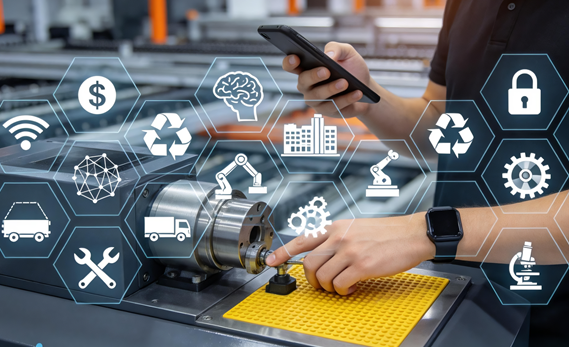
Industrial technological innovation capacity will be further strengthened via in-depth integration of scientific and technological research and industrial iteration. New manufacturing innovation centres targeting artificial intelligence sectors will be established to support collaborative breakthroughs in computing power, algorithms and industrial data. The national digital-model synergy initiative will be fully implemented to remove technical barriers restricting industrial AI landing.
In-depth integration between artificial intelligence and manufacturing industries will be accelerated to expand large-scale industrial application scenarios. Practical training programmes for humanoid robots and embodied intelligence will be rolled out to bridge the gap between technical research and industrial demands. Systematic docking mechanisms will continuously promote the popularisation and iterative upgrading of AI technologies in traditional manufacturing scenarios.
Standard system construction and industrial ecological optimisation will be advanced steadily. Authorities will accelerate the formulation of key industrial standards and launch pilot ethical review mechanisms for artificial intelligence technologies. High-performance open-source large models will be opened to global developers and industrial users to share China’s intelligent technological achievements with global industrial ecosystems.
According to official documents jointly issued by competent authorities in April 2026, the national digital-model synergy initiative focuses on key industrial sectors including steel, petrochemical and non-ferrous metal industries. The initiative targets the development of highly applicable AI scenarios and professional industrial models tailored to manufacturing operational mechanisms. Systematic institutional arrangements aim to form a mutually reinforcing circulation mechanism covering data accumulation, model iteration and scenario application by the end of 2026, empowering the high-quality progress of new industrialisation.
Industry analysts point out that the digital-model synergy mechanism builds a closed-loop evolutionary system for industrial artificial intelligence. Industrial models can dynamically adapt to complex and changeable manufacturing scenarios through real-time operational data feedback. The mechanism enables AI technologies to fit authentic industrial operational logic rather than relying solely on general algorithms, achieving dynamic calibration amid equipment ageing, technological adjustment and working condition fluctuations.
The continuous optimisation of data collection standards and model iteration logic effectively narrows the gap between theoretical algorithms and on-site industrial practices, improving the practical adaptability of intelligent models. Standardised data specifications and model templates formed via the initiative support rapid replication and migration across similar production lines and industrial scenarios, reducing secondary development costs and improving the overall efficiency of industrial intelligent transformation.
The continuous improvement of China’s artificial intelligence industrial system and global technological sharing layout will further enhance the country’s participation in global AI governance and industrial collaboration. The popularisation and application of intelligent technologies will drive the upgrading of global industrial chains and deliver new momentum for the development of global new industrialisation.
热门内容推荐