China’s emerging tech trio powers global industrial upgrade with robotic, AI and biotech breakthroughs
China’s new generation of high-end industrial products, defined as intelligent robots, artificial intelligence technologies and innovative pharmaceuticals, are emerging as fresh growth drivers for the country’s overseas trade, taking over from the traditional new energy vehicle, lithium battery and photovoltaic export portfolio. These three tech sectors are securing expanding global market access through systematic technological advantages and scalable industrial capabilities.
According to official policy briefings, continuous technological breakthroughs in emerging fields are fostering new industrial clusters and economic growth momentum. The three advanced tech segments are evolving into pivotal industrial pillars, underpinned by China’s comprehensive strengths in fundamental innovation, full industrial chain autonomy and large-scale scenario implementation.
Chinese robotic enterprises are expanding global deployment across service and industrial scenarios with mature iterative mechanisms. CloudPilot robots operate steadily in hospitals across Thailand with precise intelligent path planning, gaining consistent recognition from local institutions. The firm’s intelligent agent system enables collaborative operation among robotic fleets, supporting efficient service delivery in global hospitality facilities. The brand completed 750 million delivery tasks worldwide last year, with its third-generation robots serving hotels, medical institutions and factories in more than 20 countries and regions. Its overseas revenue surged 92.1 per cent in 2025, reaching 19.06 million yuan.
Industrial robotic applications are also achieving large-scale overseas breakthroughs. Chinese intelligent robotics firms have secured orders for 2,000 customised humanoid robots for shoe manufacturing scenarios, marking the industry’s shift from technical demonstration to practical deployment in complex industrial environments. Robotic technologies are iterating continuously through closed-loop upgrading mechanisms, with joint laboratories established overseas to optimise product performance based on real operational pain points. Independent intelligent agent systems enable closed-loop service execution without manual intervention, strengthening core competitiveness in global market expansion.
Customs data shows China exported 10.377 million specialised robots in the first five months of this year, with a total export value of 19.99 billion yuan, covering over 150 countries and territories. Robotic products developed in China are optimised and upgraded through massive domestic manufacturing scenarios, obtaining real operational data to empower technological iteration, forming unique industrial advantages unavailable in most overseas research environments.
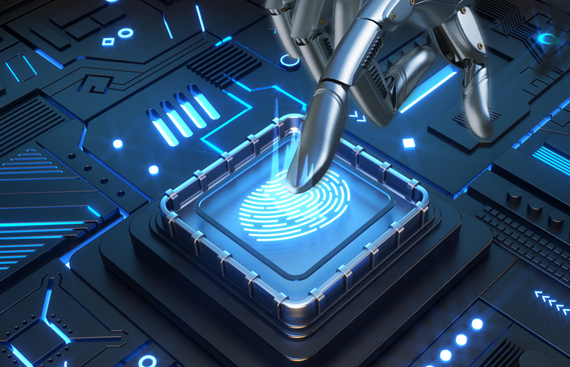
China’s artificial intelligence industry is shifting from individual technological breakthroughs to systematic capability building, replicating mature infrastructure and industrial integration models worldwide. Independently developed intelligent agent system Milkyway secured the top ranking in the international FutureX evaluation benchmark this March, outperforming multiple mainstream overseas AI systems. Domestic research institutions have acquired comprehensive capabilities in full-scale general large model training and rapid iteration of cutting-edge AI technologies.
Chinese AI infrastructure solutions are gaining widespread favour in the Middle East and other regions. Local institutions are accelerating industrial transformation from traditional energy centres to digital infrastructure hubs, adopting China’s high-density liquid cooling technologies to build power-computing coordinated computing centres. Localised solution adaptation based on regional energy endowments and industrial demands supports sustainable development of overseas digital infrastructure.
China’s industrial AI transformation delivers far higher efficiency than global average levels, with technological iteration translating into manufacturing productivity and scale effects within 12 to 18 months. Domestic industries actively embrace upgraded AI technologies, while overseas industrial model transitions require longer coordination cycles. Chinese enterprises are exporting integrated industrial solutions covering intelligent construction, smart vehicle systems and AI mapping technologies, receiving continuous cooperation invitations from the Middle East, Southeast Asia and Africa.
China’s innovative pharmaceutical sector is securing global market shares with first-in-class original research achievements. Clinical research findings of a domestically developed antibody-drug conjugate combination therapy were published in the Journal of Clinical Oncology in June, setting new survival records for advanced gastric cancer treatment. Domestic biotech firm Rochemont Biotech has built integrated research and development centres in China and the United States, forming a complete end-to-end drug development system with annual research investment exceeding 1 billion yuan.
The company has launched multiple high-value overseas licensing deals. Its core autoimmune drug secured overseas rights with a total transaction value of 4.23 billion US dollars last year, accompanied by equity participation from overseas partners. Its proprietary ophthalmic medicine and dual-specific antibody pipeline products have achieved successive high-value overseas authorisations, bringing substantial down payments and long-term revenue potential.
Fundamental technological breakthroughs are consolidating China’s leading position in global pharmaceutical innovation. The independently developed MegaDFT computing system, unveiled at the 2026 Zhongguancun Forum, realises atomic-level quantum mechanics calculations with a 100,000-atom hybrid functional computing capacity, covering over 99 per cent of known protein systems for precise quantum chemical analysis. Open-source promotion of the system will drive technological progress in life sciences and global pharmaceutical research.
Targeted national industrial policies support coordinated development of artificial intelligence, robotics and innovative pharmaceutical industries, breaking isolated sectoral governance models and forming systematic institutional support. Chinese high-tech sectors are evolving from simple product exports to comprehensive output of technological systems, clinical solutions and industrial operational standards, further consolidating the country’s core influence in global cutting-edge industrial competition.
热门内容推荐