China’s National Power Load Hits Record High Amid Summer Heatwaves
According to official energy monitoring data, China’s national electricity load reached a record high of 1.551 billion kilowatts on 14 July. State Energy Group registered a peak generation load exceeding 197 million kilowatts, accounting for more than one-eighth of the country’s total power consumption and setting a new historic benchmark for its power supply capacity.
Persistent high temperatures have swept across most regions of China in mid-July, driven by the northward and westward expansion of the subtropical high-pressure belt and peripheral sinking airflow from tropical cyclones. Large areas of Sichuan-Chongqing, central and eastern China recorded maximum temperatures above 37 degrees Celsius, triggering a sharp surge in power demand from industrial production and residential cooling usage.
State Energy Group has rolled out targeted power guarantee measures to cope with the peak summer power demand. It has closely tracked real-time meteorological changes and power load fluctuations, optimised operational scheduling and unit regulation, and actively arranged generating units to ramp up output during peak hours. On the evening peak of 14 July, the group’s thermal power unit operation rate stood at 88 per cent, with 17 thermal power subsidiaries maintaining a load rate above 80 per cent. All operational units delivered stable and sufficient power output to fully underpin the country’s peak electricity consumption needs.
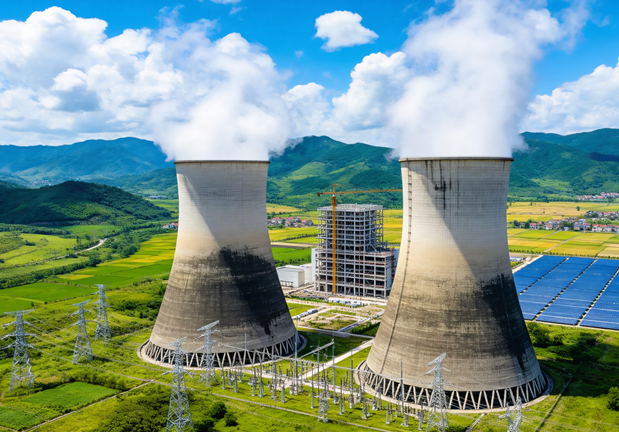
Since the start of the summer power guarantee period, State Energy Group has launched special deployment meetings and implemented 17 key measures covering six major aspects of power supply assurance. Its power operation monitoring centre has continuously tracked typhoon paths and rainstorm early warnings, strictly enforced flood prevention and safety management protocols, and maintained stable coal stockpiles for thermal power plants. Dynamic risk control and refined equipment operation management have ensured reliable output of all power generation facilities.
All regional power subsidiaries have strengthened daily equipment maintenance and inspection to seize favourable power generation opportunities. Twenty subsidiaries have achieved year-on-year growth in power generation output. Guodian Power has generated over 70 billion kilowatt-hours of electricity, while Ningxia Power’s power generation volume has surpassed 50 billion kilowatt-hours. The group has activated emergency response plans 86 times throughout the summer period. Operational teams in Zhejiang, Jiangsu, Shandong and other regions have adhered to on-duty patrol mechanisms, intensified equipment monitoring and emergency material reserves, and steadily coped with the impact of Typhoon Bavi on regional power operations.
To further consolidate regional power supply capacity, State Energy Group has accelerated the commissioning of new power generation units since June. The newly commissioned facilities include 1.67 million kilowatts of thermal power units such as Unit 5 of Dingzhou Power Plant and Unit 5 of Cangdong Power Plant, 1.08 million kilowatts of hydropower represented by Unit 3 of Shuangjiangkou Hydropower Station on the Dadu River, and 495,000 kilowatts of new energy power capacity. The expanded installed capacity will continuously reinforce the grid’s peak regulation and emergency support capabilities during the ongoing summer power consumption peak.
热门内容推荐