China’s energy supply remains stable amid global market volatility, green transition accelerates
Against a backdrop of turbulent geopolitics and volatile global energy markets through the year, energy supply and consumption within China maintain relative stability. Senior officials from national statistical authorities confirm that energy supply operated smoothly in the first half of the year, while the share of clean energy consumption rose steadily. Faster progress in the low-carbon energy shift and improved supply resilience provide robust support for stable economic activity and household energy demand.
Domestic self-supply capacity continues to strengthen. Industrial output data for the first half reflect solid fundamentals across core energy sectors. Industrial enterprises above designated size produced 2.37 billion tonnes of raw coal, with a daily output of 13.07 million tonnes, marking the second-highest level recorded for the same period in history. Coal fulfils its role as the primary domestic energy source and delivers reliable baseline supply. Crude oil and natural gas output set new records for the first six months. Producers turned out 109.43 million tonnes of crude oil and 133 billion cubic metres of natural gas, as operators stepped up efforts to expand reserves and lift production nationwide.
Electricity generation registered steady growth, with industrial power output reaching 4.8 trillion kilowatt-hours, an increase of 3.5 per cent year-on-year. Output from clean power sources including hydropower, nuclear power, wind and solar energy rose by 4.6 per cent. Since March, geopolitical tensions in the Middle East have severely disrupted global energy supply chains. China has boosted domestic production while diversifying import channels. Stable output of major energy commodities and controllable import arrangements ensure sufficient energy to meet industrial and residential demand. The balanced operation of coal, crude oil, natural gas and power generation demonstrates strong capacity to withstand external market shocks.
The country’s total installed power generation capacity exceeded 4 billion kilowatts, hitting 4.04 billion kilowatts by the end of June, representing a 10.8 per cent annual rise. Solar installations stand at 1.27 billion kilowatts, up 15.8 per cent, while wind power capacity reaches 680 million kilowatts with an 18.5 per cent increase. The threshold of 4 billion kilowatts was crossed in late May, surpassing the combined installed capacity of the United States, the European Union, India, Japan and Russia. Non-fossil power forms the main source of new capacity additions. More than 1.9 billion kilowatts of renewable installations offer powerful support for midday peak electricity demand.
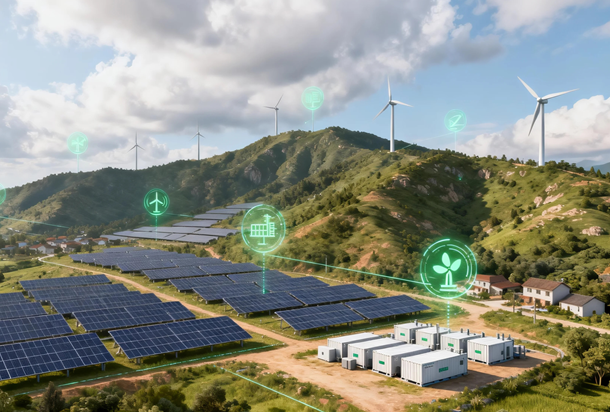
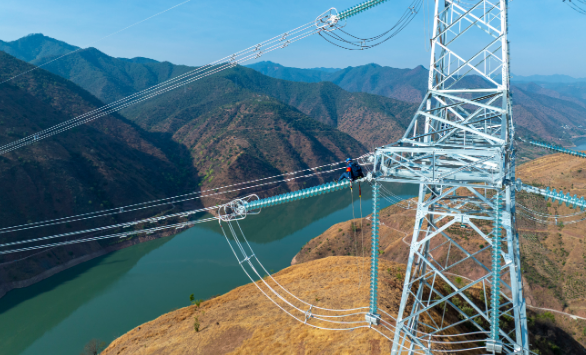
Supportive infrastructure develops alongside expanding renewable capacity. Construction of ultra-high voltage transmission lines, pumped hydro storage and new energy storage facilities proceeds at pace, enabling newly built renewable projects to deliver power reliably to load centres. China operates the world’s largest ultra-high voltage grid with the highest voltage specifications and most complete technical frameworks. Forty-six ultra-high voltage projects, comprising 22 alternating current and 24 direct current schemes, have been completed. Inter-regional transmission capacity tops 340 million kilowatts, covering one-fifth of electricity demand across central and eastern regions. The network eases power shortages in eastern hubs and creates more room for renewable energy generated in western areas to be consumed locally.
Ongoing industrial energy efficiency upgrades and structural green transformation slow the growth rate of overall energy consumption. Preliminary estimates show total energy consumption grew by 2.7 per cent in the first half of the year, 1.2 percentage points lower than the first quarter. Slower consumption expansion coincides with improved energy efficiency, as economic growth generates greater value per unit of energy used. The energy consumption mix continues to evolve. Coal maintained its consumption share from the same period a year earlier, while oil’s share fell by 1.0 percentage point and clean energy’s share climbed by the same margin. Less than one-fifth of total energy consumption comes from oil, and coal accounts for more than half of demand. Rising uptake of wind and solar power limits the spillover impact of swings in international crude prices on domestic markets.
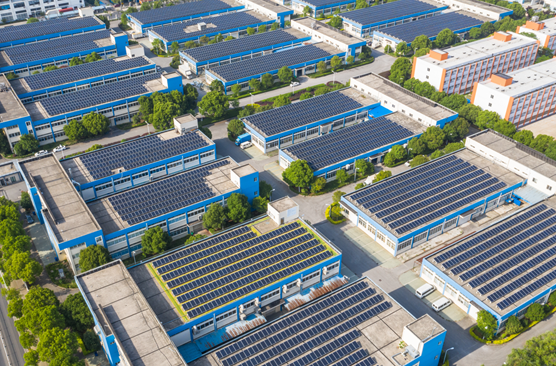
Nearly four out of every ten units of electricity consumed across China come from renewable sources. Relevant authorities will advance energy conservation and clean substitution on the consumption side. More efficient industrial technologies will be deployed, alongside low-carbon retrofits for traditional industries and efficiency improvements for high-energy computing infrastructure. Targets for minimum renewable energy consumption will be enforced, and green upgrades for heating systems will move forward. Plans include developing roughly one hundred national-level zero-carbon industrial parks and expanding building-integrated photovoltaic systems. Market mechanisms for green electricity and green certificates will mature, alongside improved accounting standards for non-fossil power consumption. Refined policy frameworks unlock further opportunities for energy saving and emissions reduction across production and daily life, lifting the low-carbon standard of energy use nationwide.
热门内容推荐