Special tourist trains boost cultural and tourism integration across Northeast China
A themed online publicity campaign focusing on railway-driven cultural and tourism development has recently been launched across Inner Mongolia and Liaoning provinces, showcasing new development momentum for integrated cultural and tourism industries supported by railway infrastructure in Northeast China. Amid the booming summer tourism season, dedicated tourist trains operated in the forest and grassland areas have become a prominent mobile landscape, injecting fresh vitality into regional summer consumption.
China Railway Shenyang Bureau has further advanced the integration of railway transportation and cultural tourism during the peak summer travel period. It has polished its branded "Shentie Holiday" tourist train services and launched multiple high-quality travel routes covering diverse scenic zones. The dual-path and multi-spot operational model caters to rising market demand for high-quality and immersive travel experiences, unlocking the full potential of regional tourism resources and empowering the revitalisation of cultural and tourism sectors in Northeast China.
Northeast China boasts abundant and diverse tourism resources, including vast grasslands, dense forests, coastal landscapes and border scenery. Geographical barriers have long restricted the full release of these high-quality resources. The branded tourist trains break regional travel limitations with mature railway network advantages. Adopting an operational model of daytime sightseeing and overnight travel with fixed sleeper berths, the services deliver one-stop customised travel solutions. Professional on-board explanations, interactive cultural activities and tailored services suitable for elderly and child travellers enrich the entire journey experience, transforming traditional transit travel into immersive leisure travel and blending scenic views with convenient transportation services.
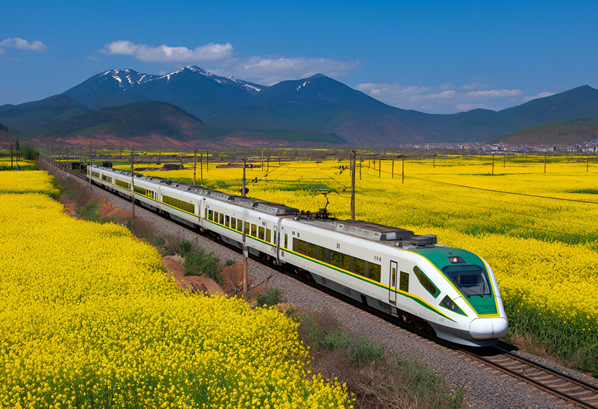
Expanding high-speed railway networks continue to underpin the rapid growth of railway-based cultural tourism. As mass tourism shifts from single sightseeing to diversified experiential consumption, "Shentie Holiday" trains balance long-distance in-depth travel and short-distance leisure tours. The routes connect grassland and forest summer resorts in northern regions, border ethnic cultural landscapes in eastern areas and coastal leisure belts in southern zones. Integrated travel routes allow tourists to access multiple types of tourism experiences including summer retreats, ethnic cultural exploration, border sightseeing and coastal recreation within a single trip, converting regional transportation advantages into tangible tourism development benefits.
The expanding fleet of tourist trains serves as a vital driver for local economic recovery along railway lines. Innovative railway tourism operations efficiently activate idle transportation capacity. Continuous passenger flows brought by the trains boost catering, accommodation and retail sectors in towns, scenic spots and commercial areas along the routes, stimulating the vitality of county-level cultural tourism economies. Railway networks build two-way channels connecting tourist sources and scenic resources, steadily converting passenger flow into industrial growth and forming efficient development corridors for coordinated regional progress.
The sustained popularity of the special tourist trains stems from continuous operational innovation and service optimisation in railway cultural tourism sectors. By capturing evolving public travel preferences, the operator optimises route layouts and upgrades supporting facilities, translating large-capacity and all-weather transportation strengths into core competitive advantages for cultural tourism integration. Railway services have moved beyond traditional passenger transportation functions to develop distinctive development models that empower high-quality tourism growth.
The "Shentie Holiday" tourist trains serve as a practical carrier for railway sectors to support people’s livelihoods and cultural tourism development. Ongoing optimisation of characteristic tourism products based on extensive railway networks will keep linking Northeast China’s natural scenery and ethnic cultural resources. Stable passenger flow conversion will further fuel the robust and sustainable development of the region’s cultural and tourism industries.
热门内容推荐