World Record Set as China’s Largest High-Speed Rail TBM Completes Yangtze River Crossing on Chongtai Tunnel
Major construction progress was marked on 30 July at the Chongtai Yangtze River Tunnel, a vital section of the Shanghai-Chongqing-Chengdu High-Speed Railway built by China Railway. Pioneer, the world’s largest-diameter high-speed rail tunnel boring machine independently developed domestically, reached the No.2 vertical shaft on the southern bank of the Yangtze after full river crossing, establishing a new global benchmark for single-head continuous tunnelling of 11.325 kilometres using a 15-metre-class large-diameter TBM.
Pioneer is fitted with a cutterhead measuring 15.4 metres across, integrated with the self-developed I-TBM intelligent control platform that delivers millimetre-precise alignment regulation during excavation. A second bespoke piece of heavy machinery, Qiming, the world’s largest-diameter vertical shaft boring machine, finished the excavation of the southern receiving shaft with an excavation diameter of 24 metres and a shaft depth of 56.08 metres.
Stretching 14.25 kilometres in full, the Chongtai Yangtze River Tunnel links Chongming District of Shanghai and Taicang in Jiangsu Province. The scheme endures five extreme construction constraints: ultra-long driving distance, super-large excavation diameter, 350km/h design operating speed, ultra-deep water-bearing strata and oversized vertical shafts. It stands as the highest-standard and largest-scale high-speed rail river-crossing tunnel under construction across China at present.
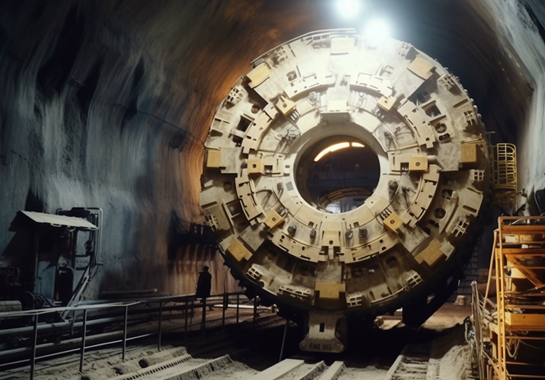
Construction teams deployed a full suite of intelligent building technologies covering real-time sensing, prefabricated segment production, automated tunnelling and centralised digital site management. A three-layer integrated protective framework combining structural sealing, synchronous grouting and round-the-clock intelligent monitoring was implemented to navigate high-risk zones including Yangtze river dykes, main shipping lanes and the national protected spawning reserve for Coilia nasus. The machine passed through the tunnel’s deepest riverbed section, 89 metres below the water surface, without structural or operational disruption.
The technical innovations trialled on the tunnel address the complex geological and hydraulic challenges of major river crossings for high-speed infrastructure. Integrated digital monitoring systems maintain constant oversight of tunnel pressure, segment deformation and water seepage throughout the excavation cycle, while prefabricated concrete lining segments cut on-site construction cycles and boost structural stability.
Once fully completed, the tunnel will connect Chongming Island to the national high-speed rail network for the first time. Rail journeys from Chongming via Taicang to Baoshan District in Shanghai will take just 17 minutes, streamlining intercity passenger travel within the Yangtze River Delta metropolitan cluster. Regional transport planners will roll out coordinated timetable frameworks that integrate the new tunnel into wider intercity rail schedules across Shanghai and Jiangsu provinces. Transport engineering teams will also document the full set of technical standards trialled on the project to form replicable construction protocols for future large-scale underwater high-speed rail tunnels worldwide.
热门内容推荐