World-Record Yangtze River Power Tunnel Kicks Off Construction for Inner Mongolia-Shanghai Green Energy Transmission
Construction has officially commenced on the receiving-end river-crossing supporting project of the Kubuqi Desert power transmission initiative linking Inner Mongolia and Shanghai on 30 July in Chongming District, Shanghai. Serving as a critical throat node for long-distance clean power delivery, the infrastructure will channel renewable and thermal power generated from the Kubuqi Desert new energy base in northern China into Shanghai’s main power grid after crossing the Yangtze River waterway.
The river-crossing tunnel stretches from Chongming Island in Shanghai to Taicang in Jiangsu Province, comprising a 12.2-kilometre underwater tunnel crossing the main Yangtze channel and a 1.83-kilometre onshore tunnel section. Boasting a tunnel diameter of 14.6 metres and a maximum burial depth of approximately 95 metres beneath the riverbed, the project sets multiple global benchmarks in power tunnel engineering, including the largest design transmission capacity, biggest GIL equipment installation scale, longest single shield tunnelling distance, largest tunnel diameter and deepest riverbed burial depth worldwide for dedicated power tunnels.
With a total investment of 11.264 billion yuan, the whole project is scheduled for full completion and operational launch by the end of 2030. Equipped with four sets of 500kV GIL pipe corridors and reserved space for future capacity expansion, the tunnel forms a key linkage connecting Chongming Island and the core load centres of Shanghai’s mainland power network.
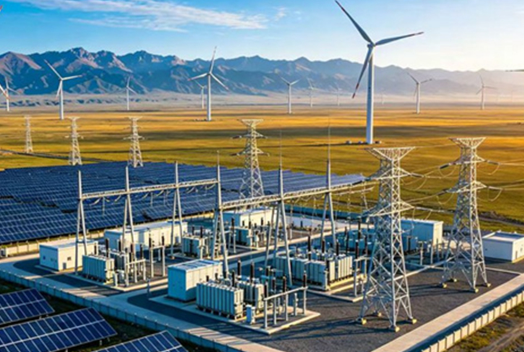
Upon commissioning, the major energy artery will deliver over 40 billion kilowatt-hours of bundled wind, solar and thermal power annually from the Kubuqi Desert base to Shanghai, with clean renewable power accounting for more than 50 per cent of the total transmitted electricity volume. The cross-regional power transmission scheme strongly supports the large-scale development and outward delivery of clean energy from desert, Gobi and barren land bases across northern China.
The project constitutes a vital component of Shanghai’s energy structure upgrading and high-quality urban development layout. It optimises the city’s power supply structure, diversifies external clean energy supply channels, and underpins the steady advancement of Shanghai’s urban functional construction and industrial green transformation. Subsequent construction phases will adopt advanced underwater tunnelling and intelligent monitoring technologies to ensure safe, efficient and high-standard project delivery, continuously improving the cross-regional allocation capacity of clean energy resources.
热门内容推荐