China accelerates intelligent connected vehicle rollout with leading tech and improved global standards
Artificial intelligence innovation is driving rapid deployment of intelligent connected vehicles across China, supporting diversified commercial scenarios including scenic area shuttle services, unmanned distribution and automatic parking, while substantially upgrading user travel experience.
Industry penetration data shows robust uptake of intelligent driving functions across the domestic passenger vehicle market. The penetration rate of mass-production passenger cars equipped with L2-level combined driving assistance functions has reached 70.5 per cent year to date. Vehicles fitted with navigation-on-autopilot functions register a penetration ratio of 34.2 per cent, while the first batch of L3 conditional autonomous driving vehicles have commenced road trials in designated regions.
The 2026 World Intelligent Connected Vehicles Conference is scheduled to take place in Beijing in October. Industrial and information technology authorities confirm that China has continuously optimised policy frameworks, industrial standards, technological innovation mechanisms, product admission protocols and demonstration application systems, establishing prominent global advantages within the intelligent connected vehicle sector.
The global intelligent vehicle industry is currently undergoing a critical transition from auxiliary driving solutions to full autonomous driving, featuring intensified market competition, diversified technical exploration and industrial ecosystem restructuring. Major economies and international organisations including the United Nations have released targeted industrial strategies and regulatory upgrades to accelerate autonomous driving research and commercial adoption. China leverages systematic policy guidance, iterative technological breakthroughs, cross-industry collaboration and vast market demand to secure top-tier global development status in the intelligent connected vehicle sector.
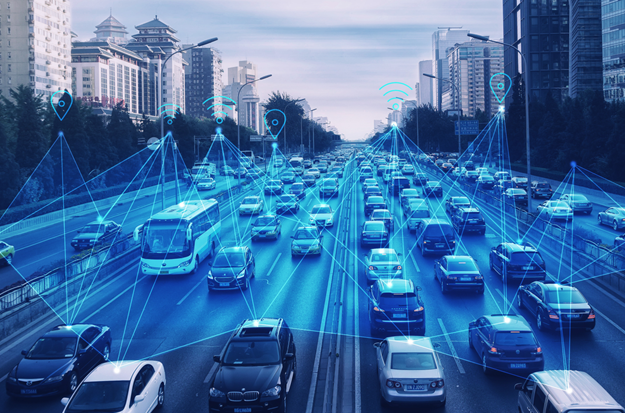
Chinese automotive enterprises have achieved world-class progress in core technological segments. Domestic solutions lead global development in vehicle-road-cloud integration architecture and multi-modal human-machine interaction systems. Breakthroughs in end-to-end autonomous driving large models enable continuous technological iteration. Core components including lidar sensors and high-computing chips have formed a mature industrial cycle featuring scaled mass production, cost optimisation and technological iteration.
National road testing infrastructure continues to expand. China has issued more than 20,000 intelligent vehicle testing licences and opened over 57,000 kilometres of designated testing roads, accumulating a total testing mileage exceeding 220 million kilometres. Twenty national vehicle-road-cloud integration pilot cities have deployed more than 60,000 sets of intelligent roadside equipment, delivering operational support for over 100,000 vehicles.
Regional industrial clusters are expanding steadily with complete upstream and downstream supply chains. Hubei province has built a major national industrial base for new energy and intelligent vehicles, hosting 25 complete vehicle manufacturers and more than 2,400 component suppliers with a local industrial matching rate exceeding 95 per cent. Domestic automotive brands leverage self-developed intelligent electric architectures and hybrid technologies to strengthen market competitiveness in the global high-end vehicle segment.
Sichuan and Chongqing regional industrial clusters focus on core technological research, standard formulation and quality improvement, leading and participating in 148 international, national, industrial and institutional standards. Local adoption rates of intelligent driving functions remain above national averages in core industrial regions. Beijing records a 77.5 per cent penetration rate of L2-level driving assistance functions for new passenger vehicles in the first half of 2026, reflecting comprehensive industrial upgrading, leading autonomous driving application and cross-regional collaborative development.
Standardised regulatory systems and deepened international cooperation underpin sustained industrial expansion. Global intelligent vehicle regulations remain fragmented amid rapid scaled commercialisation, bringing challenges in safety supervision, standardised research procedures and product publicity norms. China has accelerated systematic standard construction, with more than 120 standard projects progressing through institutional review, approval and release procedures.
A multi-layer standard system has taken shape, combining guiding recommended standards, mandatory bottom-line regulations and coordinated international norms. A total of 27 national and industrial standards targeting autonomous driving scenarios are under development, with 13 officially released and implemented. China has participated in the formulation of United Nations global technical regulations for autonomous driving systems, with formal adoption completed in June 2026. Updated regulations refine technical requirements for L3 and L4 autonomous driving, clarifying safety thresholds, user training specifications and unified testing standards to standardise corporate research and development procedures.
China continues advancing two-way coordination between domestic industrial norms and international technical rules. Accumulated experience from national testing programmes, market admission trials and large-scale commercial operations has been integrated into global unified technical frameworks. Updated mandatory national standards further refine technical indicators, expand testing scenarios and strengthen performance assessment mechanisms to stabilise industrial development expectations and support corporate global layout.
Relevant national authorities will compile the 15th Five-Year development plan for new energy and intelligent connected vehicles, implement national standardisation strategies and accelerate breakthroughs in core key technologies. Ongoing progress will cover standard iteration, international regulatory coordination, vehicle-road-cloud integration pilots, market admission reform and industrial ecosystem optimisation to drive high-quality industrial advancement.
The upcoming 2026 World Intelligent Connected Vehicles Conference will showcase cutting-edge industrial achievements through an integrated model combining conferences, exhibitions, road tests and industrial docking activities. Frontier innovations including in-vehicle artificial intelligence, automotive robotic systems and collaborative vehicle-road-cloud technologies will be displayed to strengthen global industrial exchange and cooperation.
Chinese automotive enterprises deploy AI and big data operational platforms to deliver over-the-air upgrades, intelligent charging and digital services for global users. Cross-industry partnerships with transportation and communication operators support innovative business models including autonomous ride-hailing and smart logistics, consolidating long-term global brand value.
Industry institutions highlight data empowerment as the core driver for algorithm iteration and scenario expansion. Roadside perception and communication infrastructure support complex traffic scenario data collection for autonomous driving training. Research into world model data generation technology is progressing to enhance algorithm adaptability under extreme weather, complex road conditions and high-risk traffic scenarios.
New national industrial action plans support scaled AI application within transportation systems. Industrial upgrades follow a systematic development path covering technological breakthroughs, scenario verification, commercial implementation and institutional optimisation. Intelligent driving technologies are being verified and promoted across highway freight, campus shuttle, port logistics and bulk cargo transportation scenarios. Continuous expansion of application scenarios and policy optimisation will validate technological maturity through real-world traffic operations and foster new industrial business formats.
热门内容推荐