China’s first offshore flexible DC wind project tops 10 billion kWh power output
The world’s largest and highest-voltage offshore wind project adopting flexible direct current transmission technology has exceeded 10 billion kilowatt-hours in cumulative power generation, according to information obtained from China Three Gorges Corporation on August 11.
Located in the Huangshayang sea area of Rudong county, Nantong city in Jiangsu province, the 800 MW Jiangsu Rudong offshore wind farm stands as Asia’s first offshore wind project delivered via flexible DC transmission. Fully connected to the grid in 2021, the facility has maintained stable and safe operation for more than 1,600 consecutive days, with equipment availability rate reaching 99.5 percent.
The 10 billion kWh of clean electricity generated by the project is sufficient to cover the annual domestic power demand of around four million local households. Its operational performance has translated to tangible environmental and economic gains, saving three million tonnes of standard coal consumption and cutting 7.4 million tonnes of carbon dioxide emissions throughout its operational period.
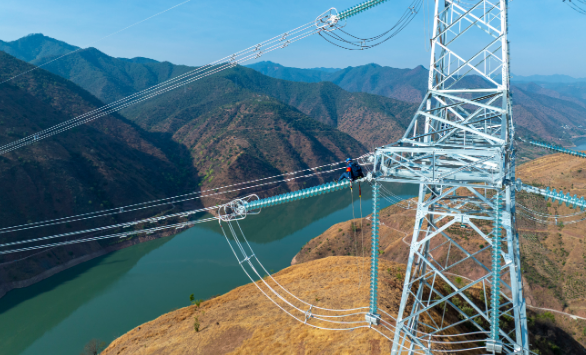
Flexible DC transmission has emerged as a viable technical solution to tackle the bottlenecks restricting deep-sea wind power development. Traditional alternating current transmission struggles to support large-capacity and long-distance power delivery for far-offshore wind farms due to inherent technical limitations. As the world’s first ±400 kV offshore flexible DC transmission project, the Rudong scheme has pioneered innovative operational practices without mature industry precedents for reference.
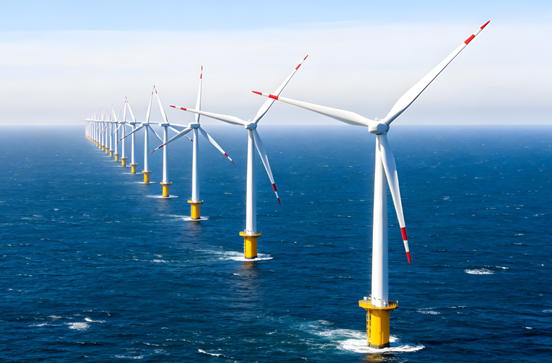
The project team has overcome multiple operational challenges posed by harsh offshore conditions, including high humidity, high salinity and frequent typhoon activities at sea. It has also resolved technical difficulties stemming from new-generation flexible DC equipment, sophisticated system integration and complex emergency response procedures. Key technological breakthroughs have been achieved in stabilising ±400 kV flexible DC system operation, monitoring and maintaining long-distance submarine cables, and regulating power output under heavy-load conditions.
The technological upgrades have delivered remarkable economic benefits in power transmission. Compared with conventional AC transmission solutions, the project has reduced transmission line losses by 1.2 percentage points, cutting cumulative power transmission costs by over 735 million yuan.
The continuous stable operation and technical iteration of the landmark project provides solid practical verification for the large-scale promotion and application of high-capacity, long-distance flexible DC transmission technology in China’s offshore wind sector. Its mature operational model and technical experience will support the scaled development of deep-sea wind resources across coastal regions in the future.
热门内容推荐