Wuhan’s Liangzi Lake Emergency Water Plant Comes Online, Establishing Dual‑source Water Supply for Southern Urban Districts
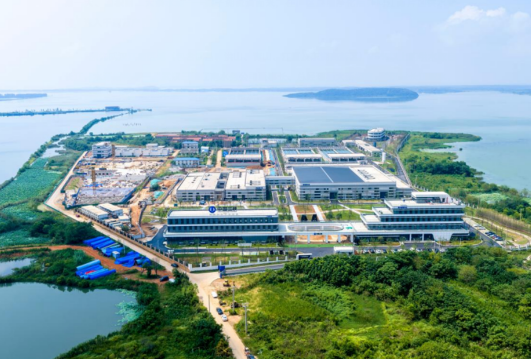
According to China Energy News, the Liangzi Lake Emergency Water Plant in Wuhan, the largest facility adopting the dual‑membrane process in central China, has been completed and put into operation on 8 August. Jointly invested and built by Changjiang Environment Group under China Three Gorges Corporation and Wuhan Water Group, this project brings into being a dual‑source water‑supply pattern drawing water from both the Yangtze River and Liangzi Lake for southern Wuhan, delivering robust safeguards for drinking‑water security for 6.6 million residents across the area.
Water is drawn from Liangzi Lake, Hubei Province’s largest‑volume and second‑largest freshwater lake, through two 1.6‑metre‑diameter intake pipelines running 15 metres underground within the intake pump house. After multi‑stage purification on‑site, treated water flows into municipal pipe networks to serve households across southern Wuhan.
The plant boasts a designed total capacity of 500 000 cubic metres per day. Under regular conditions, it operates at 200 000 cubic metres daily to meet routine demand for Jiangxia Miaoshan and central East‑lake High‑tech Zone. In emergency scenarios, operators can switch instantly to full‑load output of 500 000 cubic metres each day. Through six dedicated emergency water‑supply corridors, treated water can reach the whole of southern Wuhan within 48 hours.
Southern Wuhan, covering Wuchang, Hongshan, Qingshan, Jiangxia and East‑lake High‑tech Zone, previously obtained more than 95 per cent of its raw water from the Yangtze River. Such heavy reliance on a single water source created tangible risks for urban water security. The commissioning of the Liangzi Lake Emergency Water Plant enables mutual backup and mutual replenishment between the Yangtze River and Liangzi Lake water sources, addressing long‑standing weaknesses in regional water supply capacity.
Smart‑driven facilities underpin substantial improvements in finished‑water quality. Inside the ultrafiltration workshop, nine sets containing 1 584 membrane modules run continuously. Ultrafiltration threads with pore sizes far smaller than one‑ten‑thousandth of a human hair trap suspended solids, bacteria and viruses. Nanofiltration membranes with 1‑2 nanometre pores remove minute hazardous substances including antibiotics and algal toxins, while retaining beneficial minerals for human consumption.
Tailored to seasonal algal growth characteristics of Liangzi Lake, the facility deploys a full‑process combined treatment workflow: pre‑oxidation, dissolved‑air flotation sedimentation, ozone‑activated carbon filtration, ultrafiltration, nanofiltration and disinfection. Finished‑water turbidity stays stably below 0.1 NTU, one‑tenth of the national standard threshold, with overall water quality exceeding national statutory requirements.
Operators monitor equipment and water‑quality parameters from a central control hall supported by an AI‑enabled internet‑of‑things platform. The system carries out round‑the‑clock surveillance of water quality and equipment conditions. Data analytics support automatic chemical dosing and precise regulation of pumps, fans and other installations to sustain reliable plant performance and consistent output quality.
Eco‑friendly construction techniques have minimised disturbance to Liangzi Lake’s natural environment. Two parallel underwater intake pipelines were laid via long‑distance lake‑bed pipe‑jacking works, navigating complex composite geological strata mixing hard weathered rock, semi‑rock‑mud layers and soft silty soil. Engineers deployed a technical suite combining slurry‑balance pipe‑jacking machines with intelligent deviation correction, high‑precision orientation tools and real‑time monitoring. Polymer‑enhanced slurry wall‑protection technology stabilised excavations and limited disruption to the lake ecosystem.
A low‑disturbance, zero‑pollution construction philosophy ran through the whole project. Nearly 80 per cent of water‑transmission pipelines are buried underground using pipe‑jacking methods. Fully‑enclosed working sites prevent slurry leakage. Construction wastewater undergoes three‑stage sedimentation before being recycled. Processed residual mud is reused for on‑site backfilling to achieve zero liquid discharge. Real‑time monitoring keeps construction vibration and noise within acceptable ranges to lessen impacts on surrounding habitats.
The plant will maintain flexible operational modes switching between routine and emergency output levels. Smart control systems will keep optimising chemical dosing and equipment scheduling. Operational teams will continue routine water‑quality monitoring and equipment maintenance, while the dual‑source configuration will reinforce urban water‑supply resilience across southern Wuhan.
热门内容推荐