Southern China power load hits new record amid prolonged summer heatwave
According to China News Service, power demand across regions served by China Southern Power Grid peaked at 278 million kilowatts at 17:16 on 11 August, marking the fifth all‑time high recorded so far this year. On the same day, Guangdong province registered its fourth‑highest peak on record at 176 million kilowatts, with several prefecture‑level cities including Yangjiang, Shantou, Jieyang and Chaozhou also setting local power‑use milestones.
Cross‑provincial spot power purchases from State Grid reached a maximum import of 1.96 million kilowatts on 11 August, delivering a total volume of 11.02 million kilowatt‑hours to shore up supply during the sharp demand surge. Power networks covering Guangdong, Guangxi, Yunnan, Guizhou and Hainan remain operating in stable condition at present.
Strong economic activity alongside persistent high temperatures have brought forward and prolonged peak‑demand periods within the Southern Power Grid footprint. More than twenty separate all‑time load records have been registered across the five provincial areas from the start of 2026 up to 11 August.
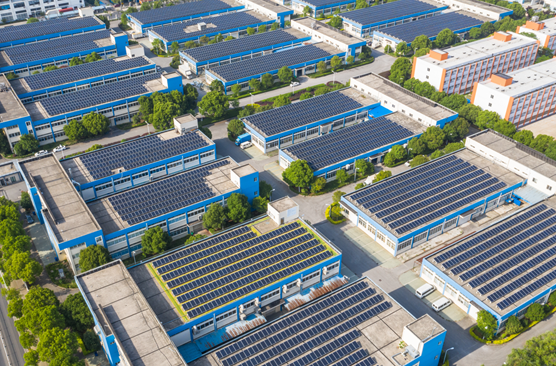
System operators have rolled out multiple operational measures to cope with elevated consumption and tight supply margins. Key power generation assets such as Unit 2 of Taipingling Nuclear Power Station in Guangdong and Unit 3 of Changjiang Nuclear Power Station in Hainan have come online on schedule, lifting the total installed capacity under China Southern Power Grid past 700 million kilowatts. Dispatch teams ensure maximum output from all available generating units; all standby coal‑fired facilities in Guangdong have been brought into full operation. Solar photovoltaic output exceeded 100 million kilowatts during mid‑day peaks on 11 August, with new‑energy penetration climbing above 39 per cent across the service territory.

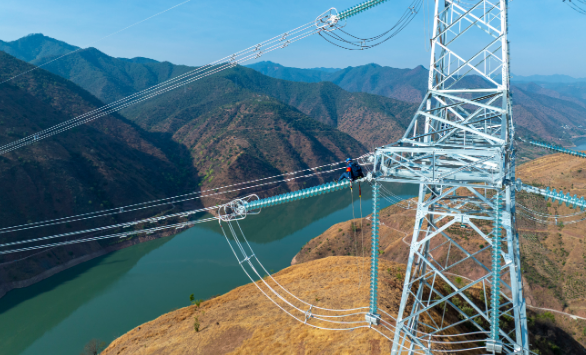
A nationwide unified electricity market facilitates cross‑regional allocation of power resources. The southern regional market maintains consistent daily operations, while trading links with State Grid and Mengxi Grid expand in both scale and frequency. In April, cross‑grid spot imports from State Grid ran for fifteen consecutive days. The Yunxiao direct‑current transmission channel hosted China’s first commercial transmission‑right market transaction in June, balancing physical power delivery and orderly market functioning. On 16 July, surplus power from southern provinces flowed via inter‑network spot trades to supply‑strained regions including Jiangsu, Zhejiang and Sichuan, with a maximum transfer capacity hitting 1.91 million kilowatts. Evening‑peak spot imports on 11 August drew power supplied by Fujian, Sichuan, Shaanxi, Chongqing and Shanxi.
Cross‑border power exchanges are also playing a practical part in summer supply security. Hydropower and renewable generation sourced from Laos support grid needs in Guangdong and Yunnan throughout the peak‑consumption season. On 6 August, hydroelectric power from Laos travelled through the China‑Laos 500 kV interconnection link to reach the Guangdong‑Hong‑Kong‑Macao Greater Bay Area. This power delivery arrangement is set to continue until late October, with an expected total delivery volume of roughly 600 million kilowatt‑hours, and the traded volume participates directly in the southern regional electricity market.
Internal projections from China Southern Power Grid indicate that power consumption will stay elevated through August. Forecasters place the possible monthly peak as high as 283 million kilowatts, representing a 12.9 per‑cent rise compared with the equivalent period last year. Digital operational tools will underpin ongoing resource co‑ordination to sustain secure and reliable electricity delivery for the duration of the summer demand period.
热门内容推荐