Humanoid robots take on penalty‑shoot‑out challenges at CMG‑hosted robotics contest
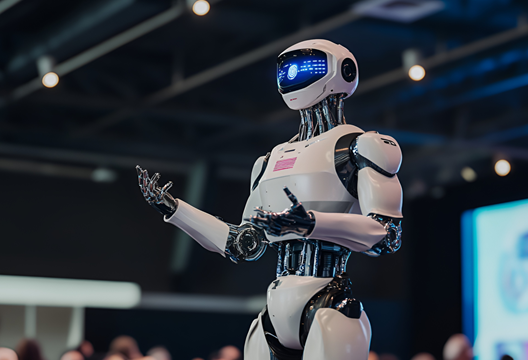
According to Economic Information Daily, the CMG Robot Challenge – Penalty Shoot‑Out, organised by China Media Group, has got under way. XianDong Lightyear, founded by core members of Tsinghua University’s RoboCup football‑robot championship‑winning squad, has brought along PrimeBOT Q1, a humanoid robot under SWANCOR New Materials. Competition‑grade motion‑control algorithms have been deployed onto this commercial‑grade robot platform, delivering practical real‑world evidence for the industrial roll‑out of embodied‑intelligence technology.
Built around football penalty scenarios, this competition adopts two‑way human‑versus‑robot match‑ups: robots shoot against human goalkeepers, and human competitors take penalties against robotic keepers. Unlike controlled laboratory settings, outdoor competition conditions bring variable lighting, uneven pitch surfaces and complex human‑robot interaction. These conditions place stringent demands on robotic vision perception, dynamic balance, motion control and environmental adaptability, forming a genuine testing ground for the comprehensive performance of humanoid machines.
The contest opens its floor to members of the public, football supporters and young people, who may sign‑up on‑site to compete directly against robots. Supplementary youth‑focused science outreach sessions run alongside matches, using hands‑on demonstrations to exhibit cutting‑edge developments in embodied intelligence and humanoid‑robot technology. Competitive displays, technical validation and public science engagement operate side‑by‑side throughout the event.
Football represents a rigorous benchmark for humanoid‑robot dynamic control, calling for full‑body co‑ordination, stable dynamic balance, environmental awareness and real‑time decision‑making capabilities. The core team behind XianDong Lightyear originates from Tsinghua University TH‑MOS robot‑football squad. Its developers have accumulated proven dynamic‑control expertise through RoboCup competitions and keep pursuing pathways to translate tournament‑proven algorithms into commercially viable solutions.
Significant practical barriers still hamper the transfer of university‑led robotics research into industrial products. Research‑built robot hardware carries high unit costs and cannot readily scale for mass production. Many commercial robot platforms retain closed‑system architectures, denying algorithm teams low‑level access for motion‑control tuning and slowing down real‑world adoption of mature research‑derived algorithms. XianDong Lightyear concentrates on commercialising competition‑tried robotic technology, developing motion‑control modules, intelligent perception systems, multi‑agent decision frameworks and integrated hardware‑and‑software packages to deepen integration between algorithm stacks and mass‑produced humanoid‑robot hardware.
Leveraging PrimeBOT Q1’s open hardware‑software architecture, the technical team completed interface adaptation, parameter calibration and system debugging within tight timescales to port RoboCup‑derived motion‑control algorithms onto this commercial robot. During live match sessions, PrimeBOT Q1 independently completes pitch positioning, posture adjustment and run‑up‑and‑shoot sequences. When deployed as a goalkeeper, the robot tracks ball trajectories in real‑time, anticipates direction shifts, redistributes its centre of mass and executes lateral dives, demonstrating consistent dynamic‑motion performance.
Prior technical trials covering autonomous dribbling, precision shooting and interactive performances have already been completed, with related demonstrations featured at the World Artificial Intelligence Conference. Participation in the CMG Robot Challenge further validates algorithm robustness and environmental adaptability under complex outdoor conditions.
XianDong Lightyear has assembled a complete algorithm toolkit spanning gait generation, virtual simulation, full‑body motion control and dynamic environmental interaction. Its software stacks support multiple open humanoid‑robot platforms and supply ready‑made motion‑control solutions for research groups and industrial clients. PrimeBOT’s in‑house HDK and SDK open development platforms supply developers with standardised mass‑produced robot hardware, accessible motion‑programming interfaces and supporting simulation utilities. These resources spare algorithm developers heavy‑duty work on fundamental hardware development and allow greater focus on motion‑algorithm innovation, shortening cycles for research findings to translate into market‑ready products.
Competition within the humanoid‑robot sector is shifting away from isolated hardware benchmarks and towards holistic platform ecosystems and real‑world scenario capabilities. The joint demonstration by PrimeBOT and XianDong Lightyear on this national‑level competition platform establishes a practical workflow covering university‑based algorithm development, validation on open robot hardware, rigorous tournament‑level field testing and downstream industrial deployment. This workflow supplies replicable practical references for the commercial advancement of embodied‑intelligence systems.
热门内容推荐