China lays out five‑year roadmap for its new‑generation power system
According to the National Energy Administration, China’s top energy regulators have rolled out concrete targets for 2030, including raising non‑fossil energy’s power‑generation share to 50 per cent, enabling high‑level accommodation of over 2.8 billion kilowatts of new‑energy capacity, and completing charging‑network infrastructure capable of supporting more than 110 million electric‑vehicles nationwide. Jointly issued by the National Development and Reform Commission and the National Energy Administration, the 15th Five‑Year Plan for New‑Type Power System Construction defines development goals and key tasks for China’s new‑type power system over the next five‑year window.
Fundamental shifts will reshape every segment of China’s power landscape over the coming five‑year window. Power‑supply mixes will tilt further toward non‑fossil generation as the dominant contributor. Grid infrastructure will evolve away from rigid conventional networks toward flexible, interconnected architectures. Demand‑side load profiles will grow far more dynamic and responsive rather than remaining comparatively static. The plan maps out coordinated measures covering generation, networks and end‑user loads, with system‑wide arrangements designed to drive high‑quality progress throughout the power industry.
Green power generation capacity keeps expanding across diverse geographical zones. Vast photovoltaic arrays stretch across desert and gobi terrain to tap abundant solar resources. Offshore wind‑turbine arrays harvest marine winds along coastal waters, while large hydropower installations along major river basins sustain long‑established west‑to‑east power transmission flows. Installed non‑fossil generating capacity exceeded 2.3 billion kilowatts by the close of 2025, representing 61.7 per cent of overall installed capacity, with non‑fossil sources accounting for 42.3 per cent of total electricity generated that year.
Optimising power‑generation structures and accelerating the formation of a low‑carbon power supply framework ranks among the core missions for new‑type power system development.
Specific capacity milestones are embedded within the policy framework for 2030. Conventional hydropower capacity will reach roughly 410 million kilowatts, nuclear‑power installations around 110 million kilowatts, and combined biomass, concentrating solar‑thermal, geothermal and marine‑energy capacity approximately 65 million kilowatts. Pumped‑storage hydropower plants are set to hit 160 million kilowatts of installed capacity. Once these targets are realised, non‑fossil energy will reach 65 per cent of total installed power capacity and supply half of national electricity output, functioning as dual mainstays for both installed capacity and actual power delivery, and speeding up the low‑carbon transition of power generation portfolios.
Sustained large‑scale roll‑out of new‑energy capacity brings persistent integration challenges. The national utilisation rate for new‑energy generation stood at 94.6 per cent in 2025, a fall of 1.7 percentage points year‑on‑year. Annual grid‑connected additions of new‑energy capacity will stay above 200 million kilowatts through the 15th Five‑Year Plan interval, mounting ongoing pressure on consumption and absorption capabilities. Pursuing large‑scale new‑energy expansion while addressing temporal‑spatial mismatches between renewable output and power demand stands as a core practical challenge for national power development.
The plan balances new‑energy development with reliable consumption by introducing multi‑faceted instruments. It promotes differentiated development and absorption models across varied scenarios, fosters emerging business patterns for local on‑site consumption, and refines institutional mechanisms governing new‑energy integration. Policy design accounts for the geographical reality where rich renewable‑resource zones sit far from major load centres, advancing both cross‑regional power delivery and local‑use pathways to reconcile development potential with operational quality.
Coal‑fired power retains its critical stabilising function for energy security in the current phase. Systematic upgrades and energy‑saving low‑carbon retrofits for coal‑fleet units form an essential strand of the overall blueprint. The document adopts a systemic approach that coordinates existing and newly‑built assets, facilitates technical overhauls and upgrades, and serves broader decarbonisation objectives. It unlocks efficiency gains from existing installations and opens fresh decarbonisation avenues for coal generation, fostering complementary, mutually supportive dynamics between coal‑fired assets and new‑energy facilities.
Transmission and distribution infrastructure forms the physical backbone enabling stable, efficient operation of the new‑type power system. National grid networks are transitioning from synchronous alternating‑current rigid large‑scale frameworks towards smarter, more flexible and co‑ordinated operational structures. Booming output from integrated‑circuit manufacturing, artificial‑intelligence applications and computing clusters, alongside emerging formats such as zero‑carbon industrial parks and direct green‑power connections, will push electricity demand higher at an approximate annual growth rate of five per cent throughout the period, placing fresh requirements on grid performance.
Robust, low‑carbon, resilient and intelligent power‑network infrastructure underpins socio‑economic activity and builds competitive strengths for industrial advancement. Grid resilience and decarbonisation performance underpin national risk‑mitigation capabilities and security safeguards. Industrial upgrading and rising living standards create demand for superior‑quality power services, while extreme‑weather events call for networks capable of switching smoothly between routine and emergency‑response modes. Narrowing regional development gaps also requires more equitable access to power infrastructure across urban and rural areas.
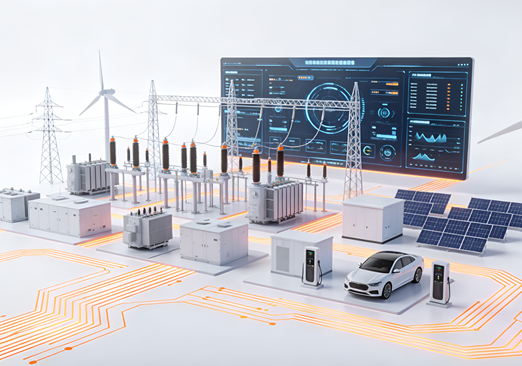
The plan advances a multi‑tier grid architecture that unifies main transmission lines, distribution frameworks and micro‑grid units. Major trunk networks operate as long‑distance power‑transport corridors safeguarding system‑wide stability. Distribution networks serve as intermediate arteries for voltage transformation and local power allocation. Micro‑grids function as self‑governing local circuits to realise on‑site consumption and end‑user supply security, with all three tiers operating in tandem.
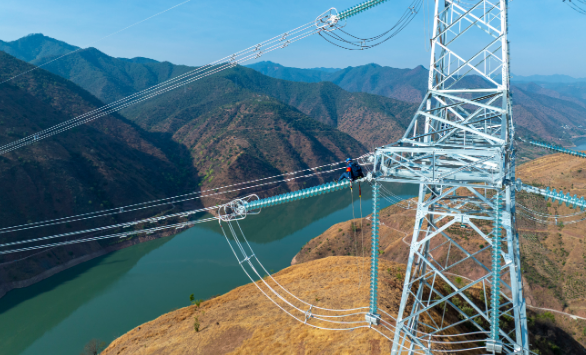
Optimised national power‑flow arrangements will take shape under the policy. Large‑scale renewable bases located in the north‑eastern, north‑central and north‑western desert‑gobi zones, together with integrated hydro‑wind‑solar complexes in the south‑west, will channel electricity towards load‑intensive regions across central, eastern, Sichuan‑Chongqing and southern territories. Offshore‑wind and coastal nuclear installations will primarily serve nearby local consumption centres.
West‑to‑east power transmission constitutes a core national energy artery. Cumulative transmission capacity for this cross‑country initiative will surpass 420 million kilowatts by 2030, while distribution networks will support 900 million kilowatts of distributed new‑energy connections. Further theoretical research into innovative grid architectures will support 100‑per‑cent‑renewable long‑distance transmission projects originating from desert‑gobi resource zones. Technical advances will lift cross‑regional delivery capacity for renewable generation and strengthen multi‑level co‑ordinated operation across main‑grid, distribution and micro‑grid layers. Additional priorities include reinforcing regional backbone frameworks, constructing offshore transmission corridors, building resilient distribution systems, rolling out intelligent micro‑grids for diverse operating contexts, establishing smart power‑dispatching mechanisms, and scaling up electric‑vehicle charging‑network build‑out.
Demand‑side participation will unlock further system‑operational potential. A landmark demonstration project combining source‑grid‑load‑storage integration, direct green‑power supply and bilateral power trading has seen its first turbine units connect successfully to national grids in Ningxia, delivering green electricity directly to computing‑intensive loads and deepening practical integration between power and computing resources.
Electricity‑consumption patterns are shifting from passive usage towards proactive, flexible user‑side engagement. Cross‑sector synergies between power and computing, transport, heating and hydrogen‑production applications are gaining ground in multiple regions. The plan pursues intelligent, low‑carbon and integrated development. It encourages greater interactive responsiveness from end‑user loads, supports virtual‑power‑plant expansion, boosts public awareness of energy‑saving and carbon‑reduction practices, and elevates green‑power adoption and general electrification levels, opening market space for scaled‑up new‑energy‑related business models. Tailored integrated pathways for power production and consumption are to be formulated for distinct industrial sectors, covering power‑computing synergy, thermal‑electric and hydrogen‑electric coupling, and power‑transport integration.
Green‑hydrogen production powered by renewables expands available outlets for new‑energy absorption and serves as a key prop for new‑energy consumption. By prioritising thermal‑electric and hydrogen‑electric coupling as one of its core tasks for cross‑sector energy integration, the plan taps into complementary strengths of different energy forms in conversion, storage and utilisation. It broadens the pool of adjustable resources, expands channels for new‑energy consumption and unlocks more pathways for green substitution.
Artificial intelligence acts as a core driving force behind the new round of technological and industrial revolution, and represents a vital source of new‑quality productive forces within the power industry. The plan sets out special arrangements for embedding artificial intelligence across all links and procedures of new‑type power system construction. It advances AI‑powered pilot demonstrations for power‑sector integration, pushing AI applications from scattered trial deployments toward systematic roll‑out. Such progress will improve capacity to manage the complexities of large‑scale power systems as implementation moves forward.
热门内容推荐