China expands national carbon‑trading market to more high‑emission sectors
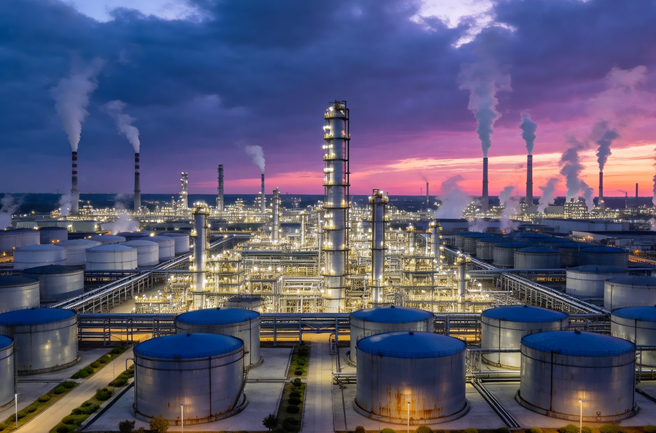
According to the State Council Information Office, China’s national carbon‑emission trading scheme will extend its coverage beyond power generation, steel, cement and aluminium smelting to include petrochemical and chemical industries, bringing roughly 80 per cent of the country’s carbon‑dioxide emissions under effective regulatory control. The update was shared at a themed press conference marking the opening phase of the 15th Five‑Year Plan period on 13 August.
The 15th Five‑Year Plan represents a critical phase for China to peak its carbon emissions, with policies anchored on carbon peaking and carbon neutrality to accelerate comprehensive green transformation across economic and social spheres. The national carbon market acts as a core market‑based instrument for climate action, delivering tangible emission‑reduction outcomes since its launch. Cumulative trading volumes on the platform have exceeded 930 million tonnes by the end of July, supporting cost‑effective industrial decarbonisation and driving broader low‑carbon shifts.
Senior officials from the Ministry of Ecology and Environment have outlined steps to advance carbon‑market development. The national voluntary emission‑reduction market will offer incentives for carbon‑reduction and carbon‑sink projects across wider sectors. Carbon pricing will steer low‑carbon technologies and industrial advancement, embedding the principle that carbon emissions carry costs while emission reductions generate returns.
Regulatory and technical frameworks will be strengthened throughout the 15th Five‑Year Plan cycle. Authorities aim to deliver accurate carbon‑emission accounting, building robust foundational datasets for carbon measurement. Work will proceed on carbon‑footprint datasets and standards, alongside improved carbon‑labelling and certification mechanisms. Expanded real‑world applications for product carbon footprints will support engagement with international carbon‑related trade rules and mutual recognition of standards, fostering greener supply chains and consumption patterns.
Policymakers will adopt coordinated, multi‑sector measures for carbon‑peaking efforts. Dual controls on total carbon‑emission volumes and emission intensity will apply, steering low‑carbon progress within energy, manufacturing, transport and built‑environment sectors. Measures will advance synergies between pollution abatement and carbon reduction, enhance ecosystem carbon sinks and tighten oversight over non‑carbon‑dioxide greenhouse gases, covering methane, industrial nitrous oxide and fluorinated gases.
Work will also advance on building a climate‑resilient society. Authorities will refine institutional frameworks for climate adaptation, boost policy coordination, expand climate observation capacity and carry out impact‑and‑risk assessments. Implementation‑feedback mechanisms will be established to lift societal resilience and mitigate harm driven by extreme weather events.
The recently issued Beautiful China Construction 15th Five‑Year Plan sets concrete operational targets. It mandates steady enlargement of the national carbon‑trading scheme and its participant base, targeting an approximate 3 per cent drop in product‑specific carbon emissions for covered installations. Major climate‑action projects are mapped out for greenhouse‑gas mitigation and climate adaptation. Retrofits for energy‑saving and decarbonisation will roll out across priority industries, while cleaner transport penetration in key regions and sectors is set to reach 85 per cent. Incentives for green consumption will also be reinforced.
Clearer road‑maps for carbon‑market expansion signal steady, deliberate delivery of China’s carbon‑peaking and carbon‑neutrality objectives. Market‑led allocation of emission‑reduction resources helps contain overall societal decarbonisation expenditure and creates sustained momentum for low‑carbon‑technology innovation, carbon‑accounting services and green‑finance industries.
热门内容推荐