China scales up green hydrogen capacity amid global low-carbon energy transition
According to the National Energy Administration’s newly released China Hydrogen Energy Development Report 2026, the global hydrogen industry is stepping out of pilot exploration and entering a phase of orderly large-scale development during the 14th Five-Year Plan period. Global hydrogen production and consumption reached approximately 109 million tonnes in 2025, marking a year-on-year increase of 3 per cent. Renewable hydrogen production is gaining rapid industrial traction, with China and Europe together contributing more than 70 per cent of the world’s installed renewable hydrogen generation capacity.
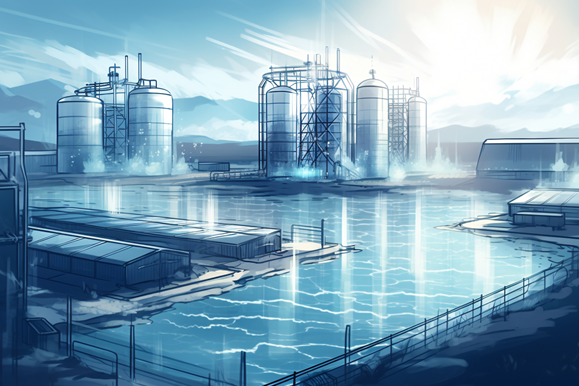
China’s hydrogen sector has delivered steady industrial progress with continuous expansion of clean hydrogen production capacity. Official statistics show that China’s completed and under-construction renewable hydrogen production capacity has exceeded 1.4 million tonnes per annum as of June 2026. Operational capacity stands above 270,000 tonnes per annum, while ongoing projects account for over 1.13 million tonnes per annum, with water electrolysis serving as the dominant technical route for green hydrogen production.
The country’s hydrogen infrastructure network continues to improve on a steady basis. By June 2026, China had built around 620 hydrogen refuelling stations nationwide. Multiple port facilities have been equipped with green ammonia and green methanol refuelling capabilities, and the operational length of pure hydrogen pipelines has surpassed 350 kilometres, laying solid infrastructure support for cross-regional hydrogen supply and industrial application.
Diversified industrial demonstration and verification scenarios have been fully advanced across key sectors. In the transportation sector, hydrogen energy applications are being piloted in long-haul heavy-duty transport and low-altitude economy scenarios. Around 8,000 fuel cell vehicles were deployed in 2025, more than ten hydrogen-powered fuel ships have been put into operation, and over 30 types of hydrogen-driven unmanned aerial vehicles have completed release or test flights.
Industrial low-carbon transformation powered by hydrogen is accelerating steadily. Innovative large-scale development models centred on green hydrogen, green ammonia and green methanol are being widely explored. Operational domestic production capacity of green ammonia and green methanol has reached 700,000 tonnes per annum and 380,000 tonnes per annum respectively. In the power sector, both distributed and large-scale hydrogen energy applications are being developed in parallel, with the installed capacity of operational fuel cell power generation and combined heat and power projects maintaining stable growth.
Hydrogen energy carries unique and irreplaceable strategic value in the new energy system. It effectively addresses renewable energy consumption bottlenecks and facilitates deep decarbonisation across end-use industries. The energy carrier enables long-term and cross-seasonal energy storage, replaces traditional fossil fuels in high-temperature industrial production, and innovates raw material supply for green chemical industries. Its multi-energy coupling characteristics further support the integrated optimisation of the modern energy system, driving sustained low-carbon transformation of the economic and social development model.
热门内容推荐