China’s National Railway Records Steady Freight Growth and Robust Cross-Border Train Operations
China State Railway Group has released operational figures showing stable expansion of national railway freight business across the first seven months of the year, delivering solid logistical support for stable economic operation and reduced social logistics costs.
Between January and July, China’s national railway system handled 2.35 billion tonnes of freight, marking a year-on-year increase of 0.7 per cent. The average daily wagon loading volume reached 187,000 units, representing a 2.1 per cent year-on-year rise. Centralised and unified scheduling across the integrated national railway network has enabled targeted capacity allocation for key materials essential for people’s livelihoods and industrial stability.
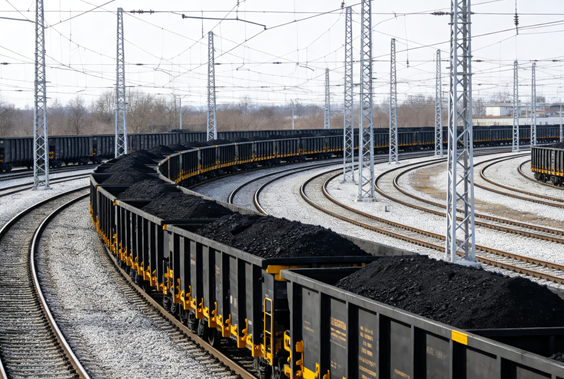
Railway departments have prioritised energy supply transportation throughout the peak summer power consumption period. A total of 1.216 billion tonnes of coal were transported via national railways in the seven-month period, including 813 million tonnes of thermal coal. Sustained high coal stockpiles at directly supplied power plants have underpinned reliable power supply during seasonal demand surges. Customised logistics services have been launched through strategic cooperation with leading enterprises in key sectors. Dedicated transport solutions for individual corporate clients have driven diversified cargo growth, with grain freight volume up 7.4 per cent, chemical cargo volume up 5.4 per cent, and textile freight volume surging 21.4 per cent year on year.
Systematic reforms and operational innovation have optimised multi-modal transport layouts nationwide. The railway sector launched 165 new integrated rail-sea freight services with unified document procedures, covering 71,600 standard containers and lifting rail-sea container throughput by 9.2 per cent year on year. Road-rail combined transport business achieved remarkable growth, completing 294 million tonnes of cargo volume with a year-on-year increase of 80.9 per cent.
In partnership with national supply and marketing institutions, innovative consolidated shipment models have been adopted for Xinjiang cotton outbound transportation. A total of 96 dedicated cotton freight trains have departed from Xinjiang in the first seven months, pushing regional cotton freight volume 157.3 per cent higher year on year. High-speed passenger-style freight routes have been deployed between the Beijing-Tianjin-Hebei, Yangtze River Delta and Greater Bay Area economic clusters, forming efficient interregional logistics corridors to support the development of a unified national market.
Cross-border rail freight services have maintained stable and robust operational momentum. China-Europe and China-Central Asia freight trains completed 21,570 trips in the January–July period, rising 10.3 per cent year on year. China-Europe train trips stood at 12,988, with a year-on-year growth of 17.6 per cent, while China-Central Asia train trips reached 8,582, posting a mild year-on-year increase of 0.7 per cent.
The national railway network will continue to deepen market-oriented operational reforms and upgrade multi-modal transport systems. Optimised freight product portfolios and refined scheduling mechanisms will further improve logistics efficiency and support high-quality economic and social development.
热门内容推荐