From Hazardous Wind‑gap to Digital Hub: Torli Transforms its Natural Conditions in North‑West Xinjiang
According to China Economic Net, the Laofengkou, or Old Wind Gap, sits in the north‑western part of Tacheng Prefecture in Xinjiang, forming a passage through which cold air masses sweep into the Junggar Basin between the Barluk and Urihaxayi mountains. Once renowned globally for fierce gales, the locality recorded more than 150 days annually with winds reaching Force 8 or above. Before the 1990s, it served as a vital transport corridor linking Tacheng with surrounding regions. Violent wind hazards frequently triggered accidents causing casualties, earning it the local moniker “the deadly wind‑gap”.
The landscape has undergone profound transformation within the Laofengkou ecological forest zone in Torli County, where dense woodland now stands and rustling tree canopies replace destructive gales. Early plans considered physical wind‑barriers and earthen walls, yet practical experience confirmed large‑scale ecological afforestation as the most effective mitigation measure.
Tree‑planting on stony gobi terrain posed substantial obstacles regarding soil and water supplies. Workers chipped planting pits amid gravel using steel chisels and pick‑axes, while water was trucked in from urban areas for irrigation. Successive generations of forest‑workers started with stunted, slow‑growing specimens before establishing nearly 20 million trees and shrubs across the zone. A multi‑layer shelter‑belt system integrating arbour, shrub and grass vegetation has taken shape, covering an area exceeding 100 000 mu. Ecological outcomes are tangible: peak instantaneous wind speeds have fallen from 40 metres per second to 31.7 metres per second. The number of days each year with Force‑8‑plus gales has dropped to just over 120, and local precipitation levels have risen on average by 20 per cent, reshaping the regional microclimate.
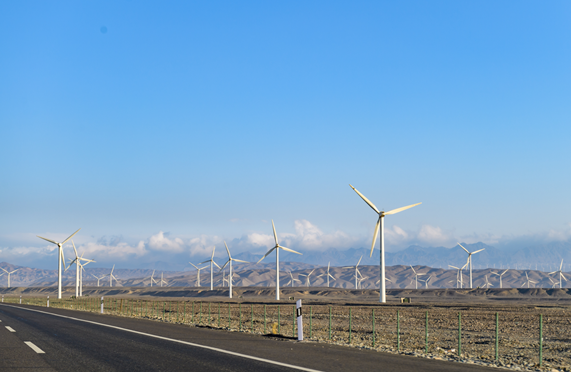
Wind resources once feared for their destructive potential are now harnessed for power generation. White turbine towers scatter across Torli’s gobi plains, their rotating blades converting wind into electricity. A 500 MW wind‑farm project with total investment of 19.59 billion yuan is entering final construction phases and is set for full‑capacity grid‑connection this October. Once operational, it will deliver 1.2 billion kWh of clean electricity each year and cut consumption of standard coal by 414 000 tonnes.
Multiple wind‑power developers have established operations across Torli County. Grid‑connected installed wind capacity has reached 3.5 GW, while projects under construction and newly registered schemes for 2026 add a further 8.68 GW. Wind‑generated power supplies sustained momentum for local economic activity.
Advancements in intelligent computing infrastructure carry the locality into a fresh development phase. Twenty‑three enterprises have settled within Torli’s intelligent‑computing park, bringing registered computing capacity totalling 85 000 Petaflops, with overall investment amounting to 240 billion yuan. One Petaflop equates to one thousand trillion computing operations each second.
High‑performance computing is an energy‑intensive industry. Torli benefits from abundant local renewable‑energy resources that keep electricity costs competitive. Geographically positioned at the heart of the Eurasian landmass, the county records average annual temperatures between six and seven degrees Celsius, which helps moderate cooling loads for server hardware and further curbs operational energy expenditure.
Transport infrastructure underpins the commercial prospects of the computing cluster. Airports, national‑level land ports, railways and national highways traverse the county, forming a multi‑modal transport network connecting domestic markets with Central Asia. The established logistical framework opens substantial market scope for exporting computing‑related digital services towards Central Asia and Europe in the period ahead.
热门内容推荐