Green‑energy Advance across Qinghai’s High‑altitude Plateau: Technology, Ecology and Integrated PV‑plus‑Pastoral Models
According to China Securities Journal, sweeping golden autumn light falls across Qinghai’s high‑altitude terrain, where robust green‑energy momentum gathers pace. Pilot XBC‑cell production lines within smart workshops in Xining keep lifting photovoltaic conversion efficiency. Vast arrays of solar panels stretch across the Talatan grasslands, turning sunlight into steady electric output. The Longyangxia Hydropower Station delivers an annual average of 60 billion kWh of clean power for households across north‑west China, while the Yangqu Hydropower Station harnesses flows from the Yellow River to generate renewable electricity.
Remarkable shifts have unfolded over the past decade. As of the end of July 2026, State Power Investment Corporation has recorded more than a fourteen‑fold rise in its installed photovoltaic capacity, exceeding 100 GW. Its overall clean‑energy installed capacity has crossed the 200 GW threshold, with clean sources accounting for roughly 75 per cent of total installations and annual generation hitting 420 billion kWh. It retains its standing as the world’s largest operator for photovoltaic, new‑energy and clean‑energy power generation.
Reporters have visited the XBC‑cell pilot production line, the Yangqu and Longyangxia hydropower facilities and the Gonghe Photovoltaic Industrial Park to observe high‑quality clean‑energy development on the plateau.
Within the XBC‑cell pilot workshop, automated guided vehicles move silently along magnetic tracks and robotic arms carry out precise operations inside sealed chambers. Ultra‑thin silicon wafers pass through multiple manufacturing stages and emerge as high‑efficiency IBC solar cells. This domestic pioneering pilot line has an annual capacity of 200 MW. It fills domestic gaps in the mass production of IBC technology and marks a fresh chapter for high‑efficiency N‑type photovoltaic hardware and smart manufacturing.
All positive and negative electrodes are relocated onto the rear face of each cell. This design eliminates shading losses caused by metal gridlines on the front surface and delivers among the highest conversion rates available today. Realising this layout required successive technical breakthroughs covering masking, laser patterning and high‑performance passivation. Multi‑year progress is clear: polysilicon‑cell efficiency stood at 18.3 per cent ten years ago, whereas modern N‑type TBC cells now surpass 26.81 per cent, with finished modules exported to European markets.
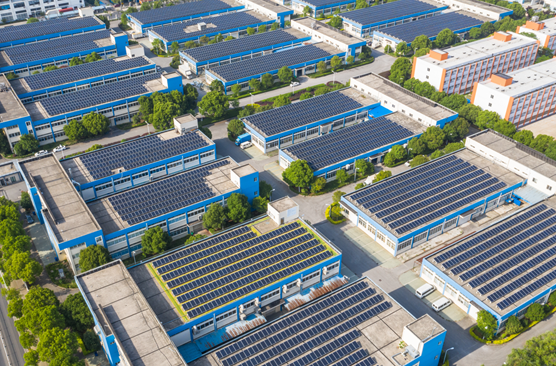
Innovation also extends beyond standalone solar cells. At the building‑integrated photovoltaic demonstration zone, photovoltaic hardware functions as construction material rather than equipment confined to desert sites. A range of BIPV building components has been deployed across thirty‑nine projects, including aesthetic curved photovoltaic roof retrofits and integrated smart‑energy bases in Xizang. Photovoltaic technology is being re‑imagined for diverse built‑environment applications.
Laboratory‑based research continues to set new benchmarks. Large‑area four‑terminal tandem modules reach 27.15 per cent efficiency, while small‑scale perovskite‑silicon tandem cells exceed 33.18 per cent. The country’s first pilot production line for photovoltaic‑module recycling achieves an overall material‑recovery rate above 95 per cent. A complete industrial‑innovation chain for solar technology has taken shape.
The Longyangxia Hydropower Station, known as the “First Great Dam on the Yellow River”, has operated for more than forty years. Stretching 1 226 metres long and rising 178 metres high, it creates a reservoir holding 24.7 billion cubic metres of water. As a key upstream facility on the Yellow River, it undertakes flood control, ice‑flood mitigation, water supply and irrigation alongside power generation. Its reservoir regulates nearly 42 per cent of the Yellow River’s total seaward discharge, greatly reducing ice‑flood risks and improving water security for downstream farmland. New wetlands spanning 600 square kilometres have formed along the river reach between Longyangxia and Qingtongxia, and sediment transport within the Yellow River has fallen by almost 61 per cent. The plant provides vital peak‑shaving and frequency‑regulation services for the north‑west China power grid amid rising shares of renewable‑energy integration.
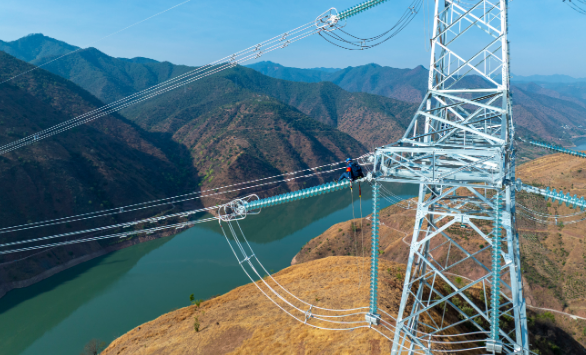
Further downstream, the Yangqu Hydropower Station pursues balanced hydropower development and ecological stewardship. Boasting 1.2 GW of installed capacity, it generates 4.732 billion kWh each year, sufficient to meet demand for roughly 1.58 million households. Annual savings reach 1.467 million tonnes of standard coal, alongside cuts of 4.41 million tonnes in carbon‑dioxide emissions. It delivers grid‑stabilising capacity for the Qinghai‑Henan ultra‑high‑voltage transmission corridor, enabling plateau‑sourced green electricity to travel vast distances.
Dam construction interrupts natural fish‑migration routes. An integrated “intelligent fish lift plus fish‑breeding station” framework has been put in place to counter this effect. Rare indigenous fish species thrive within simulated habitats. The fish lift acts as an underwater elevator; since commissioning it has safely transported 8 736 rare fish to upstream spawning grounds. The advanced breeding complex on the upper Yellow River has mastered full‑cycle breeding techniques for six indigenous fish varieties, releasing more than 660 000 fry to strengthen river‑basin biodiversity.
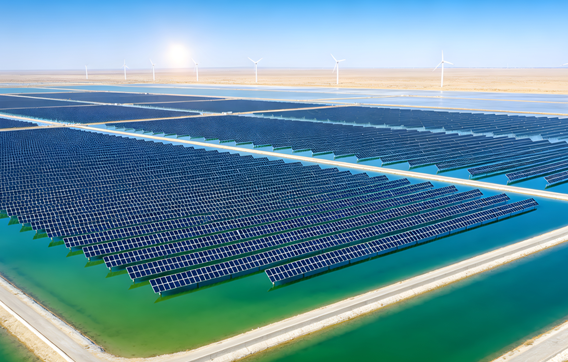
Within the expansive Gonghe Photovoltaic Park, solar panels form sprawling blue fields across the Talatan terrain. Since 2011, solar‑station construction has harnessed degraded desert land. Solar arrays moderate local conditions: more than 100 square kilometres of desertified ground have been restored, wind speeds have dropped by 40 per cent, soil‑moisture evaporation has reduced by 30 per cent and vegetation coverage has climbed from below 10 per cent to over 80 per cent.
Lush grass growth beneath panels creates operational challenges, as overgrown vegetation blocks sunlight and dry grass brings fire hazards. Local herders now graze sheep within the park boundaries. Sheep find shelter and abundant forage beneath panels, while their manure nourishes soil. Herders reduce feed expenditure and earn supplementary income through tasks including module cleaning and grass cutting. This “photovoltaics‑plus‑ecology‑plus‑animal husbandry” framework turns desert terrain into productive green space.
Covering more than 420 square kilometres, the Gonghe Photovoltaic Industrial Park hosts over seven million solar modules and serves as a large‑scale real‑world test‑bed for renewable‑energy technologies. Since 2025, multiple new‑energy installations have come online across Hainan Tibetan Autonomous Prefecture. Additional photovoltaic capacity of 1.2 GW and energy‑storage capacity totalling 615.63 MW / 2 271.29 MWh have been commissioned.
Combined deployment of solar, wind, hydro and storage assets enables plateau‑sourced clean power to be delivered across long‑distance transmission corridors. Ongoing technical breakthroughs, ecological restoration and innovative integrated‑model deployment will keep converting the region’s natural resources into sustainable energy output.
热门内容推荐