China Unveils 15th Five‑Year Plan for Oil and Gas to Boost Security and Low‑carbon Transition
China’s National Development and Reform Commission together with the National Energy Administration have published the 15th Five‑Year Plan for Oil and Gas Development, setting out pathways towards a modern oil‑and‑gas industrial system by 2030.
The document centres on two core objectives: safeguarding energy security and delivering green‑low‑carbon progress. By 2030, the industry is expected to achieve greater domestic self‑reliance, highly‑coordinated pipeline networks, flexible stockpiling capacity, low‑carbon operational patterns, safe and stable running, high‑end processing outputs, home‑grown technological breakthroughs and diversified international co‑operation.
The 15th Five‑Year period marks a vital phase for laying foundations for modernisation, alongside profound transformation within the domestic oil‑and‑gas sector. Global energy patterns continue to shift, with rising uncertainty around geopolitics, cross‑border investment and energy transit routes placing greater strain on international supply chains. Domestic social‑economic expansion and the construction of a new‑model energy system raise higher standards for secure and steady oil‑and‑gas delivery. Exploration and production now target deeper, ultra‑deep, offshore and unconventional reservoirs, calling for advances in technology, institutional reform and cross‑chain co‑ordination.
The twin priorities of energy security and low‑carbon development operate in a mutually supportive fashion. Work will step up exploration, reserves expansion and output growth, reinforce pipeline infrastructure, storage and peak‑shaving facilities and diversify import channels to bolster supply resilience. Parallel efforts will drive peak oil consumption, support clean and efficient natural‑gas utilisation, and accelerate integration between fossil‑fuel operations, renewable power, hydrogen, carbon capture, utilisation and storage and new‑form energy storage.
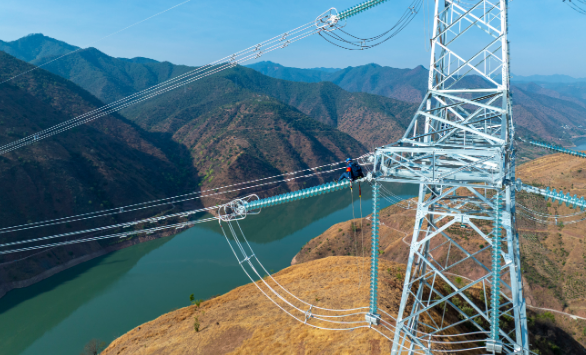
Four measurable targets for 2030 are laid out across domestic supply, infrastructure, strategic reserves and decarbonisation. Domestic oil‑and‑gas supply will reach 440 million tonnes of oil‑equivalent, with overall national output moving higher. Some 20 000 kilometres of new long‑distance oil‑and‑gas pipelines will be built during the five‑year window, lifting the total national pipeline network to 220 000 kilometres for better interconnected national coverage. Natural‑gas storage capacity will exceed 13 per cent of total national consumption, while capacity at liquefied‑natural‑gas receiving terminals and land‑based pipeline import infrastructure will keep expanding. Annual CO₂ injection via CCS and CCUS projects will hit 10 million tonnes, marking the first time this metric has featured in a five‑year sectoral blueprint.
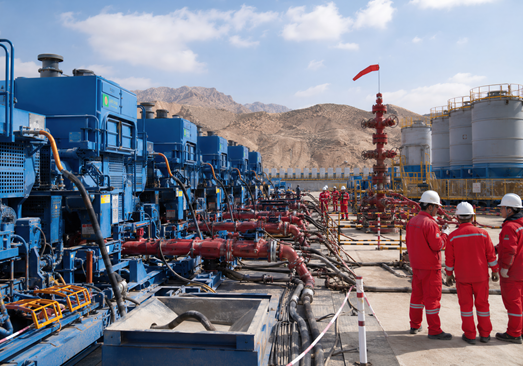
Seven sets of priority actions underpin delivery of these goals. Investment levels for field development will be maintained to deliver new production capacity. Large‑scale commercial extraction will advance for deep and ultra‑deep reservoirs, alongside accelerated development of shale oil, shale gas and deep coal‑bed methane. An offshore oil‑and‑gas enhancement programme will pursue the equivalent of 100 million tonnes of annual output from marine fields. Mature‑basin stabilisation initiatives will sustain production from long‑established oilfields, while newly‑identified blocks will ramp up output. Strategic supply bases will take shape across key resource provinces, co‑ordinating exploration, development, infrastructure and technical support to underpin national production targets.
Low‑carbon restructuring across the oil‑and‑gas industry does not rely on simple cuts to supply volumes. Policy frameworks balance security and transition, promoting greener production and consumption patterns and opening new avenues for high‑quality growth by combining traditional hydrocarbon activities with emerging technologies and business models.
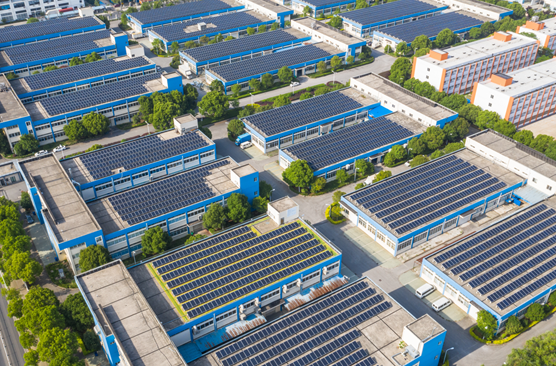
Within the 15th Five‑Year timeframe, solar, wind and geothermal installations will be developed around existing oil‑and‑gas sites to raise electrification of on‑site energy use and build low‑carbon and zero‑carbon fields. Integrated operational models combining heat extraction, multi‑source power generation, storage and coordinated source‑grid‑load‑storage systems will allow ageing hydrocarbon basins to evolve into multi‑functional sites for power generation, heat supply, energy storage and carbon sequestration.
Market vitality will be unlocked through alignment of market mechanisms and targeted public policy. Upstream reforms will adjust mineral‑right allocation procedures, increase the release of exploration blocks and bring down development costs. Mid‑stream arrangements will optimise pipeline investment frameworks, permitting private capital to participate in non‑strategic pipeline and storage‑facility construction. Regulatory oversight will strengthen fair third‑party access to pipeline assets, alongside refined national network dispatch and market‑based gas‑balancing rules. More upstream suppliers will enter the market, while municipal gas operators will pursue consolidation and standardised operations. Gas price linkage mechanisms and medium‑and‑long‑term contracts will underpin market order, alongside improved commercial frameworks for gas storage to protect residential supply.
热门内容推荐