China Northern Rare‑Earths Delivers Strong First‑half 2026 Performance Amid Booming New‑energy Demand
China Northern Rare‑Earth (Group) High‑Tech Co., Ltd has posted robust operational results for the first half of 2026, riding structural opportunities created by expanding domestic new‑energy industries and sustained downstream demand. Drawing on the resource endowments of the Bayan‑Obo deposit, its fully‑integrated industrial chain and group‑wide lean management frameworks, the firm registers simultaneous growth in output volume and profitability.
Operational metrics maintain leading positions across the sector. Revenue from its magnetic‑material subsidiaries rises markedly, while sales volumes of magnetic products for new‑energy applications increase steadily. Higher sales of lanthanum‑cerium products help clear historical inventory holdings.
Total operating revenue reaches RMB 25.799 billion in the first six‑month period, representing a 36.75 per cent year‑on‑year increase. Attributable net profit stands at RMB 2.053 billion, up 120.46 per cent compared with the same period twelve months earlier. Non‑recurring‑profit‑adjusted net profit climbs 128.79 per cent to RMB 2.051 billion. Net cash generated from operating activities totals RMB 1.208 billion, a rise of 30.57 per cent. Gross margin moves up to 15.03 per cent and the debt‑to‑asset ratio settles at 36.98 per cent. Sound operating quality and healthy cash flow provide ample capital for new‑energy‑oriented materials projects and the development of a high‑quality rare‑earth system covering all elements and product categories.
Rare‑earth materials constitute indispensable strategic inputs for new‑energy sectors. High‑performance rare‑earth permanent magnets and hydrogen‑storage alloys underpin technical iterations within wind power, new‑energy vehicles and hydrogen‑energy equipment. New‑energy markets retain strong momentum through the first half of 2026, lifting demand for neodymium‑iron‑boron permanent magnets and related goods. New‑energy vehicles emerge as the largest incremental downstream market for rare‑earth permanent‑magnet consumption, while overseas inventory restocking further enlarges market scope for rare‑earth outputs.
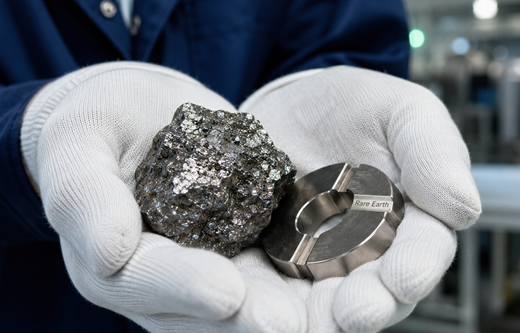
Solid underlying demand alongside rigorous supply‑side regulation keeps mainstream rare‑earth product prices on an upward, volatile trajectory. Production volumes of rare‑earth separation outputs, rare‑earth metals and functional application materials hit record half‑year highs. A dual sales framework combining long‑term framework agreements and spot retail orders underpins stable core volumes, with flexible adjustments for spot transactions. Supplies reach all major domestic magnetic‑material manufacturers.
China’s rare‑earth industry is advancing through a pivotal transition phase. Leading operators extend into high‑value‑added segments by leveraging resource and technical strengths, lifting end‑to‑end supply‑chain autonomy and core competitiveness. This environment creates favourable operating conditions for fully‑integrated sector leaders.
Access to raw‑material reserves and complete industrial integration form core competitive strengths. Its controlling shareholder, Baotou Iron and Steel Group, holds exclusive mining rights for Bayan‑Obo, the world’s largest iron‑rare‑earth symbiotic deposit, securing consistent rare‑earth concentrate supplies. The listed entity has evolved into a group‑structured public enterprise covering rare‑earth separation, functional materials, end‑use products, research and trade. Its industrial architecture builds upon resource inputs, centres on separation processing, prioritises advanced‑materials development and expands into downstream finished‑goods markets, delivering industry‑leading capabilities across the full value chain and all rare‑earth elements.
Rare‑earth advanced materials act as a vital bridge connecting mineral resources to new‑energy end‑markets. Production lines for high‑performance neodymium‑iron‑boron strip‑cast alloys and hydrogen‑crushed powders ramp up to full capacity. The group’s rare‑earth magnetic‑material capacity ranks among the largest globally, and hydrogen‑storage‑alloy output maintains a leading domestic position. Product ranges cover permanent‑magnet components for wind turbines, magnetic assemblies for electric vehicles and hydrogen‑storage alloys. Independently‑developed La‑Y‑Ni‑series high‑capacity hydrogen‑storage alloys achieve simultaneous improvements in hydrogen‑storage capacity and cycle life. Industrial‑scale roll‑out of rare‑earth flame‑retardant modifiers opens fresh application possibilities for rare‑earth compounds within new‑energy auxiliary‑material segments.
Progress accelerates along two downstream development tracks: permanent‑magnet motors derived from magnetic materials, and hydrogen‑energy two‑wheelers built around hydrogen‑storage alloys. Fully‑in‑house manufacturing of 2.2 kW and 1.1 kW rare‑earth permanent‑magnet motors is achieved, suited for wind‑power hardware, industrial energy‑saving installations and diverse new‑energy equipment. The first batch of one thousand rare‑earth‑based hydrogen‑powered two‑wheelers enters commercial demonstration operation in Baotou, accumulating 170 000 kilometres of safe travel mileage and generating practical operational experience for solid‑state hydrogen‑storage commercialisation.
Phase‑one works for upgraded green smelting facilities are commissioned with complete production lines brought online, while phase‑two construction proceeds. Overall smelting recovery rates continue to improve, embedding low‑carbon principles throughout value‑chain workflows. Secondary‑resource‑recovery projects deliver expanded output and better operational efficiency, and digital‑intelligent retrofits gather pace, lifting green and smart standards across operations.
Scientific and technological innovation links rare‑earth resources to new‑energy industrial requirements. Innovation chains are deployed alongside industrial workflows, with technical research targeting green smelting, high‑grade magnetic materials, hydrogen‑energy hardware and permanent‑magnet motors. A complete incubation system spanning research, pilot testing and industrial deployment is in place. Eighty‑four new patent applications are filed in the first half, including sixty‑three invention patents; sixty‑five patents are granted, among which forty‑seven are invention patents and five are international patents. Six national‑level key projects and fourteen provincial‑level schemes move forward. The organisation operates two national‑level innovation platforms, eight ministerial‑level platforms, two academician workstations, two post‑doctoral workstations and thirteen provincial‑level research facilities. Its subsidiary Rare‑Earth Research Institute ranks as the world’s largest comprehensive rare‑earth research body, supporting powerful collaborative research capacity. A skid‑mounted solid‑state hydrogen refuelling station receives Inner Mongolia’s “first‑of‑its‑kind equipment” accreditation, with multiple new materials and pieces of equipment achieving independent domestic development.
Capital‑backed investment drives further expansion into high‑value‑added segments. Capital injections totalling RMB 38.2073 million secure increased holding in Zhongxin Antai to expand rare‑earth‑metal production capacity. Joint‑venture arrangements see RMB 112 million committed to a rare‑earth‑metal‑alloy production line with Ningbo Funeng Rare‑Earth New Materials, and RMB 116 million invested in a cerium‑containing neodymium‑iron‑boron magnetic‑material project alongside Ningbo Shuoteng New Materials. The latter raises cerium content within permanent‑magnet formulations to boost cost‑effectiveness for broader market adoption. A further RMB 779 million funds a high‑level rare‑earth science‑and‑technology innovation platform intended to build world‑class research infrastructure, while RMB 48.6471 million bolsters Baotou Rare‑Earth Research Institute to strengthen process‑reengineering and advanced‑material development work.
Global energy‑transition momentum keeps elevating the strategic significance of rare‑earth elements. The business will deepen engagement across wind‑power, electric‑vehicle and hydrogen‑storage sectors. Upstream green transformation, mid‑stream quality enhancement, downstream output expansion and innovation‑driven efficiency gains will continue to enlarge supplies of premium rare‑earth advanced materials and finished goods. The full‑cycle rare‑earth industrial closed‑loop system will keep evolving to deliver the country’s largest rare‑earth advanced‑materials base and a globally‑competitive hub for rare‑earth application technologies.
热门内容推荐