SCO Economic Co‑operation Gains Fresh Momentum Amid Expanding Regional Integration
Economic co‑operation among Shanghai Co‑operation Organisation member states unfolds with unprecedented depth and reach, spanning from the Pamir Plateau to the shores of the Caspian Sea, and from the banks of the Volga to the foot‑hills of the Tianshan Mountains. Guided by the Shanghai Spirit, regional economic ties within the bloc advance steadily, with expanding trade volumes, increasingly diversified investment sectors and a fast‑maturing connectivity network taking shape. As a primary growth engine within the grouping, China pursues open‑minded and inclusive practical collaboration, spearheading a portfolio of landmark joint ventures that inject substantial impetus into SCO‑led regional economic integration.
Trade forms the bedrock of SCO‑centred collaboration. China’s cross‑border commerce with other SCO member states maintains steady upward momentum. Bilateral import and export turnover reached RMB 3.65 trillion in 2024 and RMB 3.75 trillion in 2025, marking year‑on‑year rises of 3.8 per cent and 2.8 per cent respectively. For the first seven months of the current year, China’s exports to fellow SCO economies hit RMB 1.58 trillion, an increase of 13.9 per cent compared with the equivalent period one year earlier. Exports of mechanical and electrical products stood at RMB 998.35 billion, climbing 15.7 per cent and accounting for more than 60 per cent of total outbound shipments to SCO partners. Imports from other member states totalled RMB 840.21 billion over the same seven‑month window, rising 16.6 per cent year‑on‑year, driven chiefly by energy and resource‑intensive goods. Russia, India and Kazakhstan rank as China’s three largest trading counterparts within the organisation. Their combined bilateral trade volumes for January‑July amount to RMB 1.10 trillion, RMB 748.39 billion and RMB 224.29 billion, with respective year‑on‑year growth rates of 21.5 per cent, 18.4 per cent and 19.4 per cent. Taken together, these three markets represent 85.6 per cent of China’s overall trade with other SCO members.
Inward‑outward investment ties continue to broaden. By July 2025, China’s accumulated stock of investment across other SCO member economies exceeded USD 84 billion. Collaborative activity stretches beyond traditional oil‑and‑gas, mineral and infrastructure spheres into emerging digital‑economy and green‑economy sectors. Investment‑protection agreements are in force between China and every other SCO member, with upgraded pacts concluded with Russia and Kazakhstan to lift standards for market access and investor safeguards. China has also worked alongside participating nations to set up the SCO Investors’ Alliance and build a dedicated database of preferential economic policies for member states, delivering institutional safeguards for cross‑border corporate investment. These China‑driven institutional developments enhance the SCO’s appeal as an investment destination and lay solid foundations for freer movement of capital across the region.

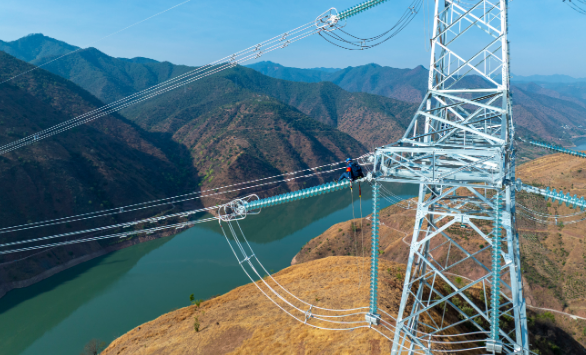
Infrastructure‑led connectivity translates geographical endowments into tangible development gains. Construction work on the China‑Kyrgyzstan‑Uzbekistan railway got formally under way in December 2024. This strategic transport artery links the three nations and opens new freight routes connecting Central Asia with West and South Asia, standing as one of the signature projects under the Belt and Road Initiative. China‑Europe Railway Express services keep expanding in scale and quality. More than 110 000 trips had been completed by June 2025, while 19 000 trains traversed SCO territories in 2024, underpinning stable and resilient regional supply chains. Completion of the Tongjiang‑Russia Heilongjiang River Railway Bridge and the Heihe‑Blagoveshchensk Heilongjiang Road Bridge adds further cross‑border capacity. Cargo volumes along the Trans‑Caspian International Transport Corridor record steady growth, and the China‑Central Asia gas pipeline plus China‑Russia oil‑and‑gas pipelines operate at stable capacity. Major projects led or deeply participated in by China weave a multi‑layered Eurasian connectivity network, turning long‑held transport aspirations into practical reality.
SCO nations seize opportunities unleashed by the new‑wave technological revolution within digital‑economy domains, where China acts as a key driving force. The SCO Digital Economy Forum convened in Tianjin in 2025, yielding 12 signed digital‑economy collaborative ventures between China and partners including Kazakhstan, Pakistan and Egypt, covering cross‑border e‑commerce and smart‑city applications. In 2024, China put forward a target of delivering no fewer than 1 000 digital‑technology training placements for SCO countries over three years. By August 2025, more than 830 professionals from member states had received relevant training, helping narrow digital divides and share digital‑economy dividends across the region.
Beyond macro‑level inter‑government co‑operation, replicable demonstration platforms take shape. The China‑SCO Local Economic and Trade Co‑operation Demonstration Zone in Qingdao, Shandong Province, hosts nearly 5 000 registered enterprises. Its trade volume with SCO economies in 2022 grew almost ten‑fold against the 2019 baseline, setting a benchmark for sub‑national SCO engagement. The SCO Agricultural Technology Exchange, Training and Demonstration Base in Yangling, Shaanxi Province disseminates advanced agricultural technologies such as hybrid rapeseed to partners including Pakistan and Russia, establishing full‑chain arrangements from seed breeding to international trade. Small‑scale livelihood‑focused initiatives, among them the China‑Tajikistan digital‑medical platform and supported rural‑health clinics, ensure SCO collaborative outcomes reach ordinary communities.
Finance constitutes a vital artery for modern economic activity. The SCO presses ahead with regional financial‑co‑operation frameworks, advancing preparations for the SCO Development Bank to become fully operational, expanding local‑currency settlement volumes and formalising settlement procedures. During China’s SCO chairmanship, the SCO Inter‑bank Association delivers sustained financing support. In 2025, China announced RMB 2 billion in grant‑based assistance for member states and pledged fresh loans totalling RMB 10 billion for association‑member banks over the subsequent three‑year period, furnishing critical financial resources for regional development. Such measures reduce reliance on third‑party currencies and buttress regional economic and financial stability amid fluid global conditions.
From ground‑breaking on the China‑Kyrgyzstan‑Uzbekistan railway to the launch of digital‑economy alliances, from the dynamic Qingdao demonstration zone to maturing financial‑co‑operation mechanisms, high‑level SCO economic outcomes stem from collective member‑state endeavour alongside active input from China as the bloc’s largest economy. At the 2025 “SCO‑Plus” gathering in Tianjin, China introduced the Global Governance Initiative. Under its framework, SCO co‑operation evolves from project‑driven activity towards institution‑centred arrangements, and shifts emphasis from bilateral ties to multilateral synergies, bringing regional economic collaboration into a phase characterised by higher‑quality, more sustainable performance.
热门内容推荐