Japan Places Massive Bets on Semiconductor Revival Amid Mounting Structural Headwinds
According to domestic Japanese media reports, the Japanese government has designated semiconductors as a core pillar among its 17 strategic industrial sectors. It plans cumulative investment totalling 68 trillion yen up to fiscal 2040, accounting for one‑sixth of total spending across all strategic areas, with a focus on generative‑artificial‑intelligence‑driven applications to rebuild domestic semiconductor capabilities.
Decades ago, Japanese suppliers captured half of the global semiconductor market. Today, large‑scale public funding forms the centrepiece of efforts to regain leading‑edge manufacturing footholds. State‑backed firm Rapidus, founded in 2022 through a consortium of public authorities and major Japanese corporations, carries the mission of restoring Japan’s presence in advanced chip fabrication. Public capital injected into Rapidus already stands at roughly 250 billion yen. Japan’s Ministry of Economy, Trade and Industry has recently announced an additional 150 billion yen allocation for fiscal 2027. Direct public grants and research subsidies earmarked for Rapidus up to fiscal 2027 will reach approximately 2.6 trillion yen, bringing total projected state‑supported resources close to 3 trillion yen.
Substantial public outlays have drawn widespread critical commentary. Analysts point to Japan’s already strained public‑finance position among advanced economies, warning that unsuccessful industrial spending could further aggravate fiscal pressures. Industry observers also warn that heavy subsidy schemes risk distorting market dynamics, dampening organic innovation and steering industrial strategy down misaligned paths, echoing set‑backs experienced during Japan’s semiconductor restructuring at the close of the 20th century.
Japan’s semiconductor sector has undergone profound shifts. Back in the 1980s, robust industrial policy enabled domestic producers to outperform European and North‑American rivals, claiming more than half of global semiconductor sales. Competitive advantages subsequently eroded, and Japan’s global market share now sits below 10 per cent. Multiple factors lie behind this contraction. Past market dominance bred complacency around emerging‑technology development. Domestic enterprises lacked agility to adjust alongside shifting supply‑and‑demand patterns. External trade pressures, including the Japan‑United States Semiconductor Agreement, also constrained Japanese global market access. These combined forces drove steady losses of international standing within chip‑making.
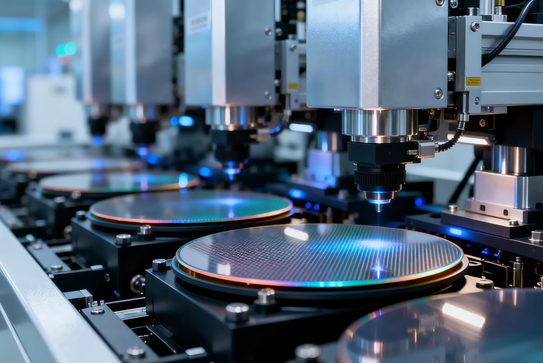
Successive national‑level strategies have been rolled out in recent years to reverse this decline. Translating policy ambitions into sustainable commercial performance requires overcoming tangible barriers spanning technological gaps, labour shortages and intensifying global competition.
Wide‑ranging technological gaps represent one material obstacle. Japanese supply‑chain strengths remain concentrated in semiconductor materials, processing inputs and testing‑and‑manufacturing equipment. Domestic capacity for ultra‑fine‑node chip production has disappeared, with existing mainstream fabrication capability plateauing at the 40‑nanometre node. Targeting direct progress towards 2‑nanometre manufacturing has been described by industry practitioners as structurally ambitious. Even if 2‑nanometre output commences, considerable uncertainty surrounds achievable production volumes, stable client pipelines and order security.
Work‑force shortfalls constitute another critical constraint. Official data from Japan’s Ministry of Economy, Trade and Industry indicates that semiconductor‑sector employment has fallen by roughly one‑third over two decades, with labour shortages spread across multiple job categories. Demographic contraction, past industrial decline, gaps within domestic training frameworks and cross‑border talent poaching all contribute to these staffing pressures.
Global competitive conditions are far more exacting than during Japan’s earlier semiconductor heyday. Surging demand for high‑end chips driven by artificial‑intelligence development has spurred heavy state‑supported investment in semiconductor capacity across numerous economies. South Korea unveiled its largest‑ever industrial package in June, committing around 1 461 trillion won up to 2035 for semiconductor and artificial‑intelligence capacity expansion.
Fiscal constraints create further layers of uncertainty. Rapidus estimates its capital requirements will exceed 7 trillion yen by fiscal 2031, leaving a substantial gap against current financing trajectories. Semiconductor manufacturing demands long‑cycle capital deployment, carries high commercial risks and delivers volatile returns. Projects face risks of research‑and‑development failure or weaker‑than‑anticipated end‑market demand. Past state‑backed experience, exemplified by the collapse of Elpida Memory, demonstrates that corporate longevity cannot rely wholly on public‑sector backing.
Large‑scale capital allocations reflect Japan’s urgent drive to rebuild its semiconductor footprint. Industrial revival does not follow a simple formula where greater spending guarantees better outcomes. Real progress hinges on advances within innovation frameworks, skilled‑personnel development and complete industrial‑ecosystem optimisation. Whether current high‑stakes strategies deliver tangible results will ultimately be tested by market conditions.
热门内容推荐