Xinjiang Completes China’s Largest‑Scale Provincial‑level 750 kV Main Power‑grid Network
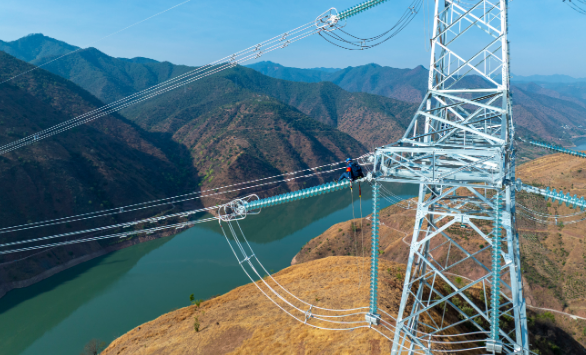
According to Xinhua News Agency, the 750 kV transmission project supporting the 2 × 660 MW coal‑fired power plant in Kashgar, southern Xinjiang, has gone into operation, pushing the total length of Xinjiang’s 750 kV transmission lines beyond 15 000 kilometres. Xinjiang now hosts China’s largest provincial‑scale 750 kV backbone grid, with more 750 kV substations and longer aggregate line mileage than any other provincial‑level administrative region across the country.
More than a decade of continuous construction has shaped the development of Xinjiang’s 750 kV power infrastructure. The commissioning of the 750 kV Fenghuang‑Wubei transmission‑transformation project in 2008 marked the formal start of ultra‑high‑voltage grid building within the region. In 2010, the first inter‑connection corridor linking Xinjiang’s grid with north‑west China’s main power network was completed, integrating Xinjiang into the national power system and enabling large‑scale outward transmission of local coal‑fired, wind‑generated power.
The 750 kV Yili‑Kuqa Ⅰ‑circuit project came online in 2016, laying down the fundamental framework for Xinjiang’s 750 kV main grid. The 750 kV Tarim Basin ring‑shaped transmission‑transformation project was put into service in 2025, forming China’s biggest 750 kV ultra‑high‑voltage ring‑network.
Energy resources and power consumption centres are unevenly distributed across Xinjiang, with abundant supplies concentrated in the north and east while demand is heavier in the south and west. The 750 kV grid resolves this temporal‑spatial mismatch in regional power supply and demand. Compared with 220 kV circuits, a single 750 kV line delivers five to ten times greater transmission capacity and supports three‑to‑five‑fold longer transmission distances, making long‑distance, high‑volume power transfer technically feasible.
The robust backbone facilitates mutual power support across the whole territory, drawing on thermal power from northern Xinjiang, wind and photovoltaic output from eastern Xinjiang and solar generation in southern Xinjiang.
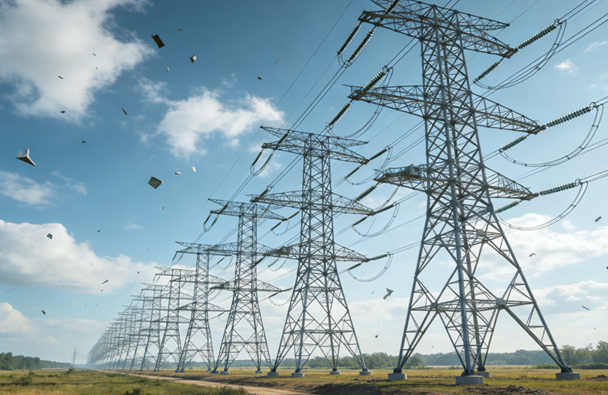
Transmission capacity between northern and southern Xinjiang sees substantial improvement, while key transmission sections in eastern Xinjiang reach the ten‑million‑kilowatt threshold and overall power‑supply reliability throughout the region keeps rising. At present, 39 substations and 120 transmission lines of the 750 kV class are operational. The grid stretches 3 300 kilometres from north to south and 2 200 kilometres from east to west.
Building upon the continuously upgraded 750 kV backbone network, Xinjiang has established a main‑grid configuration described as “eight internal ring‑networks and five outward‑delivery channels”. The eight internal ring‑networks secure tight interconnection and balanced power exchange across land on both sides of the Tianshan Mountains. Three ultra‑high‑voltage direct‑current corridors and two alternating‑current export routes carry Xinjiang‑generated electricity, including large volumes of clean power, to other parts of China.
Cross‑regional transmission capacity currently stands at 33 million kilowatts, and volumes of exported renewable‑source power keep expanding. By the end of July, cumulative electricity exported from Xinjiang had exceeded 1.1 trillion kilowatt‑hours, with nearly thirty‑per‑cent originating from new‑energy generation.
Grid operators carry forward work to transform Xinjiang from an energy‑rich region into an energy‑strong region. Thirty‑eight new and ongoing ultra‑high‑voltage and extra‑high‑voltage grid projects are being advanced this year. Eleven new projects are scheduled to commence construction, bringing 1 917 kilometres of new 750 kV transmission lines and 25.5 million kilovolt‑amperes of additional transformer capacity.
By 2030, Xinjiang expects to build an outward‑delivery main‑grid system of “three alternating‑current and six direct‑current corridors”, lifting its cross‑provincial power export capacity to 60 million kilowatts.
热门内容推荐