Power Output Surges for China Energy Investment Corporation’s Guangdong Arm to Secure Greater Bay Area Energy Supplies
According to China Energy Investment Corporation official releases, cumulative power generation from its Guangdong‑based operation reached 40.097 billion kilowatt‑hours by 31 August, marking a year‑on‑year rise of 23.71 per cent. Higher output consolidates regional energy security safeguards and underpins economic and social activity across the Guangdong‑Hong Kong‑Macao Greater Bay Area.
This year, the provincial arm has navigated tight regional power balances, fierce market competition and repeated bouts of extreme weather. It advances infrastructure construction, unit maintenance and market‑oriented operations simultaneously. Robust safety‑management frameworks are maintained, with full‑staff safety responsibilities enforced and comprehensive risk‑hazard inspection routines carried out. Unit 4 at Qingyuan Power Plant has completed its 168‑hour full‑load trial run.
Throughout the summer peak‑demand period, established contingency protocols for typhoons, flooding and heatwaves remain in place. Routine on‑site patrols target outdoor installations, low‑lying zones, coal‑handling systems, main transformers and turbine bearing assemblies. Timely defect rectification has enabled generating hardware to withstand successive heat surges and severe weather events.
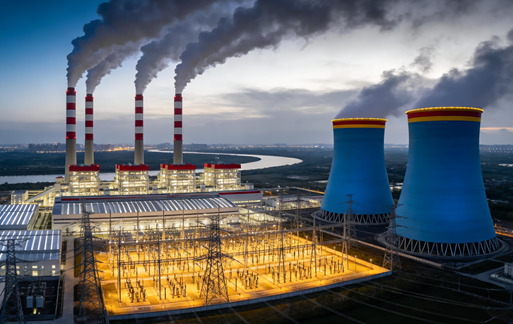
Operational initiatives labelled “five‑increases, five‑reductions and one‑improvement” guide performance enhancement. Benchmarking exercises cover power‑volume targets, tariff levels and coal‑consumption indices to unlock further generation potential. Market‑driven commercial adjustments are rolled out. Forecasting tools track nodal‑price movements, and dynamically revised bidding strategies capture high‑price windows for stable, revenue‑focused generation.
Closer co‑ordination between production, commercial and dispatching teams supports four scheduled unit overhauls and the enclosed coal‑yard upgrade at Taishan Power Plant. Coal procurement and delivery schedules are fine‑tuned to secure steady, adequate fuel stocks for on‑site facilities.
Operational workflows will continue to balance plant reliability, commercial performance and fuel logistics. Ongoing maintenance cycles and market‑responsive dispatching keep generation assets primed to respond to shifting regional electricity demand patterns. The recorded growth in output sets operational benchmarks for subsequent peak‑load cycles within the Greater Bay Area power system.
热门内容推荐