China expands national satellite‑navigation reference‑station network to 7,569 sites to boost large‑scale BeiDou uptake
According to Xinhua News Agency, China’s national network of satellite‑navigation positioning reference stations now comprises 7,569 individual sites, forming a unified nationwide ground infrastructure that underpins expanding real‑world deployment of the BeiDou Navigation Satellite System
Details emerging from a national working conference on authorised operational licensing for reference‑station network service data show the complete network includes 420 national‑level stations, 3,293 provincial‑level stations and 3,856 collaborative stations. This integrated infrastructure delivers high‑precision spatial‑temporal services across a broad portfolio of use‑cases, covering territorial spatial planning, ecological conservation and restoration, forest‑grassland monitoring, natural‑hazard early‑warning, energy‑telecom operations, engineering construction and urban governance.
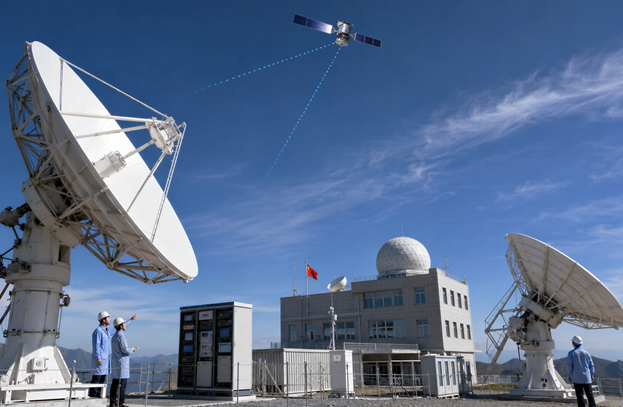
Satellite‑navigation positioning reference stations represent critical national spatial‑temporal infrastructure, constituting the essential ground‑based layer that enables BeiDou’s high‑precision positioning capabilities. The Ministry of Natural Resources has co‑ordinated and consolidated scattered reference‑station resources nationwide to build this legally authorised, standardised, accurate and securely managed single network, which maintains continuous routine operation. A co‑ordinated operation‑and‑maintenance framework linking BeiDou application hubs and reference‑service centres is now in place, supplying nationally unified geodetic datum services for public and industry users alike.
The network supports ongoing data‑licensing initiatives which open up public‑sector spatial‑temporal datasets for compliant application by public‑interest bodies, industrial operators and market‑oriented participants. New licensing arrangements will unlock the data‑element value embedded within reference‑station observations, enabling both public‑good provision and commercially‑driven innovation built upon BeiDou high‑precision services.
Further optimisation of station layout and deeper exploitation of network datasets will proceed in coming phases. Continuous improvements to operational workflows will reinforce the high‑precision spatial‑temporal foundation underpinning digital‑China initiatives and sustain diversified large‑scale BeiDou implementation across domestic industries.
热门内容推荐