Brain‑computer interfaces and exoskeletons step out of laboratories into real‑world Chinese markets
According to Economic Information Daily, combined rehabilitation solutions pairing brain‑computer interfaces with robotic exoskeletons have completed clinical trials across multiple major Chinese hospitals. Mountain‑scenic‑area rental schemes for hiking‑assist exoskeletons are now available at numerous tourist sites, as a growing array of exoskeleton devices move from laboratory testing towards practical commercial deployment. Stable demand within medical rehabilitation underpins the sector, while consumer‑focused walking‑assist applications register sharp growth and quicken overall commercialisation momentum.
Multiple bottlenecks continue to constrain further industrial expansion, covering product user experience, industry standard‑setting, public awareness, weight‑reduction and battery‑life performance.
Clinical milestones have been logged during the course of this year. In March, a triple‑technology integration scheme combining non‑invasive electroencephalography interfaces, spinal‑cord electrical stimulation and lower‑limb exoskeleton robotics achieved successful trial runs for spinal‑injury rehabilitation. In May, clinical work at Zhongnan Hospital of Wuhan University demonstrated how brain‑wave signals could steer an exoskeleton to drive affected‑side lower‑limb lifting movements for post‑surgical rehabilitation patients.
Commercial roll‑out keeps pace with clinical progress. Following its first Shanghai outlet opened in March, Haier AI‑exoskeleton experience stores have expanded to more than a dozen locations by mid‑August. Additional retail space for exoskeleton hardware has also launched. Dozens of China’s 4A‑ and 5A‑rated scenic attractions, including mountain and heritage‑wall sites, now offer rental access to hiking‑support exoskeleton units.
Monitoring data from Chinese commercial big‑data services records a 458.4 per cent year‑on‑year surge in online retail sales of smart exoskeletons for the January‑June period. Figures published by IDC show China’s exoskeleton‑robot market reached total sales of 1.6 billion yuan in 2025, with shipments hitting 26 000 units. Medical‑rehabilitation applications generated 88.3 per cent of total sales and form the industry’s core revenue base. Consumer‑assist and industrial‑use segments accounted for 6.8 per cent and 4.9 per cent of sales respectively. Shipment statistics paint a contrasting picture: consumer‑assist hardware represented 72.8 per cent of total units shipped at almost 19 000 pieces, making it the largest‑volume segment, though individual‑unit price points limit its revenue contribution. Industrial applications made up 14.8 per cent of shipments, and medical‑rehabilitation devices 12.5 per cent.
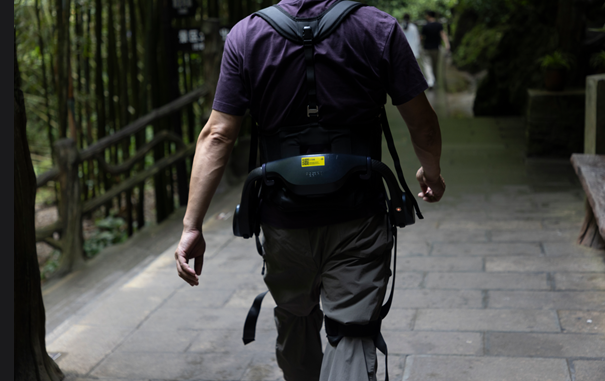
Distinct corporate groupings operate within each vertical. Firms holding medical‑device registration certificates dominate hospital‑based rehabilitation markets. Other developers target tourist‑site rental and home‑based ageing‑adaptation scenarios for consumer‑grade products. Further manufacturers carry out pilot deployments within manufacturing and logistics for industrial‑assist exoskeletons. Market participants note that 2025 marked the consumer‑segment take‑off year for the domestic exoskeleton sector, as unit shipments expanded from thousands to tens of thousands, yet market penetration remains far below latent consumer requirements.
IDC analysis indicates that consumer‑oriented assist‑technology applications may deliver the most substantial incremental growth over the coming two‑to‑three‑year window, with medical‑rehabilitation sustaining foundational market volumes and industrial‑use cases presenting meaningful further expansion potential.
Policy frameworks across multiple government departments support real‑world application roll‑out. During the 15th Five‑Year‑Plan cycle, relevant policies have built a complete chain spanning technical research, product development, scenario opening‑up, payment‑mechanism innovation and consumer subsidy arrangements. In July, fourteen central departments jointly issued the Three‑Year Action Plan for Expanding Capacity and Improving Quality of Rehabilitation Assistive‑Device Industry (2026‑2028). The document encourages research into exoskeleton robots alongside other advanced rehabilitation equipment and accelerates the drafting and revision of recommended national standards for wearable exoskeleton hardware. National‑level digital‑consumption planning lists smart robots and wearable‑intelligent hardware as priority development areas, opening policy room for consumer‑grade exoskeleton products. August publications from the National Healthcare Security Administration set out pathways for intelligent exoskeleton adoption within long‑term‑care services.
Local‑level measures directly stimulate market uptake. Beijing, Shanghai, Jiangsu, Shandong, Chongqing, Anhui and other regions have incorporated exoskeleton devices into consumer‑trade‑in incentives and ageing‑adaptation renovation subsidy schemes. Policy emphasis has shifted from pure technical research towards product‑oriented implementation, with subsidies gradually moving away from production‑side support and towards end‑user application. Multiple payment channels drawing on medical‑insurance and long‑term‑care‑insurance mechanisms are under active exploration to lower barriers for public adoption. Industry observers identify three defining shifts underway across the sector: from isolated scenic‑spot trials to nationally‑framed development blueprints; from purely technical validation towards new payment‑model breakthroughs; and from standalone hardware products towards structured industrial‑standard systems.
Even as commercialisation gathers speed, practical obstacles persist. Physical‑device drawbacks include residual wearing pressure and foreign‑body sensations, leaving further scope for weight optimisation. Varied individual movement rhythms create challenges for accurate, low‑latency motion‑intention recognition, alongside ongoing battery‑capacity constraints. National‑standard frameworks require further development. Public perception barriers remain, shaped by popular science‑fiction‑inspired preconceptions about robotic hardware.
Additional challenges emerge when transferring clinical B‑side medical‑rehabilitation datasets over to home‑based care and household‑rehabilitation C‑side use‑cases. Product suitability for diverse everyday contexts demands continuous refinement. Manufacturers must strike improved balances between lightweight construction, battery endurance, comfort, natural‑movement fluidity and mechanical‑assist effectiveness. Industry participants stress that the fundamental test lies in securing sustained user adoption and willingness to pay for recurring value, rather than one‑off novelty‑driven trials.
Hardware refinements, enhanced user experience, widened distribution networks and improved after‑sales services all require ongoing attention to move users past initial trial‑only engagement. Exoskeleton technology functions to augment human physical capability rather than replace human operators. Technical and market‑related difficulties will be resolved through collective industry progress.
热门内容推荐