AI‑driven marine computing unlocks fresh momentum for China’s blue‑water economy
According to China News Service, Qingdao, 18 September, observations made on‑site at the 2026 Forum for Marine Cooperation and Development held in Qingdao, Shandong, between 17 and 18 September reveal that China’s marine‑focused economy is shifting rapidly from observational management of the sea towards computational marine governance. Specialised artificial‑intelligence large‑scale models have become a vital technological foundation as the country pursues advances across maritime domains.
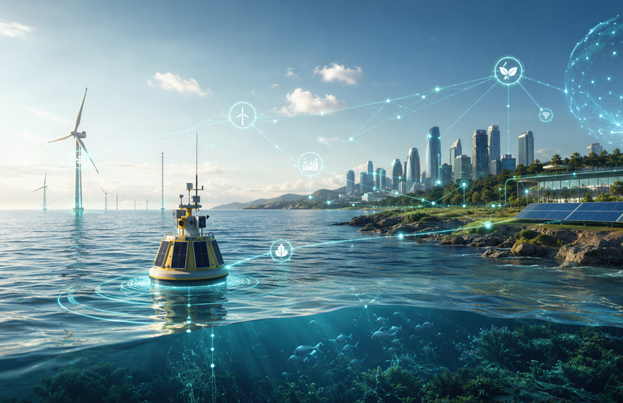
In recent years, a suite of marine‑oriented large models including Kanhai, Langya and Lankun Intelligent Breeding have been rolled out. These systems cover three core functional areas: hazard identification for disaster prevention, ecological stewardship for marine conservation, and technological innovation to foster marine‑based industries. They are reshaping end‑to‑end operational workflows running from environmental sensing and analytical decision‑making through to on‑site production within marine‑related sectors.
Langya Marine Large‑scale Model Version 2.0, developed by the Institute of Oceanology, Chinese Academy of Sciences, incorporates sophisticated marine events such as typhoons and storm surges into its intelligent forecasting framework. It delivers finely calibrated analytical outputs to underpin disaster mitigation work and safeguard maritime shipping operations. Marine forecasting is moving beyond the generation of isolated technical variables, towards practical scenarios where sensed data feeds directly into operational judgements.
Traditional marine industries have long struggled with unreliable scenario forecasting and slow cycles for technical upgrades. Dedicated marine AI platforms are now rewriting established industrial logic within this space. The Lankun Intelligent Breeding model, built for the marine aquaculture sector, establishes species‑specific algorithm frameworks, integrated intelligent breeding toolchains and phenotype‑driven decision‑making systems targeting key commercial marine organisms such as fish, prawns, shellfish and sea cucumbers. It delivers an all‑in‑one technical solution for germplasm conservation and selective breeding of aquatic stock. The platform is designed to strengthen innovation capacity for breeding‑specialised firms, while remaining accessible and workable for small‑scale grassroots aquaculture operators.
The fusion of artificial intelligence and marine economic activity sits at the heart of global‑level competition within maritime industries. A joined‑up approach that considers both land‑based and marine resources is required to refine training datasets for marine AI systems. New computational paradigms which deliver reliable, replicable simulation outcomes will underpin progress across marine observation, conservation and industrial development.
At this year’s forum, Marine Token Factory, China’s first dedicated intelligent‑element supply platform built exclusively for marine industries, went live. The new service consolidates data resources spanning more than 130 categories of maritime information alongside over twenty marine‑specific large‑scale AI models. Instant‑access intelligent marine services become available for industrial users, translating digital computing power into tangible growth drivers for maritime business activity.
Artificial intelligence is enabling China’s marine economy to move away from experience‑led modes of operation. New commercial forms including smart ports and intelligent aquaculture keep emerging. These technological advances are opening further space for development and generating fresh sources of growth across China’s whole marine economic sector.
热门内容推荐