From Gobi Oil‑City to New Computing Hub: Karamay Explores Xinjiang’s Path for Co‑ordinated Digital and Green Transformation
According to China Economic Net, a field‑visit programme entitled “Empowering with Digital Technology, Advancing along a Green Path” brought experts, entrepreneurs and media representatives to Karamay Cloud Computing Industrial Park on 18 September. This event examines practical outcomes of the region’s parallel progress on digital upgrading and low‑carbon development.
Jointly organised by the Cyberspace Administration of Xinjiang Uygur Autonomous Region Party Committee and the Cyberspace Administration of Xinjiang Production and Construction Corps Party Committee, the activity receives support from the China Internet Development Foundation and is hosted by the Xinjiang Internet Federation.
The Karamay Cloud Computing Industrial Park functions as a demonstration zone for deep‑going reforms under the “Digital Xinjiang” initiative. It represents the core node for Xinjiang’s low‑carbon high‑efficiency computing network and remains the sole cloud‑computing industrial park formally approved by the regional authorities. Its existing intelligent computing capacity has already exceeded 23 000 Petaflops.
Park management teams are pressing ahead with a direct green‑power connection project alongside retrofitting work for legacy data centres to raise overall electricity‑use efficiency. Local energy and geographical advantages will underpin further expansion of the intelligent computing industry. The site is being developed with clear aims to establish a state‑level low‑carbon intelligent computing hub.
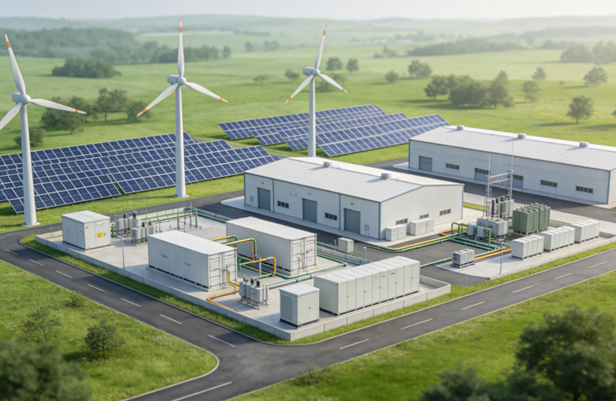
Once the direct green‑power linkage project is completed and commissioned in June 2027, the proportion of renewable electricity consumed within the industrial zone is expected to rise above 30 per cent. Work continues towards the longer‑term target of 100 per cent green‑power usage, with electricity costs for data‑centre users projected to stay around 0.35 Renminbi per kilowatt‑hour.
Situated within the park, the Carbon‑Harmony liquid‑cooled data centre adopts plate‑style liquid‑cooling technology. Its annual average Power Usage Effectiveness (PUE) falls as low as 1.1, bringing overall energy consumption down to just one‑fifth of the figures recorded for conventional air‑cooled facilities. Natural fresh‑air cooling runs for most months of the calendar year to stabilise indoor environmental temperatures.
Waste heat generated by operating servers is captured and recycled, delivering round‑the‑clock heating supplied from recovered clean thermal sources and enabling cyclic re‑utilisation of energy resources. The successive evolution of Karamay from mechanised industrial operations through automation and informatisation up to intelligent systems creates solid foundations for this shift. Established industrial heritage together with rising local digital requirements combine to create favourable pre‑conditions for the city’s ongoing transformation.
The historic industrial base built up over decades offers tangible support as the former petroleum‑focused city evolves into a modern computing hub. Construction teams keep refining implementation arrangements for green‑power supply, energy‑saving hardware renovation and waste‑heat recovery schemes across the whole industrial zone. New data‑centre facilities will continue coming online in the months ahead, enlarging the scale of local intelligent‑computing resources.
Project planners will keep adjusting operational frameworks to push forward the city’s drive towards national‑level green intelligent‑computing infrastructure, unlocking new potential for resource‑based urban transition in western China.
热门内容推荐