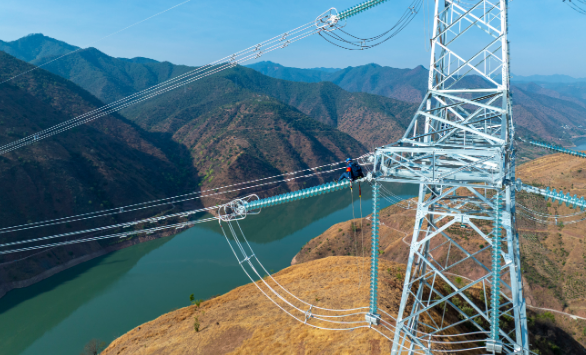
Gansu‑Zhejiang UHV Line Completes Yellow River Crossing, Gansu Section Fully Linked
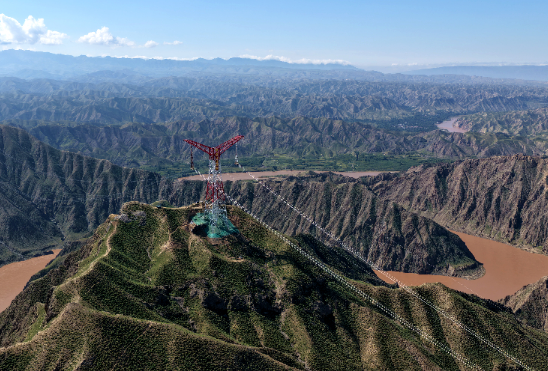
According to Xinhua News Agency, the final conductor was successfully laid across the Yellow River on 14 September at the boundary between Jingtai and Jingyuan counties within Baiyin city.
This milestone finishes the Yellow River overhead crossing for the ±800 kV direct‑current ultra‑high‑voltage transmission project known as “Gansu‑to‑Zhejiang Power Transmission”, and brings the whole Gansu segment of this major power scheme to completion.
This particular river crossing forms the only section of the entire power corridor that stretches over the Yellow River. It is also one of the critical controlling nodes for the overall construction programme. Steep mountainous terrain prevails across the locality, while frequent strong valley winds create complicated operating conditions.
The construction team erected four brand‑new transmission towers and installed 2.731 kilometres of power lines. An independent tension‑section crossing design has been adopted for the river span, allowing the civil and electrical works to be delivered to strict quality and safety standards.
This national priority power‑planning project runs for a total distance of 2,370 kilometres. Its transmission corridor commences at the Wuwei converter station in Gansu in the north‑west and terminates at Yuezhou converter station near Shaoxing in Zhejiang on China’s eastern seaboard.
The route traverses six provincial‑level administrative regions: Gansu, Ningxia, Shaanxi, Henan, Anhui and Zhejiang. Construction work is on track, with full commercial operation scheduled for 2027.
Once the whole transmission route enters service, Gansu will deliver more than 36 billion kilowatt‑hours of electricity to Zhejiang each year. Of this annual energy volume, over 21.2 billion kilowatt‑hours will originate from renewable power installations.
The new long‑distance power link facilitates coordinated energy development across western and eastern areas, and supports ongoing progress in low‑carbon energy transition.
Work on subsequent stretches of the cross‑provincial power infrastructure will move forward, as builders keep advancing towards final commissioning.
热门内容推荐