Hydrogen‑powered vehicles spearhead Dalian’s growth across the whole hydrogen‑energy industrial chain
Early on September mornings, hydrogen‑fueled sanitation vehicles start their daily operations in Jinpu New Area of Dalian, Liaoning. Free from the roaring noise produced by combustion‑engine machinery, these vehicles run on electric power generated through electrochemical reactions between hydrogen and oxygen inside fuel‑cell systems.
A hydrogen sanitation vehicle consumes 9.29 kilograms of hydrogen per 100 kilometres, with operating costs sitting at less than half of those for equivalent diesel‑driven machinery. It also delivers zero‑carbon emissions during operation. Behind these working vehicles lies a complete local hydrogen‑energy industrial network. Refuelling at nearby hydrogen stations takes only eight to ten minutes. Hydrogen supplies are acquired by purifying by‑product hydrogen generated at local petrochemical facilities. Fuel‑cell stacks and engine systems draw on research outcomes from local research institutes, with subsequent manufacturing carried out by local enterprises.
Local industrial and research resources have laid solid foundations for Dalian’s hydrogen‑energy sector. The city builds up its industry around hydrogen fuel cells, advancing research, production, storage, transportation, refuelling and downstream application together with supporting manufacturing segments.
At the automated production workshop of Guochuang Hydrogen Energy Technology, thin titanium‑based metallic bipolar plates are stamped to form fine, evenly distributed flow channels. Working in close partnership with the Dalian Institute of Chemical Physics, Chinese Academy of Sciences, the firm has brought bipolar‑plate thickness down to merely 0.58 millimetres. The volumetric power density of its fuel‑cell stacks has risen from 5.7 kilowatts per litre to 8.5 kilowatts per litre. With annual research and development spending reaching 40 million yuan, the business is set to double its annual sales revenue this year. Continuous integration of laboratory research and industrial development has helped Dalian form a full development pathway from fundamental research to real‑world deployment. Cumulatively, more than 1,600 patent applications have been filed across key fuel‑cell materials, core components and complete stack systems within the city.
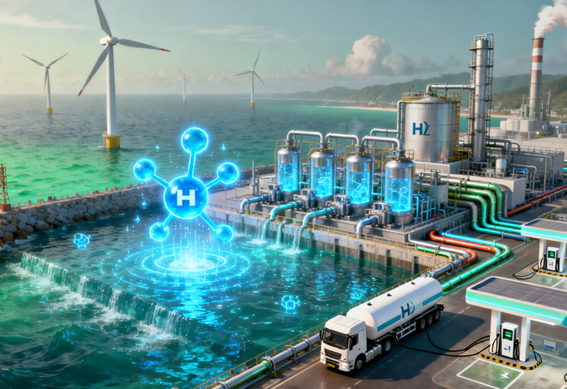
Practical demonstration sites keep expanding to accommodate more hydrogen‑powered equipment. Two dual‑nozzle hydrogen dispensers at Shenggang Comprehensive Energy Station in Dalian can serve up to four refuelling vehicles simultaneously, alongside a bus depot with parking capacity for twenty hydrogen‑fueled buses. The station’s daily hydrogen supply volume has grown from 200 kilograms to 500 kilograms over three years. Two integrated refuelling stations are already operational, while five further sites remain under preparation.
Dalian has rolled out comprehensive demonstration programmes for hydrogen utilisation. Hydrogen‑driven vehicles now cover sanitation, heavy‑duty freight, public transit and short‑distance port shuttle transport. A prototype hydrogen‑fueled vessel has completed its maiden trial voyage, and the country’s first demonstration hydrogen‑fuel cell rail locomotive has entered trial operation. The public data‑gathering and monitoring platform for hydrogen‑powered automobiles has collected over 48 million sets of operational data.
Phase‑one construction of Dalian Jia Hydrogen Energy’s comprehensive hydrogen‑utilisation facility has been finished and put into service this year. The plant can produce 20 tonnes of high‑purity hydrogen each day, enough to satisfy regular fuel requirements for 1,500 hydrogen fuel‑cell vehicles. Upstream petrochemical operations belonging to its parent group previously saw roughly one‑third of their industrial by‑product hydrogen burnt off. The extended industrial chain now enables recovery and effective utilisation of this former waste resource.
Drawing on its established petrochemical and advanced manufacturing strengths, Dalian is pushing forward key hydrogen‑energy projects. Multiple facilities including the hydrogen testing centre run by Dajian Group and the liquid‑cargo terminal for the Northeast Asia Hydrogen‑based Energy Centre in Changxing Island have gone into operation. The city has basically built a complete local hydrogen‑energy industrial ecosystem, gathering more than 60 innovative enterprises along the industrial chain.
热门内容推荐