Scientific Innovation Overcomes Production Hurdles for China’s Grain Harvest
Marked on 23 September at the Autumn Equinox, the ninth Chinese Farmers’ Harvest Festival unfolds across the country. Stretching across varied farming zones, favourable harvest results have been recorded for summer grain, with autumn crops moving towards ripening. The record‑breaking summer grain yield of 301.49 billion jin has been secured after successive practical obstacles in field production were addressed through agricultural technologies.
Extensive late sowing presented the first major challenge. Heavy autumn rainfall in 2025 delayed wheat planting across large parts of the Huang‑Huai‑Hai plain, leaving vulnerable, under‑developed seedlings over winter. Technical intervention packages were rolled out, together with on‑site guidance delivered by large‑scale teams of agricultural technicians. In Shandong, fields sown almost one month behind schedule still delivered strong final yields. Jiangsu also nursed nearly 11.22 million mu of weak winter wheat plants back to sound growth. Summer grain figures for the province registered simultaneous rises in sown area, unit yield and total output.
Climate‑driven hazards formed the second barrier, with overlapping threats of drought, waterlogging, high‑temperature stress and pest outbreaks during the key grain‑filling phase for autumn crops. Targeted national farm management campaigns were launched. In Henan, central government disaster‑relief funding supported post‑rain top‑dressing across 6.82 million mu and organised pest prevention operations over 32.55 million mu sessions. Multispectral drone surveys fed field data into smart farm analytical systems, generating differentiated management prescriptions and moving agricultural work away from uniform, one‑size‑fits‑on‑the‑ground treatment.
Bridging the yield gap between high‑performance demonstration plots and ordinary farmland constituted the third priority. National programmes for raising grain yields over wider areas expanded the number of county‑level implementation units, while city‑scale coordinated promotion was introduced for the first time. Integrated deployment of fertile farmland, improved seed varieties, suitable farm machinery and tailored agronomic practices was rolled out. In Hunan, technical personnel provided continuous on‑farm coaching for rice producers to mitigate damage caused by persistent cold and wet spring weather. An adapted dense‑planting system combined with shallow‑buried drip irrigation was introduced on maize fields in Tongliao, Inner Mongolia, cutting water consumption while lifting crop yields for local farming households.
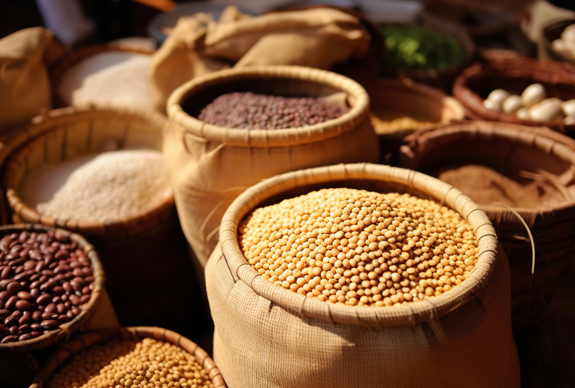
Domestic seed development formed the fourth focus of progress. AI‑enhanced breeding methods are transforming traditional crop‑improvement workflows at the Sanya Nanfan Silicon Valley research hub. New‑generation intelligent platforms support predictive evaluation for crop traits, speeding up the screening of promising hybrid maize and rice strains. Research teams in Hubei tackled bottlenecks in seed multiplication work for high‑yield local rice varieties. Germplasm resources held within laboratory collections in Shanxi supported the identification of drought‑resistant millet genetic material.
Official statistics confirm that home‑bred crop varieties occupy more than 95 per cent of China’s sown acreage. The country has recorded successive years of trade surpluses for crop seeds.
The fifth practical hurdle concerned making artificial‑intelligence farming tools accessible for ordinary rural households. Agricultural digital solutions previously demonstrated on exhibition platforms have been reworked into lightweight, low‑cost services suitable for small‑scale operators. Specialised agricultural large‑language models have been deployed across Jiangsu to cut input expenditure and reduce harvesting losses.
Mobile‑based applications developed in Jiamusi National High‑Tech Agricultural Zone draw together satellite remote‑sensing, meteorological records and local historic cropping datasets. The software delivers crop health checks, disease identification, customised fertiliser recommendations and administrative assistance for farm subsidies directly onto farmers’ mobile phones. Most active users of the system are small‑holder farming families.
Technological advances run through every segment of domestic grain production. Solutions developed in response to these five practical constraints have underpinned stable output from China’s farmland.
热门内容推荐