Gansu State‑owned Enterprises Deliver Solid Operational Results Amid Deep‑running Reform
State‑owned asset and enterprise bodies across Gansu have advanced eight key reform tasks covering layout optimisation, scientific and technological innovation, corporate governance, market‑oriented operational mechanisms, world‑class enterprise development and party‑building for state‑owned enterprises. These measures are designed to unlock internal dynamism within local state‑owned firms. Between January and July, provincial state‑owned enterprises recorded a total profit of 14.544 billion yuan, representing a year‑on‑year rise of 27.25 per cent. Revenues from strategic emerging industries reached 79.946 billion yuan, up 18.7 per cent year on year, while tax contributions totalled 17.492 billion yuan, an increase of 24.17 per cent.
Provincial‑owned enterprises have adjusted business strategies in response to macroeconomic shifts and market fluctuations to stabilise growth and improve operational efficiency. Investment work has been pushed forward with targeted project scheduling and resource guarantee arrangements. For the first seven months, total capital investment hit 60.94 billion yuan, rising by 16.41 per cent compared with the same period one year earlier. Forty‑eight major provincial‑level projects have completed 60.93 per cent of their annual work targets. Six key industrial projects, including the first‑phase 200 000‑tonne lithium‑iron‑phosphate cathode material facility operated by Jinchuan Group and the product‑mix adjustment initiative at Jiuquan Iron and Steel Group’s steel division, have gone into formal operation.
Efforts to upgrade modern corporate governance have moved ahead. The Gansu Provincial State‑owned Assets Supervision and Administration Commission has revised guidance documents on major decision‑making items for provincial state‑owned enterprises. Boards of directors or individual directors are set up in a tiered, classified manner according to each undertaking’s functional positioning, business scale and governance maturity, enabling boards to fulfil their roles in strategy‑setting, decision‑making and risk prevention. Market‑oriented personnel reforms continue, with contractual management extended for senior management teams. Rules covering performance‑related reassignment and exit for under‑performing managers have been strictly applied to normalise staff mobility. By the end of July, cash recovery rate on operating revenue, operating profit margin and gross profit margin had climbed by 3.59, 0.82 and 1.87 percentage points respectively. Labour productivity per employee grew by 59 700 yuan per head.
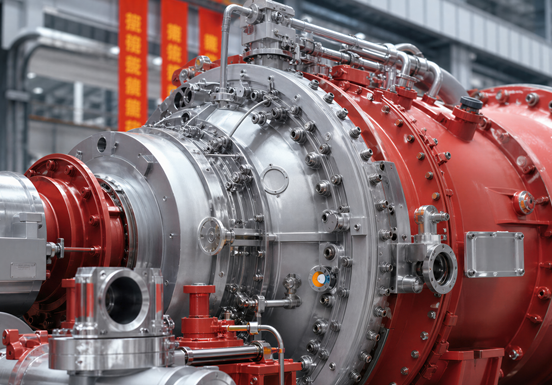
Greater integration of research and industrial application underpins local innovation drive. The provincial state‑owned assets regulator has improved diversified funding mechanisms for corporate‑led research activities, channelling fiscal and state‑owned capital budget resources to support major innovation platforms and key technological research. From January to July, provincial‑owned state‑owned enterprises poured 8.039 billion yuan into research and development work, marking a 13.96 per cent year‑on‑year increase. Industrial state‑owned enterprises attained an R&D intensity of 3.18 per cent. Better links have been forged between enterprises, universities and research institutes for commercialising technical outputs. Leading chain‑based firms carry out targeted research into advanced‑materials, high‑end equipment manufacturing and germplasm resources. Nine core technical breakthroughs have been achieved including the optimisation regulation for copper‑nickel symbiotic ore beneficiation and smelting at Jinchuan Group, whilst six technological results such as grain‑oriented silicon steel developed by Jiuquan Iron and Steel Group have been transformed into real‑world production.
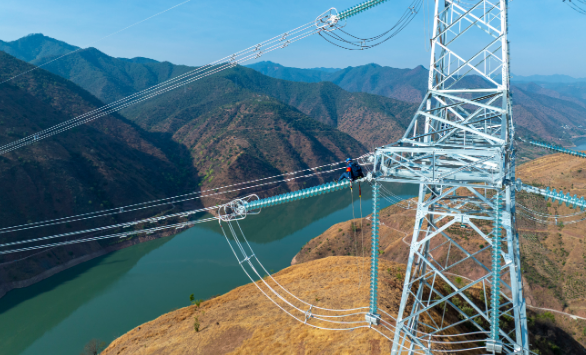
Structural reshaping of state‑owned capital is being carried out under the “6+1” action plan for layout adjustment. State‑owned capital is steered toward six priority sectors: new‑materials, new‑energy and related equipment manufacturing, coal‑based industries, cultural‑tourism, traditional Chinese medicine and modern agriculture. Investment for intelligent, digital‑driven and low‑carbon transformation reached 11.01 billion yuan in the first seven months, with 3 113 sets of production equipment renewed. Investment in strategic emerging industries stood at 7.02 billion yuan, up 8.03 per cent year on year. The 2 400‑MW smart power grid and on‑site new‑energy consumption demonstration project of Jiuquan Iron and Steel Group has been commissioned. Gansu Electric Investment Group has developed the “Zijin Yuneng” large‑scale AI model, and Gansu Engineering Consulting Group has built a provincial‑level technical centre for digital‑twin water conservancy. Central‑local co‑operation has expanded; 158 fresh joint projects were lined up in 2026 with planned investment worth 262.2 billion yuan, a year‑on‑year growth of 11.6 per cent.
Following arrangements from the provincial conference on further deepening state‑owned‑enterprise reform, the Gansu Provincial State‑owned Assets Supervision and Administration Commission has worked out 178 tailored implementation measures corresponding to the 28 national reform tasks. The ongoing reform work is directed towards strengthening provincial state‑owned enterprises and expanding state‑owned capital.
热门内容推荐