Beijing Steps up Targeted Air‑quality Improvement for Cleaner Skies in New Planning Period
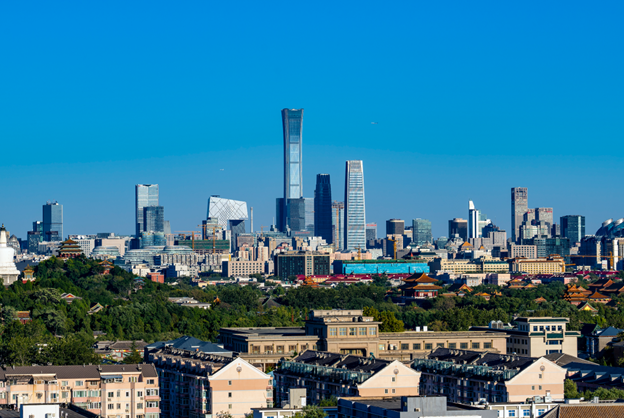
According to People’s Online Beijing, Beijing has secured marked improvements to its atmospheric environment, with clear‑sky days becoming a regular feature across the city. As the 15th Five‑Year planning phase gets underway, local authorities are pressing ahead with air‑pollution control work to deliver cleaner air for residents.
The city registered an annual average PM2.5 reading of 27 micrograms per cubic metre in 2025, the closing year of the previous five‑year plan. This marked the first time the figure had fallen below 30 micrograms per cubic metre, with stable compliance recorded for five successive years. Compared with 2013 levels, the measurement shows a fall of 69.8 per cent.
Air‑pollution governance in Beijing has now entered a new stage. The pace of further PM2.5 reduction is set to slow, while risks of temporary deterioration in air quality remain. Revised national ambient air‑quality standards have tightened concentration limits for particulate matter and relevant precursor substances. The official annual PM2.5 compliance threshold will drop to 30 micrograms per cubic metre before 2030, before moving further down to 25 micrograms per cubic metre from 2031 onwards.
Adverse meteorological conditions still exert influence over local air quality. Industrial, energy and freight transport structures across the Beijing‑Tianjin‑Hebei region have not undergone fundamental transformation, and total pollutant emissions continue to exceed local environmental carrying capacity. Extreme weather events linked to global warming also increase the frequency of weather patterns that hinder the dispersion of pollutants. Following years of emission cuts, remaining pollution sources are increasingly tied to rigid demands of urban operation and daily household activities.
The latest local source‑apportionment results for 2025 show mobile sources contributing 50 per cent of local emissions, domestic sources 18 per cent, industrial sources 10 per cent and dust sources 10 per cent.
Two key official documents set out the city’s roadmap for air‑quality progress. One policy paper targets an annual average PM2.5 concentration of 25 micrograms per cubic metre for Beijing by 2035. The recently issued Beautiful Beijing Construction Plan for the 15th Five‑Year period lays out systematic arrangements for urban environmental work over the coming five‑year cycle.
Beijing will centre its efforts on cutting PM2.5 concentrations, combining structural, engineering‑based and administrative measures for emission reduction. It will promote the switch of fuel‑powered lorries and construction machinery to new‑energy alternatives, push for green upgrades across industrial sectors, and carry out refined management over fugitive dust.
Digital technologies including big‑data and artificial intelligence will support smarter monitoring and law‑enforcement work. Joint efforts from government bodies, enterprises and members of the public will underpin local pollution‑reduction initiatives. Regional joint prevention and control mechanisms covering Beijing‑Tianjin‑Hebei and surrounding areas will also be strengthened, alongside coordinated action to adjust regional industrial, energy and transport frameworks.
热门内容推荐