Hog Prices Edge Higher in October Amid Shifting Supply and Demand Dynamics
Securities Daily reported that China’s live hog market has seen mild recovery from recent lows. Prices hit a three-month trough on 30 September. Data from China Hog Network shows that as of 8 October, the price of cross-bred live hogs stood at 10.3 yuan per kilogram, while locally bred hogs traded at 10.63 yuan per kilogram, rises of roughly 0.24 per cent and 0.2 per cent respectively compared with levels before the national holiday. Retail pork prices in multiple regions also recorded modest gains.
The price upturn stems primarily from adjustments in hog marketing schedules, with holiday consumption acting as a secondary supporting factor. Large breeding firms cut planned hog deliveries at the turn of the month, and scaled farms held back sales to stabilise prices. Smallholder producers also became reluctant to sell. Restrictions on interregional transport reduced local hog circulation volumes. Holiday dining activity lifted fresh pork turnover at markets and supermarkets, with catering and banquets boosting consumption and pushing up slaughter plant operating rates slightly.
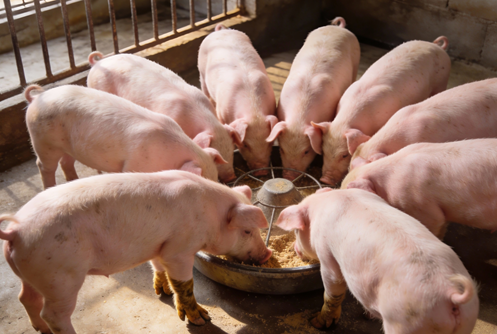
Market participants agree that the latest upturn is driven by short-term sentiment and temporary shifts in supply and demand, rather than a fundamental market reversal. Sufficient volumes of live hogs and pork remain available. Some large breeders failed to meet earlier sales targets, weak end-user demand has accelerated culling of low-productivity sows, and delayed supplies from previously fattened hogs are entering the market. Rising sow inventories also keep overall supply pressure in place.
Data from the price monitoring centre of the National Development and Reform Commission put the national hog-to-feed price ratio at 4 for the fourth week of September, a fall of 0.99 per cent month on month.
Two rounds of central frozen pork reserve purchases have been carried out this year. Huachu Network has organised multiple rotational reserve procurement operations, sending consistent policy signals to underpin market prices. Further reserve purchases may be rolled out if the hog-to-grain ratio stays below 4.5:1. Reserve buying is designed to underpin rather than push up prices. The bidding range sets a psychological floor and prevents panic selling, though the volume of reserves remains small relative to national monthly pork output and cannot reverse the loose supply structure.
Holiday consumption gains will fade and large-scale producers will resume regular deliveries. Market attention will move to winter curing demand in mid-to-late October, when cooler weather arrives. Industry projections indicate the fourth-quarter demand recovery will be weaker than in previous years, with curing purchases only providing bottom support and unable to drive sustained price growth.
热门内容推荐