Shandong Provincial SOEs Hit 1.62 Trillion Yuan Operating Revenue in First Eight Months
According to the Shandong Provincial State-owned Assets Supervision and Administration Commission, provincial state-owned enterprises in Shandong maintained steady operational growth up to the end of August 2026.
Total assets of these enterprises reached 6.04 trillion yuan, a year-on-year rise of 7.7 per cent, while owners’ equity stood at 1.8 trillion yuan, up 6.8 per cent from the same period a year earlier. Between January and August, the enterprises recorded a combined operating revenue of 1.62 trillion yuan. Gross profit totalled 71.3 billion yuan and net profit 52.65 billion yuan, rising by 12.1 per cent and 10.5 per cent respectively year on year. Tax payments amounted to 72.78 billion yuan, representing a 1.3 per cent annual increase. Among 32 provincial state-owned asset regulators excluding municipalities directly under the central government, the group ranked first in operating revenue, total assets and owners’ equity, and second in gross profit and net profit.
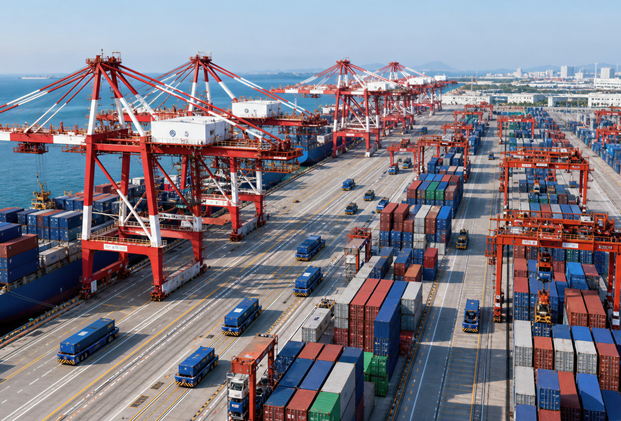
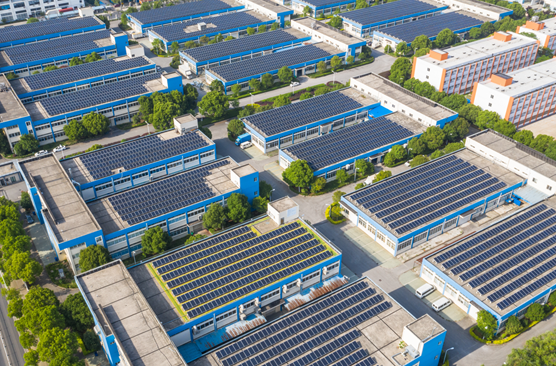
The provincial SOEs pressed ahead with high-end, intelligent and green industrial upgrades under a special programme for industrial innovation and transformation. Their research and development intensity hit 1.79 per cent in the first eight months, 0.15 percentage points higher year on year. Fixed-asset investment reached 101.38 billion yuan, with 70.908 billion yuan channelled into 73 provincial key projects. More than 1,800 asset transfer deals valued above 26 billion yuan were shared across property trading bodies of nine Yellow River basin provinces and autonomous regions via the Shandong property exchange platform. A port and logistics inland hub scheme run by Shandong Port Group was recognised as an outstanding case for ecological protection and high-quality development along the Yellow River. Progress in green transition continued; Shandong Expressway operated 707,000 kilowatts of photovoltaic capacity along its road network, topping national transport sector rankings. Shandong Iron and Steel Group achieved a 98 per cent reuse rate for industrial circulating water.
The provincial SOEs delivered tangible results in safeguarding livelihoods. By the end of August, they had signed employment contracts with 13,000 graduates of the 2026 university intake. Work on rural revitalisation included industrial, employment and consumption support, alongside joint events for consumption assistance and production and sales matching for aid to Xinjiang, building two-way circulation channels for agricultural goods.
Solid progress was made in securing resources and energy supplies. Shandong Energy generated 8.14 billion kilowatt-hours of coal-fired power within the province from January to August, a 4 per cent year-on-year increase, and 2.1 billion kilowatt-hours of new energy power, up 21 per cent. The fulfilment rate for medium and long-term coal supply contracts reached 90.72 per cent, climbing to 98.34 per cent during the summer peak demand period. A reserve of 3.3 million tonnes of government-controllable coal was completed ahead of schedule. Hualu Group maintained supply mechanisms for medicines in short supply, producing and supplying 11 such pharmaceuticals by the third quarter, covering 22.11 million injections and 190 million tablets.
热门内容推荐