China’s first supporting peaking power station for desert and Gobi renewable base reaches full capacity
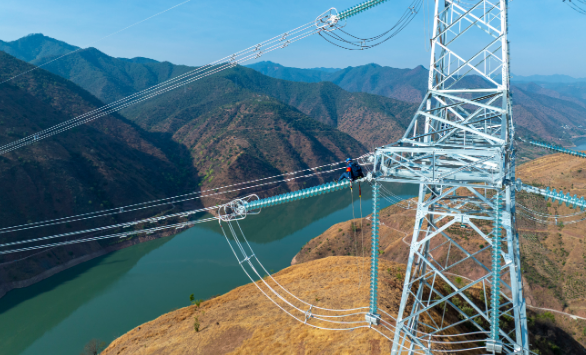
According to China Energy Investment Corporation, Unit 6 of Zhongwei Power Plant operated by China Energy Ningxia Power has passed its 168-hour trial run. The milestone brings four 660-megawatt units of the nation’s first peaking power facility built for desert, Gobi and barren land renewable energy base into full commercial operation.
The Tengger Desert renewable energy base in Ningxia, paired with the Ningxia-Hunan HVDC power project, is the first base of its kind approved jointly by the National Development and Reform Commission and the National Energy Administration.
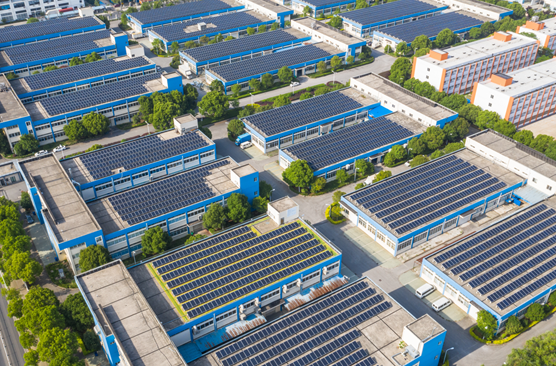
Supported by the ±800 kilovolt Ningxia-to-Hunan ultra-high voltage direct current transmission line, the base hosts 13 gigawatts of renewable installations, including 4 gigawatts of wind power and 9 gigawatts of solar photovoltaic capacity, alongside 4.64 gigawatts of coal-fired peaking capacity.
The fully commissioned Zhongwei Power Plant delivers stable back-up for green power exported from the Tengger base.
Designed for deep peak regulation, the units ramp up and down rapidly and start or stop flexibly, enabling integrated operation with wind and solar assets. This arrangement addresses grid integration challenges for intermittent renewable generation and maintains steady power and voltage levels for electricity supply to Hunan province.
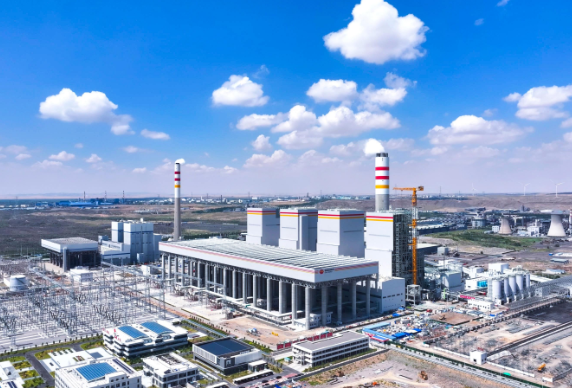
The project redefines the role of coal-fired generation, shifting its function from a primary electricity supplier to a stabilising pillar for the power system. It smooths fluctuations in wind and solar output and creates a collaborative operating model with flexible thermal regulation and efficient renewable absorption. The four units are engineered to generate 11.8 billion kilowatt-hours annually and secure stable delivery of 22 billion kilowatt-hours of clean power. The output will replace roughly 7.1 million tonnes of standard coal and cut carbon dioxide emissions by 18.46 million tonnes.
Construction began on 26 April 2024. The project adopted a concurrent four-unit build scheme, alongside integrated air-cooling platforms, a five-span steel structure layout for the 750kV step-up substation and suspended four-pipe bundled stack technology.
It also deployed a pioneering full-range adaptive intelligent cruise control system for thermal units, supporting load adjustment between 20 per cent and 100 per cent. After the first unit came online in January this year, all four units achieved full capacity within nine months.
Digital and intelligent systems underpin plant operation across safety, production, commercial management and collaborative control.
An integrated decision framework gathers real-time site data for automated analysis and precise operational control, shifting management practices from experience-led to data-driven operation. The facility recycles all urban reclaimed water and draws no water from the Yellow River for production use.
Its pollutant discharge levels sit below national standards, forming a green development benchmark for coal power deployed in arid desert zones and balancing energy security with ecological protection.
热门内容推荐