Guangdong taps selenium-rich land resources for rural revitalisation
According to China News Service on 27 October, Guangdong holds substantial reserves of selenium-rich soil, with its verified area ranking among the largest nationwide. Industrial development built around selenium resources forms a core component of the province’s high-quality development initiative covering counties, towns and villages.
Continuous regional geochemical surveys at a scale of 1:250,000 have run in Guangdong since 2000, mapping the distribution of selenium-rich soils and their geological controls. Subsequent detailed surveys have examined selenium availability and screened suitable agricultural products, laying foundations for resource exploitation.
Selenium-rich soils are concentrated in the western and eastern parts of the Pearl River Delta, the western Hanjiang Delta, Leizhou Peninsula, western Shaoguan and Qingyuan. Their distribution links closely with geological formations including Jurassic and Cretaceous monzogranite, Devonian and Jurassic sandstone and shale, and Himalayan basaltic volcanic rocks.
The Department of Natural Resources of Guangdong Province has identified a range of naturally selenium-enriched farm produce from these zones, including rice, tea, giant bamboo shoots, mulberry leaves and medicinal herbs, which carry clear potential for large-scale production and branding.
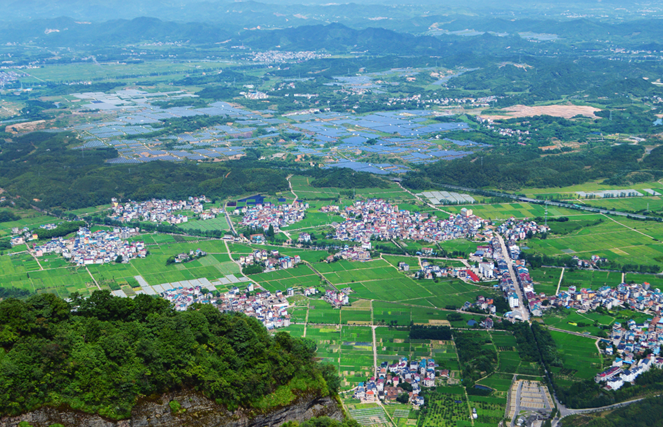
A tiered evaluation framework for selenium resources has been put in place to raise the added value of local farm goods. Authorities use 1:250,000 geochemical datasets to delineate prospective zones, before carrying out detailed 1:50,000 surveys in priority areas. Assessments of water, soil and crops run alongside this work, and official recognition of natural selenium-rich land plots takes place on a regular basis.
Twenty-eight natural selenium-rich land parcels have gained national or provincial certification to date, covering more than 200,000 mu. Six industrial demonstration bases and two selenium-industry belts have been completed, creating replicable models that translate geological findings into rural development outcomes.
Yangxi County has rolled out an ecological selenium belt and integrated agriculture-tourism complex, alongside the province’s first dedicated selenium science museum. The projects have drawn investment exceeding one billion yuan and supported the recultivation of nearly 10,000 mu of land.
Hengshui Village in Yamen Town, Xinhui District hosts Guangdong’s first jointly built provincial and municipal selenium agricultural demonstration base. An eight-kilometre industrial sightseeing corridor operates on site, with leading agricultural firms running selenium tea plantations spanning more than 2,000 mu and Xinhui mandarin orchards over 1,000 mu. Aquaculture and livestock rearing with selenium features are also established. Collective income for the village rose from less than 200,000 yuan in 2020 to over six million yuan in 2025.
Other local projects draw on selenium reserves. Yakou Village in Zhongshan produces selenium-rich rice and expands rural tourism around paddy fields, lifting collective revenue by five million yuan. Magang in Kaiping builds the “Bay Selenium Valley” identity on its regional brand. Xuwen promotes its banana and pineapple brands using selenium red earth. Xiniu Town in Yingde develops grain and bamboo shoot lines under its selenium-focused brand.
To address barriers including slow uptake of geological survey results and insufficient industrial standards, the Department of Natural Resources of Guangdong Province, together with geological specialists, has issued guidance for the selenium sector and six technical standards covering selenium soil classification and product certification. Technical teams provide regular on-site support and enable compliant sharing of survey datasets.
The department will continue fundamental geological investigations and speed up the application of geochemical findings to underpin further progress of the provincial development initiative.
热门内容推荐