High-standard farmland upgrades reinforce grain security in Zhalai Banner, Inner Mongolia
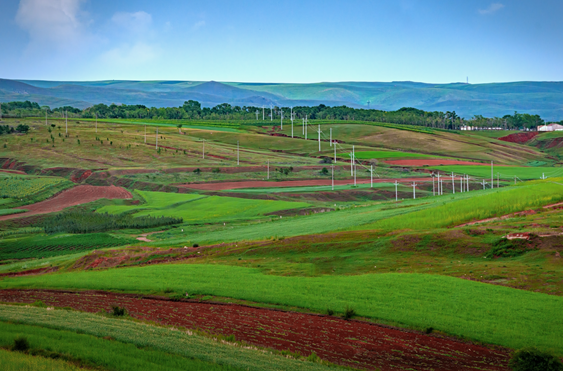
According to Farmers’ Daily, published on 29 October 2026, sweeping fields across Zhalai Banner in Hinggan League, Inner Mongolia, feature well-organised farmland, straight farm access roads and extended irrigation pipe networks in the autumn harvest season. Maize crops in Xinghua Gacha of Yinde’er Town are ripening. Maize and rice harvested from high-standard farmland operated by the Runnong Agricultural Machinery Specialised Cooperative in Bayangol Town are being stored.
Zhalai Banner is among China’s first batch of county-level pilots for high-standard farmland development, and the only pilot of this type in Inner Mongolia. The programme transforms scattered, low-yield rain-fed plots into stable, productive farmland by upgrading agricultural infrastructure and lifting cultivated land quality.
In Xingsheng Village, Bayangol Town, previously fragmented plots with outdated facilities have been levelled, merged and fitted with supporting systems. Integrated water and fertiliser coverage has cut labour input and lifted grain yields.
Zhalai Banner plans to develop 620,000 mu of high-standard farmland in 2026. The project is funded through ultra-long-term treasury bonds and central budgetary investment, covering land levelling, irrigation upgrades, farmland protection, power distribution renovation, soil improvement and hardened field roads. Local authorities coordinate land use, resolve disputes and prioritise local residents, registered poverty-relief households and monitoring households for on-site employment under the work-for-relief framework.
The banner applies a long-term farmland management framework. It introduces grid inspections under the farmland steward system and joint management arrangements bringing village collectives, cooperatives and growers together. Regular checks and maintenance keep field facilities operational.
Over 3.18 million mu of high-standard farmland have been completed in Zhalai Banner to date. The expanded area supports scaled, mechanised and standardised farming, reduces water use and production costs and lifts grain output. Further high-standard farmland works will continue, with strict quality checks, accelerated construction schedules and sustained post-completion management.
热门内容推荐